

A Case That Went Through Three Generations
Tomar, 54, of Chhichhawali village under Morena, Madhya Pradesh, just informed the CRPF’s 85th Battalion about her appointment to the organization at Bijapur, in Chhattisgarh. Court records call him Constable Driver Girwar Singh Tomar and state he was charged in July, 1999. It’s said to have started with a biking collision with an officer’s car.
After losing his job he became a sadhu, known as Baba Girvar Das. He continued to litigate all the time. In 2007, he got the relief from a High Court ruling, but it was thereafter stayed by the CRPF. The High Court ultimately ruled in his favour once again in 2025 and reinstated him. However, two years ago he was still required to send a legal notice to authorities before they intervened. His story is happy; not so was his system.
Where Did The Delay Come From?
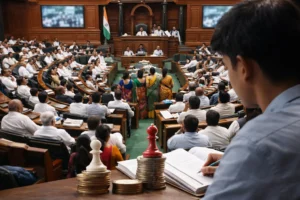
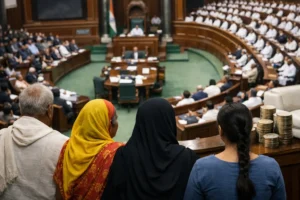
Well, the courts are clogged. The pendency of cases across the 25 High Courts and District Courts and Subordinate courts in the country stood at 63.66 lakh and 4.76 crore respectively as on 31st December 2025. As per the data compiled by the High Courts by July ’26, it was observed that there were around 63.76 lakh pending cases and the number of pending cases exceeding 10 years stood at over 16 lakh. The Law Ministry told Parliament that causes are the minimal number of infrastructure, insufficient numbers of staff, non stipulation of time frame, frequent adjournments and low level of monitoring and grouping of cases.
More Read

The State Continues to Engage in Litigation Once it Has Been Defeated
However, this matter didn’t conclude with Tomar’s success in 2007 as the CRPF had targeted it. The Supreme Court has once before criticized this behavior. In Union of India v Pirthwi Singh, in 2018, it belabored the Union’s appeals that set a precedent and had been resolved. As per the government’s own 2010 National Litigation Policy, the government is required to refrain from being a “compound litigant” and appeals should only be made where there are “significant issues of policy “.
Overall, little impact has been felt by the policy. But, there is no respite for the government of the day, as frivolous appeals by the government continue, and the Court has recently slapped Uttar Pradesh with a fine of ₹50,000 for one appeal in a gratuity case. The problem also is highly antiquated: The Law Commission highlighted it in 1973.
More Read
I could not verify the reason why the CRPF case was referred to Tomar.
A second question for the force is whether this is routine or a well-thought out decision.
Losers Win, Not Winners
Reinstatement was only achieved through his efforts of pressing the authorities. A court order should be enforcement-less or else the person should be relentless in complying with it.What the case does not answer. What the case doesn’t resolve.
There is no indication in the reports whether the back wages, continuity of service or pension credit were given to Tomar for the lost years. They also don’t say if anyone was held accountable for the dismissal or the delay. Otherwise, reinstatement is just partial remission. These are the few questions which a reporter or reader should pose to the CRPF and the court.
The reports do not say whether Tomar received back wages, continuity of service or pension credit for the lost years. Nor do they say whether anyone was held accountable for the dismissal or the delay. Without those, reinstatement is only partial relief. These are the questions a reporter or reader should ask the CRPF and the court.
More Read

So then, what about the legal system as an “agency” is it “capable”?
It arrived at the correct answer, so the capacity must be there. But it costs 27 years and a man’s career, and he’s not capable of any sensible meaning for the most part. Most people can’t hold on that long and the results can’t depend on who can last longer.
In how many years did Girwar Singh Tomar’s case take to be resolved? They estimate that he’s been out of action for approximately 27 years, from when he was fired in 1999 to when he’s set to return to duty in August 2026.
He was fired for what reason? The reports in the media mention a disagreement over a bike and an officer’s vehicle. There is confirmation from court records of a charge-sheeted in July 1999.
Write Answer, Wrong Price
Girwar Singh Tomar’s reinstatement proves the system can reach the right answer, but at the cost of 27 years and a lost career. Justice that only the most persistent can survive to see is justice rationed by endurance. Until courts clear their backlog and the State stops contesting settled matters, delay will remain the real verdict.