

In the evolving laboratory of hardline governance in Uttarakhand, administrative reforms frequently serve a dual purpose: they are presented as progressive modernization drives, yet function in practice as potent instruments of ideological consolidation. The ongoing state-wide crackdown on madrasas—culminating in the sealing and closure of 20 institutions across Dehradun and Haldwani—is the latest and most glaring manifestation of this dynamic under the Pushkar Singh Dhami administration.
From the start, the crackdown had been gradually increasing pace till mid-July when, with Uttarakhand abolishing Madrasa Board by law making this first instance in India formally, this crackdown took on a new dimension. The 2016 legislation was revoked by the act repealing the law and a fresh legislation, Uttarakhand State Authority for Minority Education (USAME) was brought in to replace the former Board. The 452 Madrasas that were licensed and sanctioned as minor educational institutions before have been thrown into limbo and their license revoked by the new education act and its rules of recognition in the year 2026. The message given was clear that any institution not meeting the requirements of the new bureaucracy and getting a new recognition must be prepared to face the consequence immediately being forced out of the market via administrative dissolution if this was their only alternative which in this specific scenario, it in fact is.
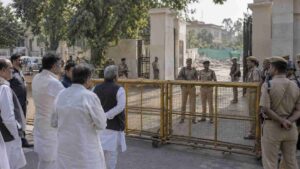
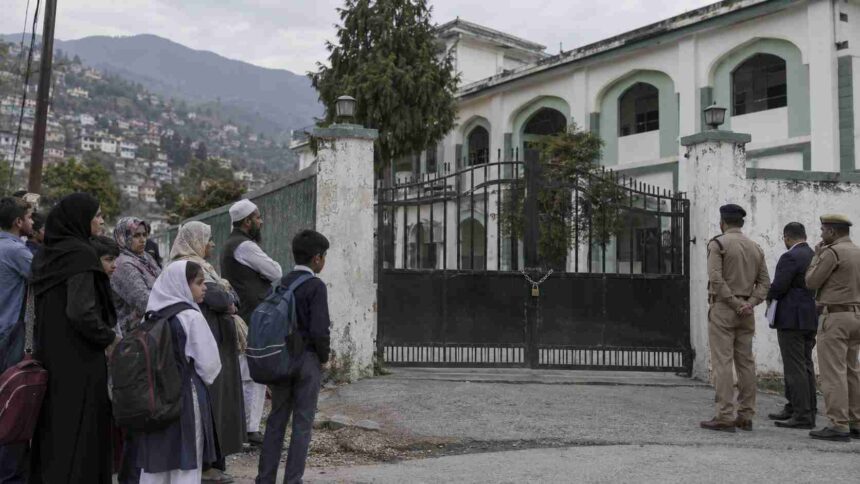
The enforcement has been very quick, strict and the police actions were clear signs of coercion. Recently, in Dehradun and Haldwani, five more schools were closed, bringing the total to 20 so far. Out of these, 17 were actually bolted by the DMC and the police, whereas the management of the other three institutions was forced to sign agreements that they had stopped functioning. This is a very aggressive and a clear change after which more than 200 unregistered mafias were locked out by the district administrations.
The reason given by the top political leaders is very clear about the ideological direction of the initiative. Arguing for the scrapping of the Madrasa Board in the state, Chief Minister Pushkar Singh Dhami was blunt in stating, “now there is no reason for educational programs based on tribal mindset and extremist ideologies.” This is not only a defense but also the state declaring its right to prescribe its own standardized curriculum.
However, for any objective civic audit, this official narrative of “progressive educational uplift” collapses under the weight of glaring administrative and legal contradictions.
More Read

In the first place, the state’s declared aim, making education progressive, and method, unreasonably, harshly closing institutions, result in a major discrepancy. The real policy goal had to be academically modernizing youths through phased transition grants, curriculum integration support, and teacher training. On the contrary, the government has used governmental re-accreditation as a tool of expulsion and closed institutions on an administrative order basis without transition support or integration of displaced students into government schools.
Next, the statutory hypocrisy of the new system is clearly discernible. For one thing, the USAME was created in theory to monitor the educational institutions of six notified minority communities – Muslims Christians Sikhs Parsis Jains, and Buddhists and on the other, the actual implementation by law enforcement agencies that include unannounced checks and the physically sealing the institutions has mostly occurred at Muslim-run madrasas. This highly selective enforcement removes the neutral regulatory cover from the initiative and exposes a very clear preference for one religious community.
Apart from that, this intellectual purge has to be understood as part of a bigger, multi-faceted, legislative and administrative revamping inside the state of Uttarakhand. From the hard-core implementation of UCC or Uniform Civil Code and changing the provisions for marriage by way of nikahnama to a major voter deletion operation in the minority-major minority dominated constituencies under the Special Intensive Revision (SIR), the state’s machine is a well-coordinated consolidation of control from the civil, religious and educational spheres of minority communities.
More Read

Unsurprisingly, legal scholars and minority rights advocates have pointed out that these measures directly undermine the fundamental protections guaranteed under Article 30 of the Indian Constitution, which grants minorities the inalienable right to establish and administer their own educational institutions.
Ultimately, while the Dhami government has successfully delivered a muscular ideological spectacle to its core political base, the lingering questions regarding constitutional propriety, educational disruption for thousands of marginalized children, and the weaponization of bureaucratic regulations remain dangerously unaddressed. What is being celebrated as administrative reform looks increasingly like the systematic dismantling of minority educational autonomy.