
Earlier this morning, a handful of Cockroach Janta Party (CJP) leaders climbed over barricades and gates and ran into Jantar Mantar with the national flag in hand. They sloganeered and filmed themselves. Within minutes, security personnel stationed there detained them. The whole episode lasted far less time than the standing order it defied took to draft. But it has already become the sharpest image of a week in which Delhi’s oldest protest ground was struck off the list of places where citizens may protest.
What Happened This Morning
CJP co-convenor Ashutosh Ranka, spokesperson Saurav Das and National Organisation In-charge Ajinkya Shinde got inside the premises along with a few other members, a day after the venue was denotified. Police detained them shortly afterwards and were last seen taking them in a bus to Jaffarpur Kala police station. Delhi Police confirmed the detentions of Das and Ranka.
CJP founder Abhijeet Dipke posted a video of the sprint and wrote that the “cockroaches with the Tiranga” had sneaked in before being picked up, adding, “You cannot denotify the resistance.” Ranka posted his own clip with a four-word verdict, “Fortress Jantar Mantar breached”, and a tongue-in-cheek note that they had not tried hard to get in. The party chose the Tricolour deliberately. A flag in hand makes a detention harder to justify and an image harder to forget
The Ultimatum And The Answer It Got
More Read

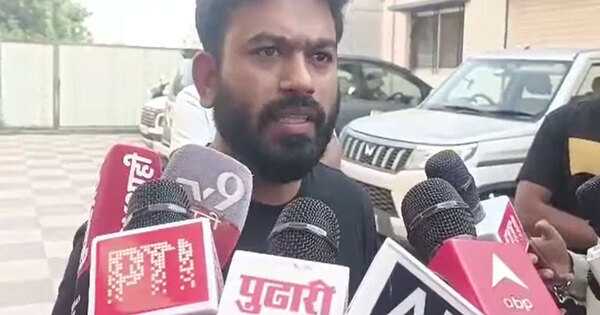
The entry did not come out of nowhere. Yesterday, Ranka and Das went to the Parliament Street police station and handed in a letter seeking a date for a peaceful protest at Jantar Mantar. They left the date to the police and gave them 24 hours to respond, failing which the party said it would announce a fresh date for a mass protest on its own. The letter also complained that three days of heavy security deployment had disrupted normal life in the capital. Ranka told reporters outside the station that the way Delhi Police had shut the capital down was unprecedented, and that residents and businesses were suffering ahead of the festival season.
The answer, when it came, was not a date. It was a notification. Later yesterday, a standing order from the Union home ministry declared that a committee had examined alternative venues for citizens’ right to protest, and that, on its recommendations, Jantar Mantar had been denotified as a protest site. Delhi Police named three replacements: Ramlila Ground, Burari Ground and the CBD Ground in East Delhi. The letter had asked for a date at a place. It received the removal of the place.
Dipke’s reaction was immediate. He said the Prime Minister had denotified Jantar Mantar and would next denotify democracy, adding that the protest site had never been the real problem, only the idea of people protesting. That is rhetoric, and the order itself does not mention the CJP. But the sequence is plain, the party asked for a slot yesterday, and by last night the slot no longer existed.
More Read

Why The Venue Matters
Jantar Mantar is not an ordinary patch of pavement. It sits a short walk from Parliament, and for decades it has served as the place where a grievance can be shouted within sight of the people who could resolve it. Anna Hazare, the farmers’ movement and the wrestlers have all used it, which is why denotifying it carries weight beyond one party’s campaign. The alternative sites are far from Parliament, and Burari and the CBD Ground are on the city’s edges. A protest in a ground that Parliament cannot see is protest in name only.
There is also a legal backdrop. In 2018, the Supreme Court set aside an earlier ban on protests at Jantar Mantar, affirming that peaceful assembly is a fundamental right that the state may regulate but not extinguish. The government can argue, correctly, that regulation is allowed and that designated sites can be changed. But the question the court posed then is the one citizens should ask now: is moving the venue a regulation of the right, or a way of emptying it?
The Week That Led Here
CJP’s confrontation did not start today. On Saturday, Delhi was placed under what one live blog described as a lockdown, with thousands of police deployed and hundreds detained, Dipke among them. The protest demanded the resignation of Chief Election Commissioner Gyanesh Kumar over the SIR. Yesterday, the opposition’s march to the Supreme Court was halted behind barricades near the court. The Supreme Court has separately asked the Union Home Secretary, the Delhi Police Commissioner and the Delhi Metro chief to respond to complaints about restrictions on metro and train services, with answers due today.
Seen together, the pattern is clear. A movement demanding an election official’s resignation met barricades, mass detentions, curtailed public transport and then the abolition of its chosen venue. A government confident that its electoral machinery is beyond reproach could have allowed the protest to run its course in front of Parliament, with no particular risk. Instead, it has made the protest itself the story.
What The Authorities Say
The establishment’s case deserves a hearing. A deliberate breach of barricades is not peaceful assembly in the strict sense, and detention is a standard response. Delhi has dense traffic and sensitive buildings, and police are entitled to manage crowds. The home ministry says it acted on a committee’s recommendations. A relocated venue is not a ban. None of this has been tested in court, and no charges against the detained CJP members had been announced at the time of writing.
But arguments of administrative convenience carry less weight when the timing is this tight. The denotification landed within hours of a lawful, written request. The new sites are remote. The party seeking access is a satirical, youth-led outfit that has spent months embarrassing the ruling party, including through a name that parodies the BJP. When a state removes a venue at the exact moment a critic asks for it, it invites the very suspicion it should avoid.
What Comes After the Deadline
The 24-hour deadline lapses today. CJP has said it will announce a fresh date for a mass protest if the police do not allocate Jantar Mantar, and the denotification has effectively settled that question in the negative. The detained members, if released, are likely to be back on the streets and to challenge the denotification in court. A petition arguing that the order violates the 2018 ruling would be a natural next step, and the party’s legal track record in a week of heavy filings suggests it knows the route.
For the government, the choice is similar. It can defend the denotification on its merits, with published reasons, the committee’s report and a clear statement of how citizens may reach Parliament’s doorstep. Or it can let the picture of leaders scaling a fence to enter a protest ground stand as the verdict on its approach. A government that wants to be seen as confident in its mandate would pick the first. For now, it seems like it has chosen the latter.