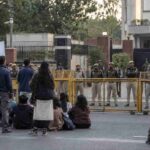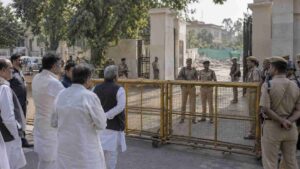

In an affidavit submitted to the Supreme Court, Delhi Police stated that its Facial Recognition System identified 2,873 individuals with criminal backgrounds at the Jantar Mantar student protests between 20 and 26 July. A subsequent cross-check of official jail and court records against a sample of 205 of those flagged names found that at least 25 of the individuals were physically locked inside high-security Delhi prisons on the exact dates the system claimed to have spotted them.
Of the 25 prisoners wrongly placed at the protest site, 17 faced murder charges, four faced rape charges including three under the POCSO Act, and four faced attempt-to-murder charges. Three of the false matches were recorded on 24 July, twenty-one on 25 July, and one on 26 July. The concentration of errors across consecutive days points to systemic failure rather than isolated technical glitches.
The police treated an 80% algorithm confidence score as a positive match. That threshold was disclosed through an RTI reply and is not laid down in any statute. Nearly two-thirds of the 2,873 flagged names, 1,884 individuals, were placed in a vague “other” category of criminal and special-law offences without clear indication of whether the persons were convicts, undertrials, or merely named in FIRs. The system searched live camera feeds against 2,402 profiles from the internal Crime Kundli database and 471 general criminal records.
India has no dedicated law governing the use of facial recognition technology. Rules on procurement, data retention, accuracy testing, demographic bias, and deployment remain administrative decisions. The same technology that was originally justified for tracing missing children has been repurposed for screening crowds at political assemblies. Police maintain that a facial match triggers further field verification before any action is taken. In practice, thousands of names generated by the system entered an official list placed before the court without a transparent verification standard or a clear right of the individual to challenge the match.
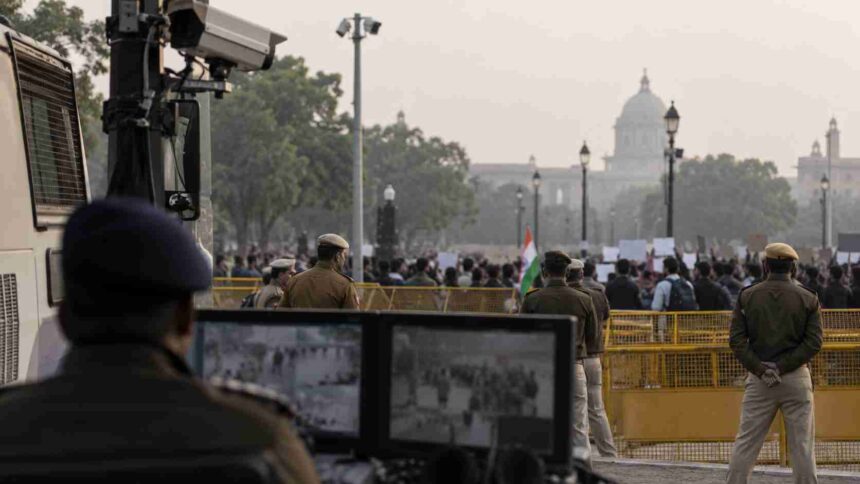
The discovery that the system repeatedly identified people who were behind bars at the time of the protest exposes the gap between algorithmic output and physical reality. When software can place undertrials held in Tihar, Mandoli or Rohini inside a public demonstration, the claim that facial recognition provides reliable intelligence for policing assemblies becomes difficult to sustain. Visible surveillance vans and camera arrays at protest sites already alter the decision of ordinary citizens to participate. Treating unverified algorithmic hits as the starting point for investigation compounds that effect.
More Read

The Supreme Court Is examining the wider allegations of surveillance and force used during the July protests. The false positives involving incarcerated inmates form a concrete test of the system’s credibility. An 80% confidence score that can place a prisoner at a protest he never attended is not a minor calibration error. It is evidence that the technology, as currently configured and deployed, generates results that cannot be trusted without independent human verification. Until that verification is made mandatory, public and subject to challenge, the use of facial recognition to monitor democratic assemblies remains an exercise in automated error with real consequences for those wrongly flagged.