
The opposition asked the Chief Justice of India for a meeting and was refused. It marched to the Supreme Court and was stopped by police short of the gate. By evening, its leaders were inside the building anyway, at the filing counter, with a petition against the Election Commission. A political confrontation was transformed to a legal one in three days. This change is more important than the march itself.
A Refusal That Came With A Route
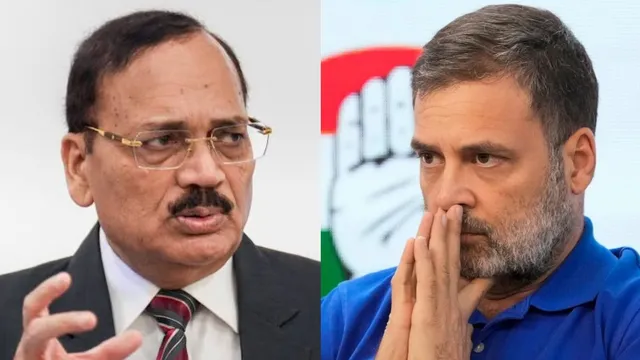
CJI Surya Kant refused to accept a memorandum on behalf of the Lok Sabha and Rajya Sabha opposition leaders Rahul Gandhi and Mallikarjun Kharge on Sunday, 11 October. He had responded that the issue was under consideration in court and that the leaders would have to go through a formal petition to the court. There was no official statement in the response, instead the response itself was delivered via sources.
The refusal looked like a rebuff, but it came with an instruction, and the court followed through quickly. It directed its registry to process the opposition’s petition the same day, allowed a delegation of 10 to 15 leaders into the filing counter, and the petition was lodged just before the counter closed. A judge who will not take a political delegation in his chamber was willing to take its grievance in his court. That is the orthodox position, and it deserves credit.
The March That Was Stopped
More Read
Delhi Police halted the march at Bhagwan Das Road near the court, behind barricades and under a heavy security deployment. The BJP’s line was that the opposition was politicising constitutional bodies, now including the judiciary. That framing is hard to sustain. Marching to a court with a memorandum, and ending the day with a legal filing, is among the most constitutional forms of protest a democracy offers. A government confident in its electoral process would have little reason to call it anarchy.
What The Petition Actually Asks
The street slogans of “vote chori” and a halt to the SIR have given way to a narrower legal case. The petition, filed by Gandhi and ten other leaders, seeks an independent investigation into decisions allegedly taken unilaterally by Chief Election Commissioner Gyanesh Kumar, including the June 2025 decision to conduct the SIR. The petitioners say they are not asking the court to reconsider the SIR’s validity.
More Read

That restraint is not accidental. On 27 May, a bench headed by CJI Surya Kant upheld the exercise. The court held that the Commission can inquire into citizenship while revising rolls, but cannot finally determine it, and must presume in favour of voters already on the rolls. A direct challenge to the SIR would have faced the judge who wrote that ruling.
The petition’s sharpest claim concerns the Commission’s inner workings. It alleges that the other two commissioners, Sukhbir Singh Sandhu and Vivek Joshi, objected to unilateral decisions by Kumar on 14 occasions over ten months, and asks the court to call for the files, agendas, minutes and internal notings behind them. If established, a single member exercising collective powers would raise a serious question under Article 324 and Section 18 of the 2023 Act. For now, it is an allegation. The Commission maintains that all SIR orders were approved by all three commissioners.
A file inspection would settle the dispute in an afternoon. An institution that believes its process is clean has every reason to welcome that, and the government, which says the same, should too.
Why The Opposition Distrusts The Referee
The mistrust was not something that came all at once. Kumar was the first Chief Election Commissioner to be appointed under the appointments law of 2023 in February 2025. Gandhi filed a dissent note, calling the late-night selection disrespectful and warning that removing the CJI from the selection committee deepened concerns over electoral integrity. The Supreme Court had earlier ordered a panel of the Prime Minister, the Leader of Opposition and the Chief Justice, until Parliament legislated. Parliament then replaced the Chief Justice with a Union minister, and the court declined, in March 2024, to stay appointments under the new law. Kumar is due to oversee 22 state elections before he retires in 2029.
None of this is illegal. Parliament passed the law. But it leaves a panel where two of three members come from the executive, and a Commission whose head the opposition had no real say in choosing. A government that prizes the language of reform might have preserved a judicial voice at that table. It chose not to, and the opposition’s suspicion is the predictable result.
More Read

The Petition’s Stumble
The opposition’s own handling deserves scrutiny too. The registry flagged 14 defects in the petition, including a ₹220 court-fee shortfall, an illegible copy of Kharge’s identity card, and missing vakalatnamas for nine of the eleven petitioners. It also questioned naming all three election commissioners as respondents in a writ framed as a public interest litigation. The petition could not be heard on Tuesday, and the petitioners’ lawyers have asked for listing on Wednesday, 14 October, once the objections are cured.
For a party with a bench of senior advocates, missing signatures and a ₹220 shortfall make an easy target. They let critics dismiss the exercise as theatre. They do not change what the petition alleges, but they hand the opposition’s opponents a convenient line.
There is a harder limit as well. The Constitution allows the Chief Election Commissioner to be removed only through a process like that for a Supreme Court judge, which requires a special majority in both Houses of Parliament. The opposition lacks the numbers. The march can build pressure, but it cannot deliver Kumar’s resignation.
What Happens Next
This afternoon, INDIA bloc leaders are due to hold a joint press conference, followed by tea at Gandhi’s residence at 4 pm with MPs, student leaders and civil society representatives. The aim is to consolidate Monday’s momentum and decide the next phase of the campaign. No fresh protest date has been announced yet.
The legal calendar is more concrete. If the defects are cured, the petition may be listed on Wednesday, though the court has not confirmed a date. It is expected to be taken up alongside other pending matters connected to the Delhi protests. Three questions will define what follows. Will the court call for the Commission’s internal records? Will the Commission and the government welcome that scrutiny or resist it on technical grounds? And will the CJI’s assurance of an expeditious hearing translate into one?
The opposition has found the single route the Chief Justice himself pointed to. Whether that route leads to answers or to delay will say more about the state of India’s institutions than any march.