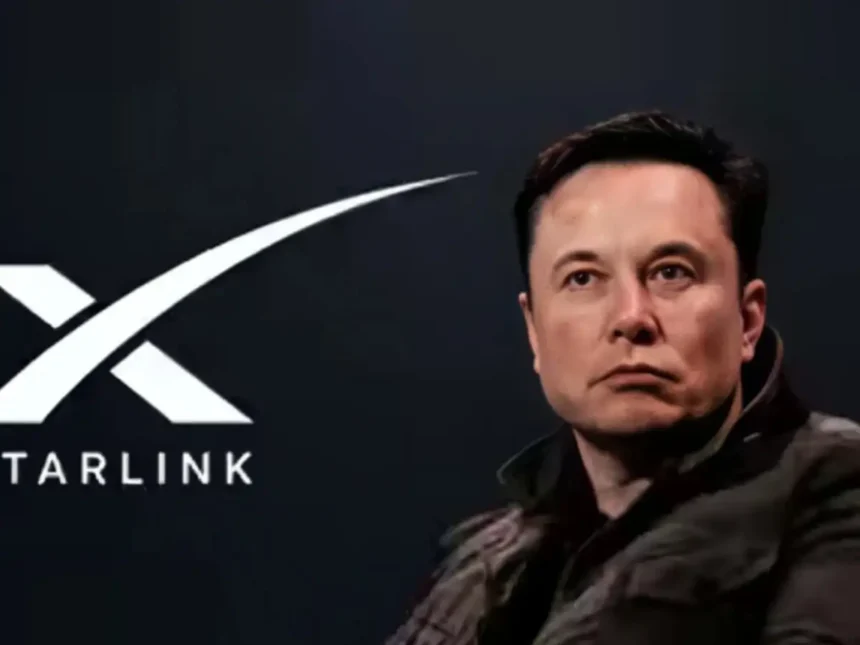


Elon Musk has stepped in to suggest that the Indian government might be blocking Starlink to maintain a monopoly on customers. Elon Musk has taken to Twitter to allege that India’s government is obstructing Starlink to preserve its monopoly on customers, though he has not named the entity. The government quickly declared the charge groundless within a day. The allegation and denial sit between a fact that neither side disputes. In October 2022, Starlink had applied for an Indian licence, but four years later it has yet to sell even a single subscription. In the same four years, India’s two major private telecom firms strengthened their presence each month, with the government never afraid to stand by the side of the major business houses in India. There is a lack of evidence of a link. The pattern, however, needs a closer look.
What Musk Said, And What He Didn’t
Musk’s tone was harsh. He shared a commentary on X on 7th October saying that some oligarchs are trying to maintain a chokehold on Indians and obstruct the deployment of Starlink. He did not mention any names, he said that they could guess who it was and that it was a crime against the people of India. The second post stated that Starlink will be able to provide internet access to regions that do not have strong internet connections or access to the internet at low costs.
A day later he gave the name, as a question. To a post by industry veteran Gagandeep Singh Sapra, who alleged that he had seen the files of Starlink awaiting comments at state-owned TCIL, Musk responded that the company had been through the five-year process in India and had met all the requirements, “so why still no license? Who is the true king of India? Ambani or Ambani’s enterprise? The TCIL claim is made by Sapra, and has not yet been independently verified. Musk’s five-year timeframe is from when Starlink attempted to launch in 2021. If you only count since it was formally was introduced in October 2022, it’s four.
No new thing here spiritually. Musk stated in October 2024 that such an auction of satellite spectrum was unprecedented, stating that ITU had long considered it shared for satellites. His response was to reports that Jio was trying to bid for that very auction. He was asking a policy question two years ago. Today, he is asking questions of those behind it.
More Read

The Government’s Answer
The Ministry of Communications denies the charge. The ministry’s statement, reported in Business Today, said that the satellite framework was fair and non-discriminatory and the notion that it was not is “baseless and misconceived. All three are at broadly the same stage of regulation, every licensee will have to prove security conditions, a security assessment is underway for all three and spectrum can be sought after security conditions have been met. (businesstoday)
That’s a legitimate response, and it has a point to be drummed into our heads. Jio and Airtel are also in the process of final clearance. In a fair process, the incumbents will be waiting outside Starlink. But they play from a very different seat: they own the towers, they own the customers and they have the politics and they can keep waiting as long as it takes. Little expenses for an incumbent can be everything for a newcomer. Even a strong “no,” isn’t a timetable. The ministry hasn’t yet indicated the end date of the assessment.
More Read

Starlink’s Long Road
The early conduct of Starlink wasn’t pristine. It took pre-bookings for its unlicensed terminals in 2021 and had over 5,000 customers; the Department of Telecommunications has now directed it to cease and desist from accepting all payments. It complied. This is the first time it is charged of violating an Indian rule.
Thereafter, it was a long paper chase. It had applied for a GMPCS licence in October 2022 and with Jio’s satellite arm already having a licence. It has applied to IN-SPACe for permission to built ground stations in July, 2023. As September 2023 approached, indications were that approval was imminent. The licence did not come until 2025, after three years, on the condition that Starlink had fulfilled all the security parameters outlined in its letter of intent. Those conditions are very onerous: No traffic can be mirrored abroad; No data can be decrypted overseas; Gateways must be located within India. These were all accepted by Starlink.
The finish line continued to march, though! The government has announced licences for Starlink, Jio and OneWeb in February 2026 with the spectrum price yet to be determined. As per the latest news security assessment continues and spectrum has not been assigned yet. Upon acceptance of all stated conditions, a company is still waiting on the final conditions.
A Market With Two Giants
How can the incumbents be bothered? That’s the point of TRAI’s June 2026 numbers, which have been summarised by TelecomTalk. Jio had 503.58 million wireless subscribers (39.27 per cent), Airtel 486.80 million (37.96 per cent), Vodafone Idea 198.82 million (15.50 per cent) and BSNL 93.01 million (7.25 per cent). Jio and Airtel accounts for around 77 per cent of mobile users. The grip is tighter in the case of broadband with data from the TRAI indicating a penetration of about 84 per cent in the same period. (telecomtalk)
More Read
It is as important to show the direction of travel as it is to show the snapshot. As per the monthly releases by TRAI till 2026, Jio and Airtel increase the number of subscribers and share, while Vodafone Idea and BSNL lose subscribers and share. Conspiracy to misbehave is not needed for a market this concentrated. At present, there is little competition, so nobody benefits from reducing prices, which is why the simultaneous tariff hikes of mid-2024 had so many people up in arms.
A satellite threat to the comfort. It can penetrate any village where a tower is not present, in areas where “incumbents’ networks” are least dense and margins are most secure. Jio’s defence with regard to an administrative allocation was fairness because foreign satellite companies could sell voice and data without having to bear the burden of towers and auctioned spectrum. It’s a reasonable statement. It’s also a handy one.
How Delay Works Without A Ban
There haven’t been any objections to Starlink, which is why it can work. The tools are quieter than a “no. In response, Jio requested that the telecom minister consider auctioning the spectrum and reissue the consultation by TRAI. The government refused but the challenge took months. Each stage of the process, from licence to IN-SPACe authorisation, security assessment, spectrum assignment and pricing, must pass individually and at each stage the process can become stuck.
Next, is containment in partnership. Last year, Starlink had promised to provide Airtel and Jio the use of its systems along with theirs, but the partnership seems to have soured. To an incumbent, selling an ‘other’s’ service is the closest thing to killing it!
Security reviews are valid and bureaucratic delays are not the only problem here. The argument here is more limited: In a market where two firms have absurdly large commercial clout, the system’s default can be skewed toward what is comfortable for them, and no one has articulated four years of waiting yet.
A Regulator With A History of Goodwill
To judge whether the system treats everyone alike, it helps to keep in mind how Jio was treated by the system. When Jio was launched in 2016, Jio offered voice and data for free for months and its competitors termed it as predatory offers. TRAI’s response, as Business Today reported, was that the free offer wasn’t a violation of the promotional-offer guidelines, a shot in the arm for Jio. Airtel challenged the regulator in the tribunal and TelecomTalk quoted it as saying that the regulator has been a “mute spectator” of the violations. Regulators have a right to have an opinion. But India’s biggest business house had a long rope and the one who now wants a licence has a short rope.
Power, Proximity And People Who Decide
That’s where the telecom story ends. The various stages of security assessment, spectrum allocation, etc. are pending with various ministries and agencies in the Union government of the BJP. That government hasn’t always been averse to Starlink. It opted for administrative allocation instead of the auction Jio had hoped for, following the international trend which was too difficult to resist. There’s a whole lot of credit to be taken and a warning: The decision on paper hasn’t become a launch on the ground.
But the ties between the biggest conglomerates and the rule of law have long raised questions in India, and the record is plenty. At the time of launch of Jio in 2016, it had dedicated its full page newspaper ads to the 4G service under the Modi government’s Digital India programme and featured the Prime Minister’s picture. Later, both Jio and Paytm both apologised for its inappropriate use, as well as the fact that the law in question prescribed just a fine of Rs 500, the Wire reported. The Prime Minister’s Office stated that it had not given permission and the government admitted it was aware of the advertising.
A more dramatic episode, two years later. In the 2018 list of Institutions of Eminence announced by the government, Gulf News reported that the Jio Institute, which was an institution on paper, was included, leading to a lot of criticism before government officials said it was not final. The government had clarified that the institute was being given a letter of intent as part of the greenfield category. There were rules, and they were obeyed, the officials said. Perhaps. An institution, not having a campus or faculty or students, was ranked next to the IITs and the IISc, but the reason came only when there was a cry of outrage. (gulfnews)
None of that is evidence of any official slowing Starlink on an incumbent’s behalf and the ministry has categorically denied it. It’s a description of a climate, though. It’s in that climate that the largest business house gains the backing of the regulators, the image of the Prime Minister and is seen on an eminence list before it erects a classroom. It has been been argued for a long time that it is easier for conglomerates that are closer to the power to close than for new ones. Musk’s query regarding who the “real boss” is only gives an old but fresh and louder voice to that suspicion, and the most obvious test for this would be Starlink, an outsider with no such cushion.
What The Delay Costs
The market for the satellites is small, but their value is in their user base: border districts, hill villages, islands and farming belts where fibre does not pay. The longer they stay away or pay for the privilege, the more time they miss. Starlink has not yet announced its pricing in India, but with the pricing seen internationally, the service looks unaffordable for the rural family. Which is why several providers, instead of just one, are needed to bring prices down.
Who Decides India’s Skies?
Starlink went wrong in 2021, adopted the right path, made formal application in 2022, got terms of security from India and was granted its licence in 2025. It certainly has done what it was requested to do by any normal measure. But it’s still not on the spectrum and has no launch date, and the three-quarters of the market are its biggest domestic competitors.
But now, according to Musk, the reason is oligarchs. The ministry states that the process is fair. Both are unstated and there is a problem because they have not been tested in the public eye. There is no document that points to any one billionaire or minister for the delay, but no one in a BJP government that values “ease of doing business” has published a timeline that explains it. The solution is inexpensive for India, either publish a date for when the security assessment will be complete and spectrum will be given, and publish a list of each assessment that is outstanding, in general terms; publish a public register of who is lobbying whom. Until it does, the question Musk raised will not be out of the minds of common Indians, that in the Indian market, is the rulebook public property or of the person closest to power?