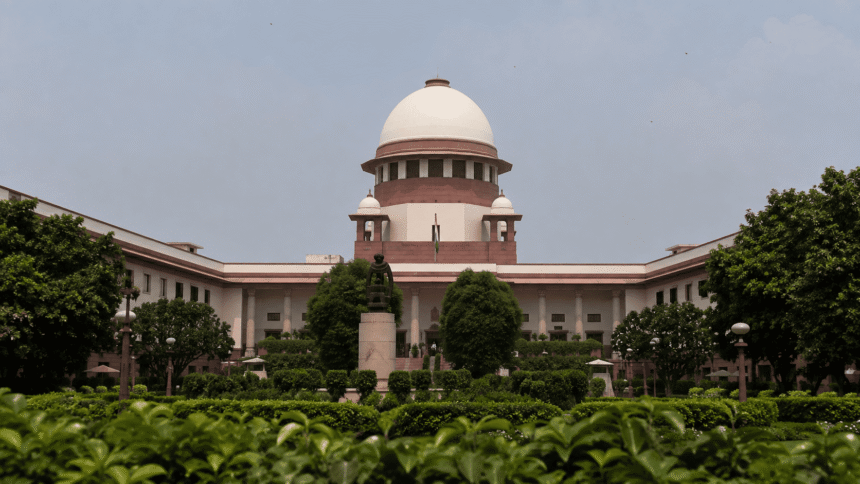

The Union government’s decision to oppose the introduction of a creamy-layer exclusion within the Scheduled Castes (SCs) and Scheduled Tribes (STs) has once again brought one of India’s most complex constitutional debates before the Supreme Court. Responding to a batch of petitions, the Centre argued that settled judicial precedents have consistently held that the principle of creamy layer, which applies to Other Backward Classes (OBCs), cannot be extended to SCs and STs because the historical basis of their reservation is fundamentally different.
At first glance, the government’s position appears to rest on established constitutional doctrine rather than political preference. Reservations for SCs and STs were designed to remedy centuries of untouchability, social exclusion, and structural discrimination that cannot simply be measured through income or occupational status. The Supreme Court itself has repeatedly distinguished caste-based exclusion from the backwardness addressed under the OBC category.
Yet the litigation illustrates a broader dilemma that Indian policymakers have struggled to confront. Reservations are no longer debated solely as instruments of historical justice. They have also become central to questions of equitable distribution within disadvantaged communities. Petitioners argue that excluding relatively better-off families from reservation benefits could allow opportunities to reach those who remain the most marginalized. The government, however, maintains that economic advancement alone does not erase caste-based discrimination or social stigma.
This disagreement reflects the unique character of India’s affirmative action framework. Unlike many systems that primarily assess present economic disadvantage, India’s constitutional architecture recognizes that discrimination often survives even after improvements in education, income, or professional status. A member of a Scheduled Caste who enters the civil services or becomes financially secure may still encounter forms of social exclusion rooted in caste identity rather than material deprivation.
The continuing debate also reveals the challenge of balancing constitutional continuity with changing social realities. Over the decades, India’s reservation policy has expanded alongside demographic change, educational competition, and increasing demand for public employment. Every attempt to revisit its design inevitably raises questions about whether reforms would strengthen social justice or weaken protections that remain necessary.

The government’s reliance on judicial precedent is therefore significant. It signals an effort to preserve a constitutional distinction that has long shaped reservation jurisprudence. At the same time, the petitions demonstrate that public debate over affirmative action has entered a new phase, where questions of intra-group equity are becoming increasingly prominent.
Whatever the Supreme Court ultimately decides, the case underscores that reservation policy cannot be viewed as a static constitutional settlement. It remains an evolving response to deeply rooted inequalities that continue to shape access to education, employment, and public institutions. The real challenge is not merely deciding whether the creamy-layer principle should apply to SCs and STs. It is determining how a constitutional democracy can ensure that affirmative action continues to reach those who need it most while remaining faithful to the historical injustices it was created to address.
The outcome of this litigation will therefore have consequences extending beyond legal doctrine. It will influence how India understands equality, social justice, and the continuing legacy of caste discrimination in the decades ahead.