
The National Council of Educational Research and Training has reconstituted the Textbook Development Team for Class 11 and Class 12 Political Science. The new 20 member panel has been tasked with rewriting the books under a mandate that emphasises cultural rootedness Indian knowledge systems and inclusion. At least four members of the team have documented associations with the Rashtriya Swayamsevak Sangh its student wing the Akhil Bharatiya Vidyarthi Parishad or organisations linked to the Sangh Parivar and the Bharatiya Janata Party.
The team Is headed by Sandeep Shastri academic and political analyst who is vice president of Nitte University in Karnataka. The Class 11 textbook is to be completed by November 2026 and the Class 12 book by July 2027. According to the NCERT notification the panel will work under the guidance of curricular area groups on social science languages Indian knowledge systems and related themes. It is also expected to review the books for the integration of cross cutting themes including cultural rootedness and Indian knowledge systems.
Among the members is Yadunath Deshpande now a senior consultant with the Ministry of Education. ABVP records identify him as a former joint state organising secretary for Maharashtra and later as an organising secretary in the organisation’s Mumbai Konkan structure. His professional profile also describes him as a political consultant for the BJP. Another member Prashant Divekar is associated with Jnana Prabodhini a Pune based institution founded by an RSS pracharak. Divekar has described his educational approach as rooted in Bhartiya educational philosophy and has contributed to the National Curriculum Framework.
Vandana Mishra professor at Jawaharlal Nehru University’s Centre for Political Studies is a former national secretary of the ABVP. Ravi Rameshchandra Shukla associate professor at JNU’s Centre for Comparative Politics and Political Theory has served on the editorial board of the Indian Journal of Democratic Governance published by the Indian Institute of Democratic Leadership which operates under the RSS affiliated Rambhau Mhalgi Prabodhini. Shukla’s research includes work on cultural and spiritual nationalism including an ICSSR funded project on the role of festivals such as the Kumbh and Magh Mela in shaping national identity.
The remaining members of the panel include academics from JNU Delhi University IGNOU National Law University Chanakya University Jindal Global Law School Pondicherry University Utkal University and other institutions along with school teachers and NCERT faculty. Vanthangpui Khobung and Subhash Singh of NCERT serve as member coordinator and co coordinator.
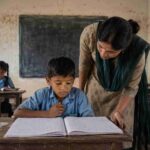
The composition of the team raises direct questions about the direction of political science education at the senior secondary level. Political science textbooks shape how students understand the Constitution democracy institutions and the history of political ideas in India. When the body responsible for writing those books includes individuals with organisational histories in the ABVP and professional links to the BJP the boundary between academic expertise and ideological preference becomes difficult to maintain.
Previous revisions of NCERT books under the current dispensation have already drawn criticism for selective deletions and altered emphasis in history and political science. The new panel’s explicit mandate to integrate cultural rootedness and Indian knowledge systems continues that trajectory. The presence of members whose careers have been intertwined with Sangh affiliated organisations suggests that the integration will lean towards a particular interpretation of Indian culture and nationalism rather than a plural and contested one.
The process by which textbook teams are constituted has rarely been transparent. In this case the inclusion of a serving Ministry of Education consultant with a background as a BJP political adviser and former ABVP office bearer makes the institutional distance between the government the ruling party and the textbook writing process even narrower. Political science as a discipline depends on critical engagement with power ideology and institutions. A panel that draws significantly from networks associated with the ruling establishment risks producing material that explains power more than it interrogates it.
More Read

The deadlines are tight. The Class 11 book Is expected within months. Once published these textbooks will be used by students across the country for years. The decisions taken by this team will therefore have a long life in classrooms. The question is whether the books that emerge will equip students to understand Indian politics in its full complexity or whether they will primarily reflect the cultural and political priorities of the networks now represented on the panel. The composition of the team already points towards the latter possibility.