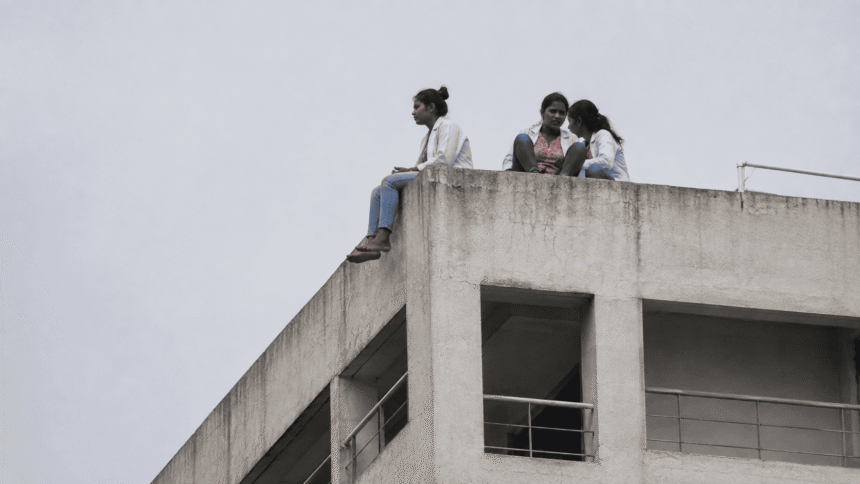

Three nursing students in Bhopal climbed onto a six-storey building on Wednesday with the intention of attempting suicide during an ongoing protest over unresolved problems surrounding their education, examinations, results, degrees and professional registration. The students were eventually brought down after officials intervened and persuaded them to abandon the attempt.
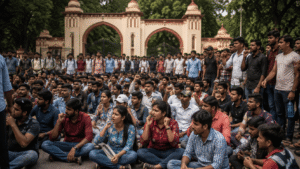
The students have been protesting since August 8 outside the Madhya Pradesh Nursing Council, raising seven demands concerning pending examination results, examinations, degrees, registration, recognition disputes and scholarships. According to reports, some students say their careers have remained stalled for nearly six years.
The escalation in Bhopal comes against the backdrop of a long-running crisis in Madhya Pradesh’s nursing education system. Questions over the regulation and recognition of nursing colleges have persisted for years. In 2024, the Central Bureau of Investigation examined hundreds of nursing institutions in Madhya Pradesh after concerns were raised over inadequate infrastructure and faculty. An investigation found that nearly half of the colleges examined were declared ineligible, while only 169 of the institutions assessed at that stage met the required standards.
The consequences of regulatory failures are ultimately borne by students. A young person can spend several years pursuing a professional qualification, only to find examinations, results, recognition or registration caught in administrative disputes. For students whose families have invested their savings in professional education, such uncertainty can mean years lost without a clear path into employment.
The Bhopal incident is particularly alarming because the students’ protest was not about an abstract policy disagreement. They were demanding clarity over qualifications and careers they had already spent years pursuing. One of the students was heard saying, “Zindagi barbaad ho gayi, kya karenge ji kar?”, which captures the extent to which an institutional dispute can become an existential crisis for young people whose education and future are inseparable.

The wider national figures make the incident even more disturbing. According to the National Crime Records Bureau’s 2024 data, India recorded 14,488 student suicides in 2024, the highest figure on record. The number increased 4.3% from 13,892 in 2023 and 62.2% from 8,934 in 2015. Between 2015 and 2024, 115,850 students died by suicide. Student suicides accounted for 8.5% of all suicides recorded in India in 2024.
Madhya Pradesh accounted for 10% of India’s student suicides in 2024, with 1,447 cases, placing it third among states after Maharashtra and Uttar Pradesh.
These figures should make incidents such as the Bhopal protest a matter of governance, not merely law and order. When students encounter delayed examinations, disputed recognition, administrative uncertainty or prolonged waits for results and degrees, the state cannot respond only after a crisis has erupted.
More Read

The question is not simply why three students climbed a building. It is why they reached a point where attempting suicide appeared to them to be a way of making their demands impossible to ignore.
Removing an official after a crisis may provide an immediate political response, but it does not repair a system that allowed students to remain trapped for years. What is required is accountability before desperation reaches the point witnessed in Bhopal. Students should not have to put their lives at risk before the institutions responsible for their education begin listening.