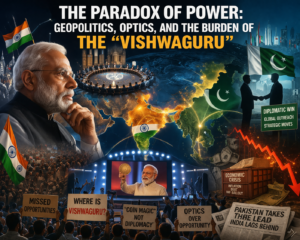


The political machinery of the “Mainstream State” has spent the last few weeks in a state of hyper-nationalist overdrive. Celebrating the anniversary of Operation Sindhoor, the ruling elite projected an image of absolute, uncompromising global dominance.
Still, a well-developed and intellectually rigorous democracy should not judge the state of the country by political billboards but only by cold, macroeconomic data. After crunching the financial consequences of these staged dramas, a rather disturbing fact comes to light.
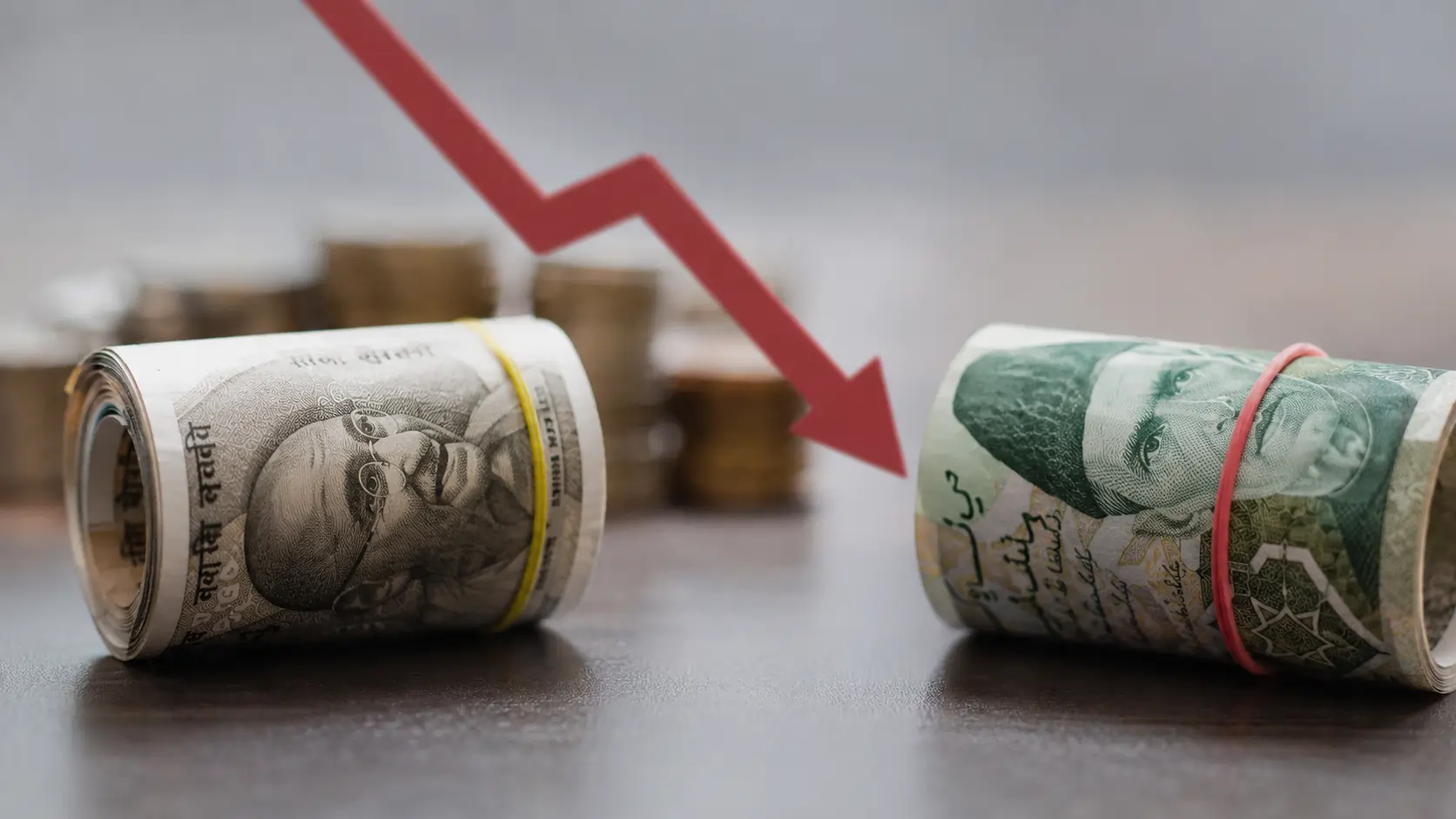
As per a recent astonishing report, Indian Rupee lost value against Pakistani Rupee by about 12% since the military operation was initiated. But, it is not simply a fluctuation of the market, rather a clear indictment of how domestic vote-bank politics are consciously dismantling India’s economic sovereignty.
The Bombshell Data: The 12% Currency Crash
To comprehend the gravity of this crisis, we must look directly at the comparative currency markets over the first quarter of 2026.
More Read

A detailed financial report highlights a catastrophic trend. In the weeks succeeding the highly publicized Operation Sindhoor, the Indian currency experienced severe downward pressure.
The data unequivocally shows that the Indian Rupee fall against Pakistani Rupee represents a nearly 12% depreciation.
For a government that is always busy promoting the “Vishwaguru” (Global Leader) and “Double Engine” economic narratives, it is really an outright, unmistakable humiliation that its currency is largely outperformed by a historically struggling neighboring economy.
More Read

Why Did the Currency Collapse?
The mechanics of this currency crash are deeply tied to the political strategy of the ruling establishment.
- Manufactured Instability: Capital markets demand predictability. By utilizing aggressive border posturing to secure the Bihar assembly elections, the state intentionally introduced massive geopolitical instability into South Asia.
- Capital Flight: Foreign Direct Investment (FDI) and institutional investors instantly retreat when a region is pushed to the brink of conflict for political optics.
- Market Panic: The loss of investor confidence directly triggered the Indian Rupee fall against Pakistani Rupee, eroding billions in national wealth.
The Electoral Calculus Over Economic Reality
The “Mainstream State” is acutely aware of the economic risks associated with war hysteria. Yet, they proceeded with the hyper-nationalist narrative because the domestic political calculus demanded it.
In early 2026, the administration was suffocating under a massive wave of anti-incumbency in the Hindi Heartland.
- Youth unemployment in Bihar had breached 19.1%.
- The catastrophic UP Police and RO/ARO paper leaks had destroyed the futures of over 70 lakh capable students.
- The middle-class was revolting against bureaucratic tyranny, such as the exorbitant Smart Meter rollouts.
The political elites were in dire need of a shield. The launch of Operation Sindhoor was an ideal means to create a diversion that would evoke people’s emotions. Through their cunning manipulation of the youths’ outrage, they managed to keep their political positions for a while Yet they didn’t think twice about destabilizing the Indian economy in the process.
More Read

The Taxpayer’s Burden: The Invisible Inflation Tax
The macroeconomic fallout of the Indian Rupee fall against Pakistani Rupee does not stay confined to stock market tickers. It heavily impacts the daily survival of the ordinary citizen.
A 12% fall in the value of the national currency will send import prices soaring. Since India depends quite a lot on the import of crude oil, electronics, and other basic raw materials, such a currency break would be a direct cause of very serious and inflation that is not controlled by law.
Who absorbs this economic shock? The General Category, middle-class taxpayer.
The same people who are even urged to cheer the loudest at the political rallies, are in fact quietly made to pay an “inflation tax” when they visit the supermarket or the petrol pump. It is really the state that compels the tax payer to foot the bill for the deficit in its own electoral PR campaigns through extra spending.
The Illusion of ‘Atmanirbhar Bharat’
The ruling establishment often resorts to slogans like “Atmanirbhar Bharat” (Self-Reliant India) to showcase India’s economic prowess. But genuine self-reliance comes from investing in domestic research, having transparent examinations, and developing human capital.
At present, India allocates a meagre 0.65% of its GDP to Research and Development (R&D). Rather than blowing our trumpets and nurturing our best brains, the government, by way of never-ending 50%+ demographic quotas and widespread corruption, actually forces the talented ones to leave the country.
At present, India allocates a meagre 0.65% of its GDP to Research and Development (R&D). Rather than blowing our trumpets and nurturing our best brains, the government, by way of never-ending 50%+ demographic quotas and widespread corruption, actually forces the talented ones to leave the country.
Conclusion: Demanding Economic Accountability
As Uttar Pradesh prepares for the monumental 2027 Assembly elections, the electorate must view this economic data as a critical warning sign.
The tremendous decline of the Indian Rupee against Pakistani Rupee is the clearest evidence that politics of emotional distractions has a very heavy financial cost. A well-established democracy should definitely distinguish between its appreciation for the non-political role of the military and the manipulative, harmful tactics of the politicians.
So let’s not accept national security as a mere product for sale, the middle-class taxpayer has to firmly call for a government that gets its authorization by perfect home rule, strong job generation, and unwavering economic stability and definitely not by the hazardous, disruptive election warmongering show.