

India’s largest state by population, Uttar Pradesh, is again a focus of the nation’s concern about the treatment of religious minorities. While official message usually point to “better law and order,” actual data on the ground and disclosures in the parliament depict a more disturbing picture one of a country witnessing more complaints, declining faith in the institutions, and rising fear among minorities.
In 2024, the Union Ministry of Minority Affairs reported that almost 35% of all discrimination complaints in India, i.e. 482 out of 1,390 cases, originated from the state of Uttar Pradesh alone. Based on Allahabad-based rights group, Major complaints against police, land disputes, and law and order issues are the main reasons for the grievances. (www.ndtv.com)
Despite these data, the state government carries on with a narrative of stability. Yet, the figures point to a very disturbing question: why is it that the state with “improving governance” at the very same time produces the highest number of minority distress complaints in India?
Institutional Trust Deficit: When Complaints Become a Pattern
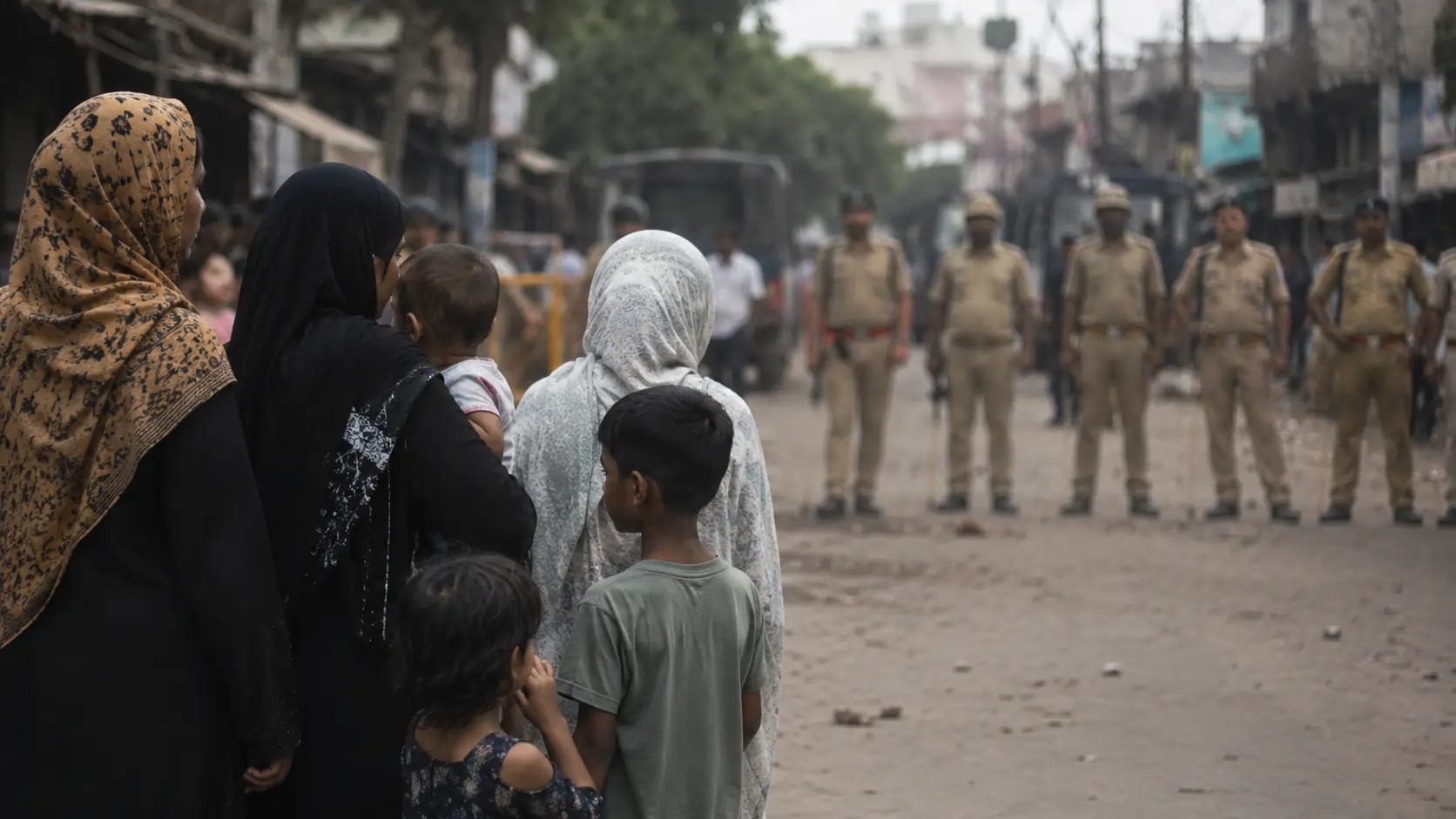
The high number of complaints from Uttar Pradesh is more than just a figure it actually represents a bigger problem with how much people trust their institutions. Out of the 482 complaints made from the state, a large part even accuse the police and local government, which shows that minorities don’t just suffer from social tensions but also from institutional resistance when they ask for justice.
Documents given to Parliament indicate that 195 cases were connected to law and order issues, while several ones were about disputes with police officials and land-related conflicts.
This results in minorities being caught in a cycle of fear: lodging complaints frequently calls for dealing with a system that they consider to be partial or non-respondent. The human rights community has in fact done a number of times caution that there is a lot of under-reporting because of the fears of the possible consequences, This way the real amount of discrimination may be far larger than the officially reported one.

Communal Climate and Rising Hate Narratives
Civil society reports and research groups have not only pointed out administrative complaints but also highlighted a worrying increase in hate-related incidents in India, with Uttar Pradesh often mentioned as one of the most affected areas.
Records monitoring hate speech incidents in 2024 reveal that there were more than 1,100 reported cases at the national level among which Uttar Pradesh was one of the main contributors of such incidents. These events are usually found in places stirred by politics – marches, religious functions, and digital sites – where hate speech is unleashed and can very quickly influence and organize people’s attitude.
Besides, there was an overall increase in communal riots and inter-religious hostilities in India. Several sources have reported a rise in polarization and hate tactics directed towards religious minorities.
More Read
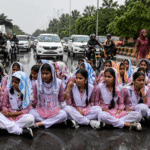
In such circumstances, the minorities continue to be isolated by rising societal hostility and lack of efficient safeguards, which deepens their sense of vulnerability.
Between Data and Reality: Governance Claims vs Ground Experience
Officially-sponsored research often shows in the aggregate crime scenario in Uttar Pradesh that there has been a fall in various types of violence and riots. Still, those who are against such reports contend that these indicators at the macro level rarely portray the actual conditions of the most at-risk sections of the society.
Minority-related issues continue to be A lot higher versus other communities, even if the general trend in crimes has been depicting a downward movement. This is a strong indication that the overall enhancement of law and order measures does not, by any means, lead to the equal safeguarding of all individuals.
The paradox couldn’t be more glaring: For one thing, governmental statistics show “a safer Uttar Pradesh” but minority grievance data reveal large-scale distrust, continuous disagreements and unresolved complaints.
Conclusion
Uttar Pradesh is at a very crucial point in its history today. Based on official statistics, it is a role model for better governance and lower crime rates. Yet, the continued accumulation of minority grievances – almost one-third of the total number in the whole country – reveals that there is a much bigger problem with governance.
Unless the faith in the institutions is renewed and the safety of the citizens is guaranteed without any discrimination, the difference between the figures and the facts on the ground will only become more pronounced. For the minority communities in Uttar Pradesh, the issue is not simply about maintaining the law and order situation but rather if the system recognizes them as equal partners in justice.