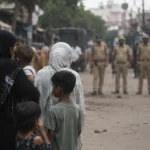


The death of a 24-year-old woman in Gautam Buddha Nagar has once again exposed the brutal reality that many Indian women continue to face after marriage. According to her family, she was not the victim of an accident. She was allegedly beaten by her in-laws over dowry demands, suffered at least 14 to 15 visible injuries, and was then thrown from the terrace of her three-storey matrimonial home.
The allegations are chilling. They also raise a larger question that India can no longer ignore: how many women must die before dowry violence is treated as a national emergency rather than a routine police statistic?
In a country that claims to be a rising global power, thousands of women are still tortured, harassed and killed each year because their families cannot satisfy the financial demands of their husbands and in-laws. The tragedy in Uttar Pradesh is not an isolated incident. It is part of a deeply entrenched system of patriarchal violence that continues despite strict laws, constitutional guarantees and repeated political promises.
What Happened in Gautam Buddha Nagar?
According to the victim’s father, Sanjay Nagar, the post-mortem report revealed multiple injuries on his daughter’s body.

He stated:
“According to the post-mortem report, this girl was beaten, and she had 14–15 injuries, and then she was thrown off the roof. She was thrown from the terrace after being beaten to death. Also, even though there was a hospital nearby, she was taken to a hospital 20 kilometres away from her home.”
This allegation suggests not only severe physical abuse, but also possible attempts to delay treatment and obscure evidence.
More Read
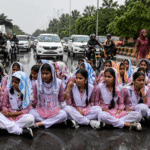
The fact that she was allegedly transported to a hospital much farther away, despite the availability of a nearby facility, raises legitimate questions:
- Why was immediate emergency care not sought?
- Was time deliberately wasted?
- Did the accused attempt to construct a false narrative of suicide or accidental fall?
These are questions investigators must answer transparently.
Dowry Deaths Remain a National Crisis
India has had anti-dowry laws for decades, yet dowry-related violence remains widespread.
According to the National Crime Records Bureau, more than 6,000 dowry deaths are reported annually in India. This means roughly 16 to 18 women die every day because of dowry-related abuse. Thousands more face harassment, assault and coercion that never receive national attention.
These numbers likely understate the true scale of the problem because many cases are disguised as suicides, kitchen accidents or unexplained falls.

Uttar Pradesh: The Epicentre of Violence Against Women
Uttar Pradesh has consistently recorded some of the highest numbers of crimes against women in India. As India’s most populous state, Uttar Pradesh often leads the country in:
- Dowry deaths
- Domestic violence
- Cruelty by husband or relatives
- Sexual violence
- Crimes against Scheduled Castes and women from marginalized communities
This is particularly significant because the state has been governed since 2017 by Yogi Adityanath and the Bharatiya Janata Party, which frequently project an image of strict law and order.
Yet the persistence of such crimes raises concerns about whether state institutions are effectively protecting women inside their own homes.
Patriarchy Behind Closed Doors
Dowry violence is not simply a criminal issue. It is rooted in a social system that treats women as economic liabilities.
In many marriages, the bride’s family is expected to provide cash, jewellery, vehicles or property. Failure to meet escalating demands can lead to humiliation and abuse. Women are pressured to remain silent to preserve family “honour.”
The result is a structure where marriage becomes a mechanism of extraction rather than partnership. One fact must always be unmistakably clear that women are not commodities to be bought, negotiated over or punished for financial inadequacy.
Laws Exist, But Enforcement Remains Weak
India has several laws intended to combat dowry violence, including:
- Dowry Prohibition Act, 1961
- Section 80 of the Bharatiya Nyaya Sanhita (formerly Section 304B IPC)
- Protection of Women from Domestic Violence Act, 2005
Despite these legal tools, implementation remains inconsistent.
Common failures include:
- Delayed FIR registration
- Pressure for private settlement
- Poor forensic investigation
- Witness intimidation
- Slow trials
For many victims, justice arrives too late, if it arrives at all.
Why Women Often Cannot Escape
Observers frequently ask why abused women do not simply leave violent marriages. This question ignores the realities many women face. The barriers include financial dependence, social stigma attached to divorce, emotional pressure from families, concern for children and fear of retaliation among many others.
In such circumstances, a woman may remain in an abusive environment not because she lacks awareness, but because society offers her few viable alternatives.
Political Symbolism Versus Structural Reform
Successive governments have announced women’s welfare schemes and public campaigns promoting female empowerment.
However, true empowerment requires more than slogans. It requires:
- Fast and impartial investigations
- Functional shelters and legal aid
- Economic independence for women
- Social transformation in attitudes toward marriage and inheritance
It is argued that while political leaders celebrate women’s achievements in public forums, many women continue to face extreme violence in private spaces with insufficient institutional support.
The Hospital Question and the Need for Accountability
One of the most troubling aspects of this case is the family’s allegation that the victim was taken to a hospital approximately 20 kilometres away, despite a nearer medical facility.
If established, this detail could indicate:
- Delay in treatment
- Possible tampering with the timeline
- An effort to influence the narrative surrounding her death
Investigators should examine call records, CCTV footage, transport timelines and statements from hospital staff for a swift comprehensive investigation. A rigorous forensic inquiry is essential to ensure that evidence is preserved and responsibility clearly assigned.
A Demand for Justice
Every dowry death is a reminder that gender equality remains incomplete.
A genuinely feminist response requires society to affirm that:
- Marriage does not transfer ownership over a woman’s life.
- Economic demands are not a cultural right.
- Domestic abuse is a public concern, not a private matter.
- Women must have the economic and social freedom to leave unsafe homes.
The life of a young woman cannot be reduced to a negotiation over money and status.
Beyond Outrage
The death of this 24-year-old woman in Gautam Buddha Nagar is more than a local crime report. It is a stark indictment of the continuing intersection of patriarchy, dowry and institutional weakness.
Her father’s allegation that she suffered 14 to 15 injuries before being thrown from a rooftop points to an act of extraordinary cruelty. Whether these allegations are proven in court, they demand a thorough and transparent investigation.
India cannot claim progress while thousands of women remain vulnerable to violence inside their own homes. Laws exist. Public awareness exists. Yet the persistence of dowry deaths shows that enforcement and social change remain inadequate.
Justice in this case should not end with arrests alone. It should renew a broader national commitment to dismantling the structures that continue to place women’s lives at risk.