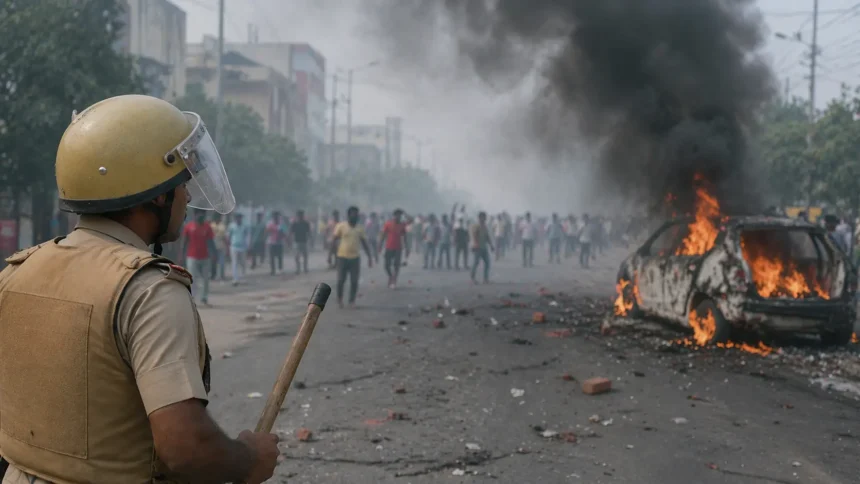

Thousands of contractual garment workers turned Noida’s Phase-2 and Sector-62 into a site of chaos today. Protesters vandalised vehicles, set some on fire, damaged police vans, and pelted stones, causing massive traffic disruptions across Delhi-NCR. The unrest, ongoing for 3-4 days, escalated despite heavy police deployment and administrative assurances issued just a day earlier.
This outbreak exposes deep cracks in Uttar Pradesh’s much-touted industrial growth story under the Yogi government. Workers demanded wage parity with neighbouring Haryana, where a 35% minimum wage hike took unskilled pay to ₹15,220–19,000 per month effective April 1. In contrast, many Noida garment workers earn around ₹13,000 or less for 12-hour shifts, fuelling resentment over cross-state disparities and rising living costs.
Timeline and Escalation of the Noida Protest
The agitation began peacefully in the Hosiery Complex of Phase-2, a hub for garment and hosiery export units. On Friday, around 1,000 contractual workers from nearly 300 factories gathered to press for higher wages, weekly offs, double overtime pay, bonuses, and timely salaries. By Monday morning, the crowd swelled to thousands, blocking key roads including the Dadri Road, Noida-Greater Noida Elevated Road, and routes near Sector-62.
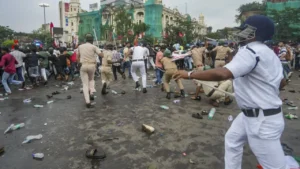
Violence erupted as police clashed with the protesters. Reports confirm vehicles, including private cars and at least one police vehicle were torched, properties vandalised, and stones pelted. No major injuries or arrests were immediately reported, but traffic jams paralysed large parts of Delhi-NCR, affecting commuters on the Delhi-Meerut Expressway and other corridors.
More Read

The Noida administration had announced measures yesterday, including compulsory weekly offs, double pay for overtime, annual bonuses before November 30, salary disbursement by the 10th of each month, medical cover, and a complaints mechanism. Despite these promises, workers rejected them as insufficient compared to Haryana’s hike, leading to the violent clashes.
Wage Disparity Comparison
Haryana’s recent 35% minimum wage revision for unskilled, semi-skilled, and skilled workers has created a visible border divide. In industrial hubs like Manesar and Gurgaon, workers now enjoy higher pay amid rising costs linked to global energy disruptions. Noida workers, many of them women from garment units, argue they perform similar labour-intensive work but receive significantly lower compensation, often as low as ₹9,000-13,000 monthly for long shifts.
More Read
This disparity is not accidental. Uttar Pradesh has aggressively promoted itself as an investment destination with lower labour costs to attract factories shifting from higher-wage states. However, this model relies on suppressing wages, which now risks backfiring as workers compare conditions across state lines. The protest highlights how competitive federalism in India often translates into a race to the bottom for labour rights.
Government Response and Broader Pattern of Labour Unrest
The Yogi government responded with heavy police deployment and warnings to factories against layoffs or wage delays. District officials, including the DM and police commissioner, held meetings with industry representatives. Yet the quick escalation into violence suggests these measures failed to address root grievances.
This incident fits a larger pattern in Uttar Pradesh. Labour-intensive sectors like garments and hosiery employ lakhs of contractual workers with limited protections. Promises of industrial growth with Noida and Greater Noida as key hubs have not translated into improved living standards for the workforce. Rising inflation, disrupted supply chains from the ongoing global energy crisis, and stagnant real wages have pushed workers to the edge.
Experts argue the government prioritises investor-friendly policies over worker welfare. While Uttar Pradesh boasts improved ease of doing business rankings, enforcement of labour laws remains weak. Contractualisation allows factories to keep costs low but leaves workers vulnerable to exploitation, with little bargaining power.
Data from recent years shows increasing labour disputes in the NCR region. Similar protests erupted in Haryana’s Manesar recently, forcing the state to concede the wage hike. Noida’s violence indicates the contagion effect: workers will no longer accept being treated as second-class compared to counterparts just across the border.

Implications for Uttar Pradesh
Noida’s Hosiery Complex and surrounding industrial areas employ tens of thousands, many migrants and women supporting families. Prolonged unrest risks factory shutdowns, job losses, and supply chain disruptions for export-oriented units. With violence damaging property and creating panic, investor confidence could take a hit.
The protest also exposes governance gaps. Heavy police deployment controls the streets but fails to resolve underlying economic discontent. Assurances of weekly offs and double overtime are welcome but come as reactive measures rather than proactive policy. If similar unrest spreads to other industrial clusters in Uttar Pradesh, it could undermine the state’s development narrative.
This all reflects failures in balancing growth with equity. Uttar Pradesh has seen infrastructure push and law-and-order improvements on paper, yet ground-level economic distress among the working class persists. Contractual garment workers, often from marginalised backgrounds, bear the brunt of global and domestic cost pressures without adequate safety nets.
Urgent Need for Structural Reforms
The Noida violence underscores that wage suppression is not sustainable. The government must move beyond ad-hoc assurances to systemic changes: regular minimum wage revisions aligned with neighbouring states, stricter enforcement of labour laws, and mechanisms for genuine tripartite negotiations involving workers, industry, and administration.
Failure to address these issues risks more frequent and intense protests. With thousands already on the streets and traffic disruptions affecting the entire NCR, the economic cost of inaction is rising. The Yogi administration’s focus on optics and investment attraction must be matched by genuine worker welfare measures to prevent industrial harmony from unravelling.
According to reports, the protest turned violent with vehicles set on fire and stones pelted in Phase-2 and Sector-60 areas, highlighting the depth of worker frustration over wage parity.
A Wake-Up Call for Labour Policy in Uttar Pradesh
The violent escalation in Noida Phase-2 over wage demands reveals deep discontent among contractual garment workers. Triggered by Haryana’s 35% hike, the protests have exposed how Uttar Pradesh’s low-wage industrial model creates resentment and instability.
While police have restored order for now, the underlying issues including wage disparity, long hours, and poor conditions remain unaddressed. The Yogi government faces a critical test, can it deliver inclusive growth that benefits workers, or will it continue prioritising investor appeasement at the cost of labour peace?
Without meaningful reforms, incidents like the these clashes will likely multiply, undermining the state’s industrial ambitions and eroding public trust. True development requires not just factories, but fair wages and dignity for those who run them.