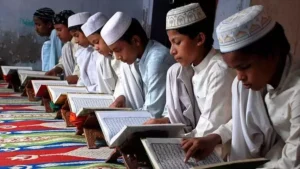
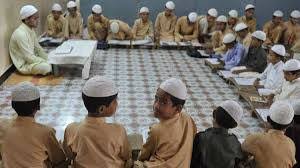


The draft madrasa regulation framework introduced in Uttarakhand has led to an intense debate on the issue of adequate check on the state vis–vis safeguards for minority institutions. The All India Muslim Personal Law Board, in particular, has raised concerns over irreverent encroachment of religious identity.
At the center of debate is the government proposal to require registration of madrasas under the state’s education department and to regulate parts of their curriculum and administration. Proponents see the policy as a move toward greater standardisation and accountability in education, within which all institutions, whether religious or secular, must adhere to prescribed standards.
This however is challenged by the critics including the AIMPLB who argue that the powers given to the State to regulate the entry of ‘any person or class of persons’ into their religious institutions (Articles 25 & 26) and to establish and administer educational institutions of their choice (Articles 26 & 30), would breach those rights granted to minorities and religious groups under the Constitution.
This is compounded by recent political developments in the state such as the sealing of a number of madrasas, and moves to bring the syllabus of these institutions in line with the State Education Board S.E.B. These have heightened anxieties among communities about policy directions and institutional autonomy.
At the same time, the state argues that reforms were needed so that standards could be consolidated and vigilance strengthened. This is a complex national issue how to be modern and modernising yet regulate and unify an education service without sectoralising the pluralism that reflects religious and cultural diversity?

Given the case before the courts, the ultimate shape of the policy may be determined through judicial intervention. The results will certainly impact the situation not solely in Uttarakhand, but also in the emerging dynamic between the state and minorities’ education institutions throughout India.