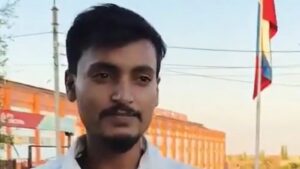
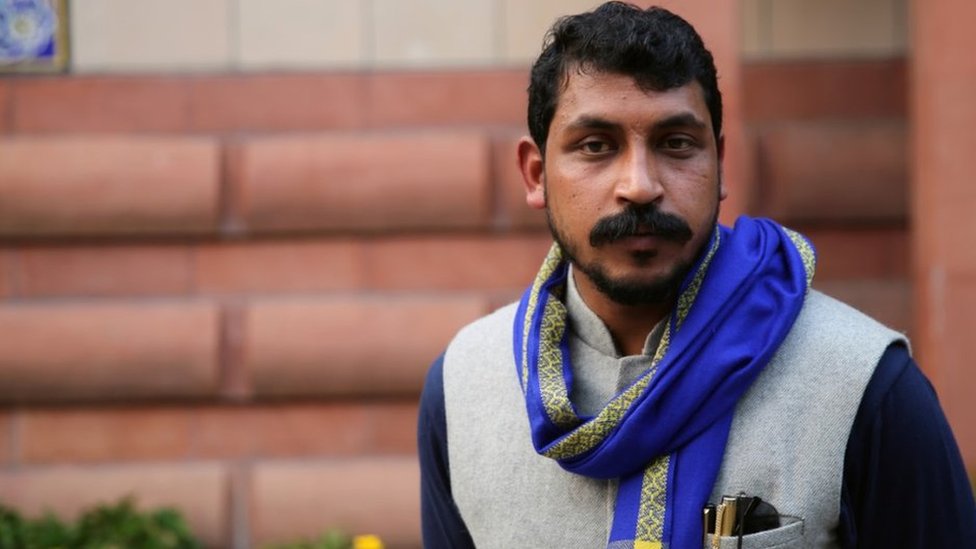


Bhim Army chief Chandrashekhar Azad has reignited a long-dormant debate by publicly demanding the restoration of separate electorates for Dalits. Speaking recently, Azad argued that the existing system of reserved seats in legislatures has been largely captured by upper-caste dominated political parties, leaving Dalit voters with little real influence over candidate selection or policy priorities. He claimed that only separate electorates, where Dalits vote exclusively for Dalit candidates, can ensure genuine representation rather than token nominees chosen by dominant party high commands.
This demand has stirred strong reactions across the political spectrum, particularly in Hindi belt states where Dalit assertion has historically clashed with majoritarian politics.
Historical Roots: The Poona Pact and Ambedkar’s Unheeded Warning
Dr. B.R. Ambedkar had strongly advocated for separate electorates for Dalits during the Round Table Conferences in the early 1930s. He believed this was essential to prevent upper-caste domination over Dalit political life. However, the Poona Pact of 1932, signed under intense pressure from Mahatma Gandhi’s fast, replaced separate electorates with the current system of reserved seats within joint electorates.
Ambedkar accepted the compromise reluctantly but repeatedly warned that without separate electorates, Dalits would remain politically subordinated. Ninety-four years later, sections of the Dalit community feel his apprehensions have been proven correct. Many Dalit leaders and intellectuals argue that the joint electorate system has allowed dominant parties to control reserved constituencies by selecting candidates who are loyal to party leadership rather than accountable to Dalit voters.
Persistent Dalit Under-Representation in Power Structures
Despite constitutional reservations, Dalits continue to face severe under-representation in real centres of power. According to the DoPT Annual Report 2024, Scheduled Castes occupy only 12-13% of Group A central government posts (senior bureaucratic positions), despite constituting 16.6% of the population as per the 2011 Census.
In the higher judiciary, Dalit presence remains negligible. As of early 2026, only a handful of Dalit judges serve in High Courts, and representation in the Supreme Court has historically been minimal. In the private sector and mainstream media, Dalit representation is virtually non-existent. A 2023 study on corporate leadership found almost no Dalit CEOs in India’s top 500 companies.
More Read

Even within reserved parliamentary seats, most Dalit MPs are chosen by national party leadership. This has led to widespread perception within Dalit circles that many reserved seat winners function more as party functionaries than independent voices for their community. Data from the Trivedi Centre for Political Data shows that independent Dalit political assertion remains limited in national politics.
BJP’s Approach and Dalit Perceptions of Political Capture
In recent years, the BJP has actively courted Dalit voters through symbolic gestures — installing Ambedkar statues, celebrating Ambedkar Jayanti prominently, and fielding Dalit candidates in reserved seats. However, many Dalit leaders, including Chandrashekhar Azad, allege that the party promotes a “sanitised” version of Ambedkar that downplays his radical anti-caste critique while integrating Dalits into a broader Hindutva framework.
In Uttar Pradesh, where Dalits form over 21% of the population, the BJP has won significant support among non-Jatav Dalit sub-castes. Yet ground-level resentment persists. NCRB data for 2023-24 shows Uttar Pradesh recorded nearly 12,000 cases of crimes against Scheduled Castes. Conviction rates under the SC/ST (Prevention of Atrocities) Act remain below 30% in many districts.
Dalit activists argue that despite increased political visibility, real decision-making power within the BJP remains concentrated among upper-caste leadership. They point out that key portfolios and organisational posts in reserved constituencies are often controlled by non-Dalit party bosses. This has created a perception that reserved seats have been effectively “captured” by major parties, reducing Dalits to vote banks rather than power centres.
Why Dalit Leadership Feels the Need for Separate Electorates
More Read

Large sections of Dalit leadership and intellectuals believe the current reserved seat system has structural flaws. The candidate selection process lies entirely with party high commands, which are overwhelmingly dominated by upper castes. As a result, many Dalit candidates are chosen for their loyalty rather than their ability to articulate community concerns independently.
In today’s majoritarian political climate, where Hindutva ideology seeks to consolidate Hindu identity across caste lines, Dalit leaders fear their community’s distinct political voice is being gradually absorbed and neutralised. Separate electorates, they argue, would allow Dalit voters to directly elect representatives accountable primarily to them, free from interference by dominant caste leadership.
This demand reflects deep frustration with the gap between numerical presence and actual political empowerment. While Dalits have made some gains in local bodies and state assemblies through reservations, their influence at the highest levels of policy-making remains limited. Low conviction rates in atrocity cases, slow implementation of reservations in promotions, and negligible presence in elite institutions reinforce the feeling that the existing system has failed to deliver substantive justice.
Critics of the demand point out practical and constitutional difficulties in reviving separate electorates. However, within Dalit discourse, the call is increasingly viewed as a response to decades of political marginalisation under both Congress and BJP-led dispensations. The persistence of caste-based violence, economic exclusion, and bureaucratic under-representation continues to fuel this sentiment, particularly in states like Uttar Pradesh, Bihar, and Madhya Pradesh.
Chandrashekhar Azad’s demand has reignited debate on whether the Poona Pact compromise has ultimately weakened Dalit political autonomy in independent India.
A Direct Challenge to Majoritarian Politics
Chandrashekhar Azad’s demand for separate electorates is not merely symbolic. It is a sharp critique of how the current political system has reduced Dalits to vote banks while denying them autonomous leadership.
Ambedkar had warned in 1932 that joint electorates would make Dalits politically powerless. Ninety-four years later, low representation in bureaucracy, negligible presence in judiciary and media, and poor conviction rates in atrocity cases confirm his fears.
The BJP’s strategy of promoting a Hindutva-friendly Ambedkar while capturing reserved seats through dependent candidates has made the case for separate electorates stronger than ever.
Conclusion: An Unresolved Question in Indian Democracy
Chandrashekhar Azad’s demand for separate electorates highlights the continuing dissatisfaction among significant sections of the Dalit community with the current system of political representation. Nearly a century after the Poona Pact, many Dalits feel Ambedkar’s warning about political subordination under joint electorates has been validated by persistent under-representation in bureaucracy, judiciary, corporate leadership, and genuine decision-making power.
While the BJP has expanded its Dalit outreach through symbolic politics and welfare schemes, large parts of the community perceive their role as largely ornamental within a majoritarian framework. The call for separate electorates reflects deep disillusionment with a system that ensures numerical presence but often denies substantive political agency.
Whether this demand gains wider traction or remains a fringe voice will depend on how effectively existing institutions address Dalit concerns regarding representation, security, and empowerment. For now, it stands as a sharp reminder of the unfinished nature of social and political justice in India’s democracy.