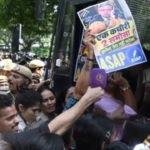
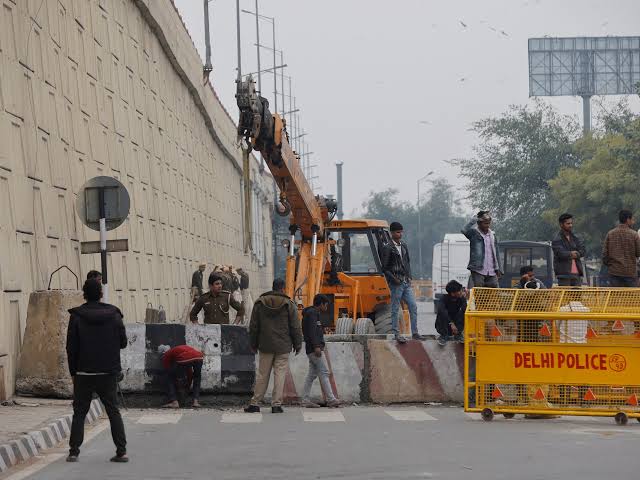

Delhi is preparing for a protest, and its people already are paying the price. The capital is now a labyrinth of barricades, diversions and checkpoints, ahead of the planned demonstration by the Cockroach Janta Party at Jantar Mantar on October 10. Walk or drive through the city this week, and you will also hear a regular whirl of calls to people trying to dissuade them from joining the protest. The disruption is genuine and mainly on those who are not involved in the protest.
The magnitude of the response is remarkable. The number of CAPF personnel deployed reportedly includes 23,000 personnel and Delhi Police personnel is 20,000. The additional deployment has now been permitted from Oct 8 to 12 and greater vigilance will be maintained on the routes from Uttar Pradesh and Rajasthan, in addition, barricades will be placed at entry points. The state is reacting to a citizens’ demonstration as an invasion that it needs to fend off at the borders.
You can’t just hear it in public, you feel it as well. Police reportedly have been advised to speak to university heads and colleges and urge them to not let students join and to reach out to PG owners in student hubs to dissuade students from joining. It’s the same outside of Delhi. The protest organisers’ spokesperson claimed that the police in Maharashtra’s Chandrapur issued notices to the protest volunteers demanding answers to questions about the motive behind their visit to Delhi and forbidding them from entering the city without permission. Police officials there described such notices as “routine” and “preventative. Routine or not, a citizen who is warned in advance, questioned about travel money and nudged by landlords and college heads is being discouraged to come together before anyone is broken a law.
The price to the common folk is already visible. Heavy traffic disruption yesterday around Connaught Place and the Rajghat caused delays and confusion for commuters, as a huge number of police barricades blocked off roads. This before the protest day itself and the measures could also impact public transport and movement in central Delhi. Think about the people who are stuck: the delivery rider who forfeits pay if he takes an hour off from his job, the patient who is a long way from an appointed hospital in central Delhi, the student who has an exam, the office worker who has no flexible hours and the shopkeeper whose customers can’t get to market. None of them wanted to end up in a political deadlock.
This is not new. In the context of the Agnipath agitation in 2022, Delhi Police blocked the Gurugram-Delhi road in front of Gurugram Railway Station at Rajokari and stopped almost all the vehicles at the border leading to the station. The citizens have also filed suit over this. Barricading was termed as “unnecessary and hazardous” by a petition filed before the Delhi High Court, which has caused massive traffic jams and public inconvenience. It has been a lesson that has been around for years, but the playbook rarely changes.
More Read

The police do have legitimate duties. Attendees are at risk of stampedes on large gatherings and sensitive areas need to be secured. Permission is another matter as well, with the two sides disagreeing on this. It is reported that the Delhi police had not approved, and the organisers state that they had written to the Delhi police and got an acknowledgment. Such a dispute should be resolved in the open, rather than by quiet pressure.
The crux of it is proportionality. Protecting the protest site is another thing. Following the flow of movement from other States, relying on students and their landlords, and sending out announcements to residents to stay home is more than just traffic planning. It threatens to cool down legitimate assembly itself protected by Article 19(1)(b) of the Constitution with reasonable restrictions. A caution that assumes that all potential players are a liability is not reasonable.
It doesn’t take a genius to think of a better way. Authorities may post clear diversion maps ahead of time, maintain open Emergency routes and remove barricades as soon as a diversion is over. They could also make decisions on permission in an open fashion, meaning that the rules will be clear in advance to both organisers and the public.
More Read

A capital city must be capable of dealing with dissent in tandem with its daily life. The price to people’s lives may prove to be higher than the risk the barricades are designed to ward off when the reaction to one demonstration is to surround a large part of the city. Security for the public which can’t distinguish a protester from a patient on their way to a hospital is not serving the public it is supposed to serve.