
For millions of young Indians, especially from Bihar, Uttar Pradesh and eastern India, railway stations are not merely transit points. They are gateways to hope. Every year, lakhs of students leave their homes carrying admit cards, coaching notes and dreams of securing a government job that might lift their families out of economic insecurity.
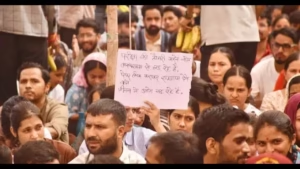
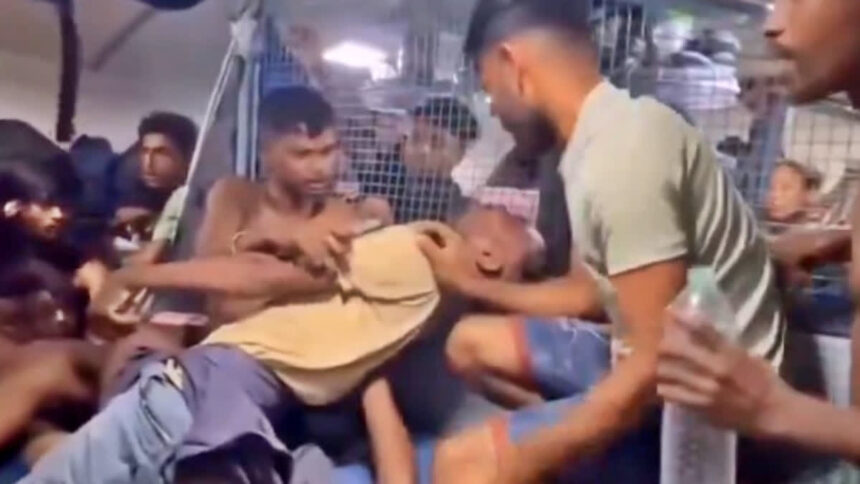
For one young aspirant at Patliputra station in Bihar, that journey ended in tragedy. According to reports and videos that circulated widely on social media, the young man collapsed inside an overcrowded general coach amid severe congestion and delays. Passengers around him appeared helpless as he struggled to breathe in conditions that many witnesses described as unbearable. His death triggered outrage among students, with hundreds reportedly blocking railway tracks in protest and demanding accountability.
Whether viewed as an accident, a medical emergency aggravated by overcrowding, or a symptom of deeper institutional failures, the incident has come to symbolize a painful reality: for countless ordinary Indians, even the pursuit of opportunity has become physically dangerous.
A Death That Represents More Than One Individual
The tragedy at Patliputra cannot be understood as an isolated incident. It reflects the lived experience of millions who rely on India’s general-class railway system.
Every examination season transforms railway stations across Bihar, eastern Uttar Pradesh and Jharkhand into scenes of desperation. Students travel hundreds of kilometres for recruitment examinations, entrance tests and interviews. Many come from families that cannot afford air-conditioned coaches or even sleeper reservations. General compartments become their only option.
More Read

These coaches are often packed far beyond their intended capacity. Passengers stand for hours. Many cannot even sit. During peak periods, human bodies are squeezed together with little room to move, creating conditions that are not merely uncomfortable but potentially dangerous.
In such an environment, one medical emergency can quickly become fatal. The Patliputra death has therefore resonated so deeply because many Indians recognize themselves in the victim. He was not a celebrity or a politician. He was one among millions chasing the promise that hard work and education could provide a better future.
The Two Indias of the Railway System
Modern India frequently celebrates the arrival of high-speed trains, premium services and modern railway stations. Projects like Vande Bharat have become symbols of national pride and technological progress. Government advertisements portray sleek coaches, improved interiors and a vision of a rising India. Yet the reality experienced by the majority of passengers is very different.
More Read
India’s railways carry over eight billion passengers annually, making them among the busiest networks in the world. However, the overwhelming majority travel not in premium trains but in ordinary compartments, where overcrowding has become normalized to such an extent that scenes of passengers hanging from doors and occupying floors no longer generate shock.
This contrast has produced what many critics describe as two parallel railway systems. One India travels in air-conditioned comfort, enjoys onboard catering and experiences modern amenities. The other India travels in overcrowded compartments where basic dignity itself often becomes a luxury.
The Patliputra tragedy exposed this divide with painful clarity.
The Human Cost of Competitive India
The victim was reportedly travelling as part of the vast army of exam aspirants that defines contemporary India. This generation faces extraordinary pressures. Youth unemployment remains high. Estimates from the International Labour Organization and CMIE have repeatedly highlighted the difficulties faced by young job seekers. Competition for government jobs is intense, with thousands sometimes competing for a single position.
Adding to this pressure have been repeated controversies surrounding recruitment examinations and paper leaks. From NEET to various state-level examinations, allegations of irregularities and administrative failures have generated widespread frustration among students.
As a result, lakhs of aspirants are forced into a cycle of endless preparation, repeated examinations and continuous travel. For many families, these journeys represent enormous sacrifices. Parents borrow money, students relocate to coaching hubs and entire households pin their hopes on a single examination. The incident at Patliputra illustrates how even the physical act of reaching those opportunities can become hazardous.

Development and the Politics of Optics
India’s political discourse increasingly revolves around visible achievements. Bullet trains, expressways, airports and premium rail services are showcased as evidence of national transformation.
There is nothing inherently wrong with modernization. Infrastructure development is necessary and desirable. The question raised, however, concerns priorities. Should modernisation primarily benefit those who already possess resources, or should it first address the daily struggles faced by the majority?
The answer becomes difficult when images of overcrowded general compartments coexist with advertisements celebrating luxury trains. This contrast has led many observers to argue that Indian development increasingly prioritises spectacle over equity. A country aspiring to become a global economic power cannot afford to neglect the transport conditions experienced by the very people whose labour and aspirations sustain that growth.
Protest and Anger
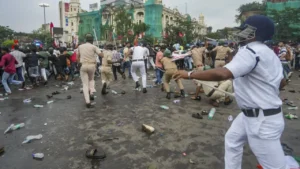
Following the tragedy, reports indicated that students blocked railway tracks in protest. Such reactions are often portrayed merely as disruptions. But beneath these protests lies accumulated frustration.
Young Indians are confronting multiple crises simultaneously:
- Intense unemployment.
- Delayed recruitment processes.
- Examination controversies.
- Rising coaching costs.
- Economic uncertainty.
- Increasing competition.
- Inadequate infrastructure.
The death at Patliputra became a flashpoint because it represented all these anxieties at once.
Students were not simply mourning one individual. They were expressing anger at a system that increasingly seems to demand sacrifice without guaranteeing reward.
The Forgotten Geography of India
Bihar and eastern India continue to produce some of the country’s largest pools of competitive examination candidates. Yet these regions have historically faced challenges related to infrastructure, employment opportunities and industrial development.
As a result, migration has become a way of life. Millions travel to Delhi, Mumbai, Kota, Prayagraj and other cities in search of education and employment. Railway stations become crowded because opportunities remain unevenly distributed.
The Patliputra incident therefore reflects not just railway overcrowding but regional inequality itself. People are forced into overcrowded trains because opportunities are concentrated elsewhere. In this sense, the tragedy is linked to larger structural questions about economic development and social mobility.
Beyond the Tragedy
Rail-related accidents and deaths remain a persistent concern.
According to official figures and related reports, more than 20,000 people died in rail-related incidents during 2022-23. While these fatalities arise from multiple causes, overcrowding, unsafe boarding practices and inadequate passenger management continue to pose serious risks.
General coaches frequently operate at occupancy levels far beyond their intended capacity. Yet overcrowding itself has become so routine that extraordinary conditions are now treated as normal. And that is the most disturbing aspect of all. The abnormal has become ordinary.
A New India Built Upon an Exhausted One
The young aspirant who died at Patliputra was chasing the same dream that drives millions of Indians: education, employment and dignity.
His death has become a symbol because it reveals the contradiction at the heart of contemporary India.
Official narratives celebrate a “New India” of high-speed trains and technological progress. But another India, the one that travels in overcrowded compartments, prepares endlessly for uncertain examinations and struggles simply to reach opportunities, continues to bear the weight of the nation’s ambitions.
Infrastructure is not merely about steel, tracks and locomotives. It is about whose lives are considered valuable. A railway system that allows millions to travel in conditions of chronic overcrowding raises difficult questions about priorities, equity and governance. Because development cannot be measured only by the speed of premium trains. It must also be measured by whether ordinary citizens can pursue their futures without risking their lives simply trying to get there. And for far too many young Indians, that remains an unanswered question.