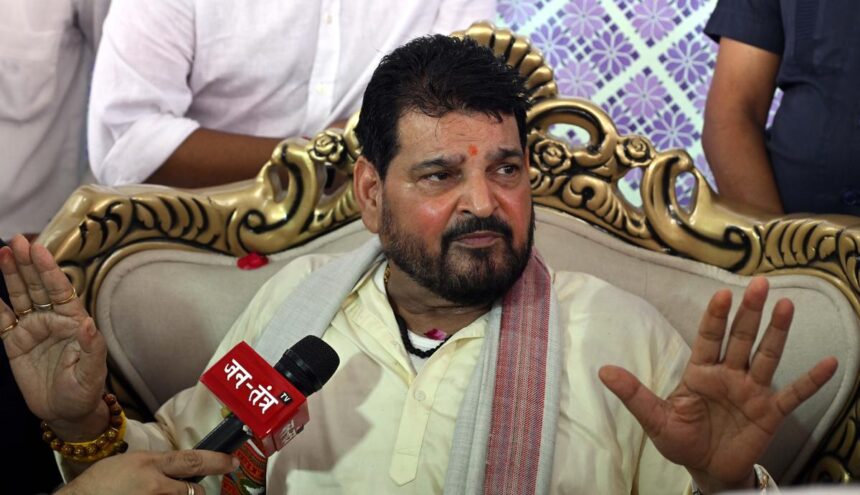


A Delhi court on has acquitted former BJP MP and Wrestling Federation of India chief Brij Bhushan Sharan Singh in the sexual harassment case filed by women wrestlers. Additional Chief Judicial Magistrate Ashwini Panwar of the Rouse Avenue Court held that the prosecution failed to prove the charges beyond reasonable doubt, citing unexplained delays in complaints, material inconsistencies, contradictions on major points, and the post-incident conduct of the complainants. Co-accused former WFI assistant secretary Vinod Tomar was also acquitted. Since 20 July 2023, Singh had been on regular bail.
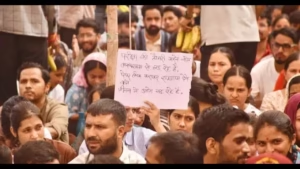
The case originated In early 2023 when several women wrestlers, including Olympians Sakshi Malik and Vinesh Phogat along with Bajrang Punia, publicly accused Singh of sexual harassment and intimidation spanning from 2016 to 2019. The alleged incidents were said to have occurred at the WFI office, his residence, and during foreign trips while he headed the federation from 2012 to 2023. The wrestlers staged prolonged protests at Jantar Mantar and outside the new Parliament building, demanding his arrest and removal. The agitation drew national attention, led to police complaints, a chargesheet, and eventual framing of charges under sections related to sexual harassment and criminal intimidation.
As a long-time BJP parliamentarian from Kaiserganj in Uttar Pradesh, Singh has maintained his innocence throughout and continued to enjoy political support. Even after the protests forced administrative changes in the WFI and his eventual exit from the top post, he remained a figure of influence within the party ecosystem. The trial proceeded in camera. Defence counsel emphasised the gaps in the prosecution’s evidence, and the court ultimately found the complainants’ version “highly unbelievable.”
The verdict brings the trial-court chapter of one of Indian sport’s most high-profile #MeToo cases to a close. For the wrestlers who risked their careers and faced intense public and institutional pressure, the outcome is a setback. For Singh, it is a complete legal clearance at this stage. The detailed judgment is awaited, and the complainants retain the option of higher-court remedies.
What stands out is the trajectory of the case itself. A powerful federation head and sitting MP faced serious allegations from medal-winning athletes, yet the process moved slowly, bail was secured early, and the final ruling rested on evidentiary weaknesses that the court found decisive. In a system where political connections often shape the pace and pressure around investigations, the result fits a familiar pattern: high-profile accused linked to the ruling establishment frequently emerge with the benefit of legal technicalities and institutional caution. Whether this reflects pure judicial independence or a deeper structural tilt remains a question that the wrestlers’ supporters continue to raise.

The acquittal closes one chapter but leaves larger questions about accountability in sports bodies and the unequal burdens faced by women athletes who challenge entrenched power.