
In 1983, Charan Singh and Atal Bihari Vajpayee led a dharna at India Gate demanding a ban on the import of animal tallow after samples of vanaspati ghee were allegedly adulterated with cheap imported beef tallow. The protest became a political marker against the commercial handling of animal fat. More than four decades later, the party that claims Vajpayee’s legacy took a different path. Early in the Modi government’s first term, the export of buffalo tallow was quietly legalised, converting a once-controversial substance into a permitted commercial product.
According to reporting by The Hindu, the decision was formalised through a Director-General of Foreign Trade notification in December 2014. Buffalo tallow was placed under the free export category, subject to APEDA registration and compulsory pre-shipment testing. The move came even as several BJP-ruled states tightened laws on cow slaughter and the political rhetoric around cattle protection intensified.
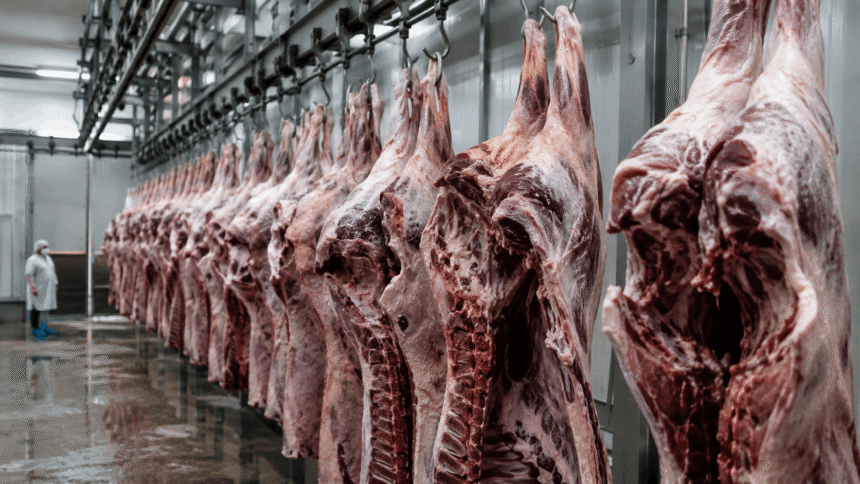
The broader buffalo meat trade has continued at significant scale. APEDA data show that India exported 14,19,650.98 metric tonnes of buffalo meat valued at USD 5,098.54 million in 2025-26. Major destinations included Vietnam, Egypt, Malaysia, the UAE and Saudi Arabia. USDA estimates place carabeef exports at around 1.68–1.7 million tonnes carcass-weight equivalent for 2025 and 2026, levels that rank among the highest in recent years. Earlier official figures compiled for Parliament recorded buffalo meat exports of roughly 1.47 million tonnes in 2014-15 and 1.29 million tonnes in 2023-24, indicating sustained high volumes throughout the period.
The legal distinction remains carefully drawn. Export of cow, ox and calf meat is prohibited. Export of boneless buffalo meat and its by-products, including tallow from registered plants, is freely permitted. This separation has allowed the industry to operate while political messaging has focused on the sanctity of the cow. The Caravan has previously described the arrangement as a convenient contradiction in the BJP’s animal-protection politics, strict state-level restrictions and vigilante mobilisation on one side, continued central facilitation of a large export trade on the other.
Price effects were visible soon after the tallow decision. Market reports from the mid-2010s noted a sharp rise in domestic buffalo tallow prices following the easing of export curbs. The industry itself has remained export-oriented, with registered integrated abattoirs and processing units supplying overseas markets under APEDA oversight.

The 1983 protest treated tallow as a threat to domestic food purity. Today the same commodity is part of a formal export regime that generates substantial foreign exchange. Buffalo meat alone accounts for the overwhelming majority of India’s animal product exports. The numbers published by APEDA, the USDA and parliamentary records show no structural retreat from this trade under the current government. Volumes have fluctuated with global demand and currency movements, yet the overall position of India as a major supplier of carabeef has been maintained.
The gap between political symbolism and commercial practice has therefore persisted. A party that once mobilised against the presence of animal fat in the domestic market has overseen the liberalisation of its export and the steady continuation of a multi-billion-dollar buffalo meat trade. The data make the continuity clear. The political contradiction remains unresolved.