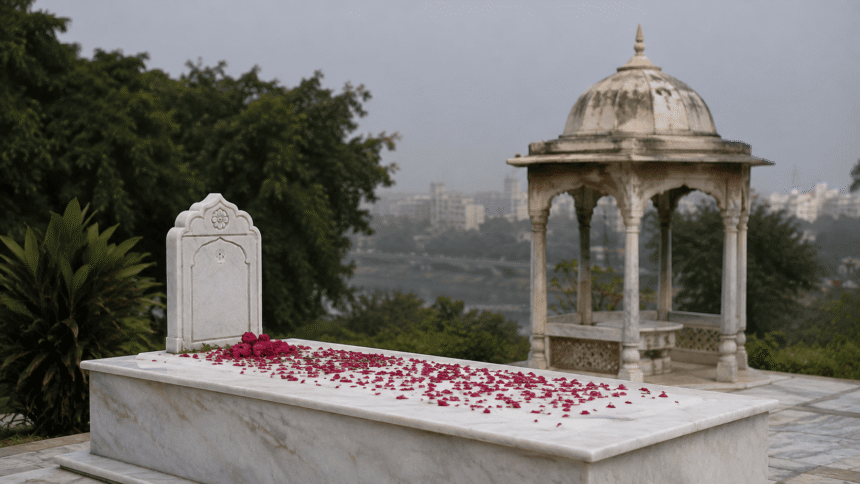

The burial of Abaan Ahmed the youngest son of the late gangster politician Atiq Ahmed has concluded in Prayagraj after the Allahabad High Court allowed his two jailed brothers limited parole to attend the last rites. Abaan died in a road accident in Jhansi on 6 August while travelling to meet his elder brother Ali who is lodged in the local jail. His friend Sonu also lost his life in the crash. The body was brought to the family’s ancestral cemetery at Kasari Masari, where Atiq Ahmed, his brother Ashraf, and another son Asad are already buried.
Mohammad Umar and Mohammad Ali were granted parole under strict conditions. They were barred from addressing any public gathering speaking to the media or taking part in any procession beyond the funeral itself. The court permitted only a brief meeting with their younger brother Ahzam and their aunt Parveen Qureshi. Umar remains in Lucknow jail in connection with a kidnapping case while Ali faces charges including extortion in Jhansi.
Atiq Ahmed’s wife Shaista Parveen is still absconding. She has not surfaced for the funerals of her husband or her sons and continues to face accusations linked to the 2023 murder of lawyer Umesh Pal. Searches across several states have so far failed to locate her. Other women connected to the family including Ashraf’s wife Zainab and Atiq’s sister Ayesha Noori are also wanted in the same case.
Atiq Ahmed built a formidable combination of criminal influence and electoral power in Prayagraj over several decades. He served multiple terms as a Member of Parliament and maintained a network that mixed muscle with political patronage. Supporters viewed him as a defender of local interests while opponents saw him as the face of the politician criminal nexus that once thrived in parts of Uttar Pradesh. The murder of Umesh Pal in 2023, a witness against Atiq, set off a sustained crackdown. Asad was killed in a police encounter in April that year. Two days later Atiq and Ashraf were shot dead by assailants while under police escort for a medical examination.
The family’s remaining members now live with the consequences of that period. Two sons are in custody. One is continuing his studies after earlier spending time in a child care home. Properties linked to the family have faced attachment and legal scrutiny. The network that once operated around Atiq has been steadily reduced through arrests and court proceedings.

In Prayagraj the family’s name still resonates among sections of the population that once looked to Atiq as a figure of local power. The successive losses and incarcerations have left that base without its most prominent faces. As Uttar Pradesh prepares for the next round of assembly elections, the disappearance of this particular political and social network from the public stage is difficult to ignore. Whether the vacuum alters local equations or simply marks the close of one chapter of strongman politics is a question that will be settled by voters in the region.
The latest death has added another layer to a long and violent history. What remains is a series of pending cases, a mother still being hunted by the police, and a community that must now chart its political course without the men who for years claimed to represent its strength.