
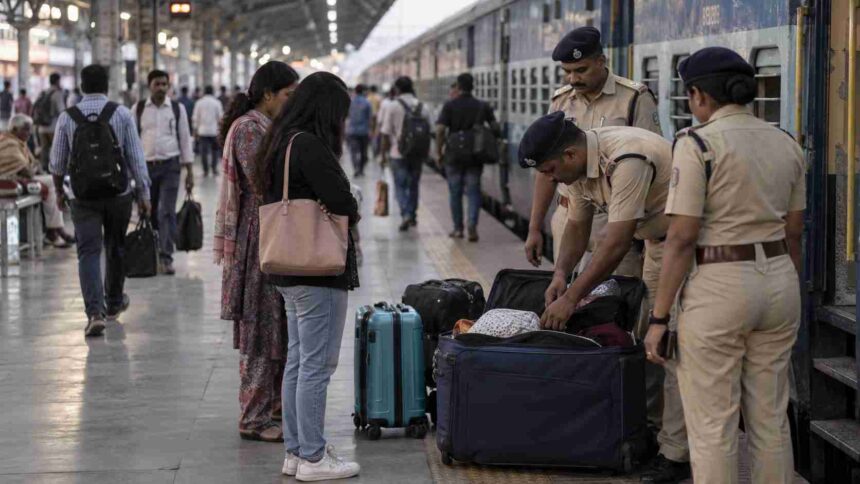

Two recent arrests at major railway stations have drawn attention to the involvement of educated young women in liquor smuggling across Bihar. In the first case, 25-year-old Neha Jha was detained at Samastipur Junction after 75 litres of branded foreign liquor were recovered from two suitcases in an AC First Class coupe of the Swatantrata Senani Express. She was travelling without a valid ticket along with a relative. Police said she is a graduate of KS College in Darbhanga and is suspected of supplying liquor to doctors and other influential clients while posing as a medical representative. Her family has prior links to similar cases.
Days later, another young woman identified as a BA student preparing for competitive examinations was arrested at Patna Junction. Liquor worth approximately ₹14,000 was recovered from her handbag and shoulder bag. She told investigators that she had brought the consignment from Uttar Pradesh and had agreed to transport it for a payment of ₹2,000. The two cases have revived discussion about why relatively educated young women are appearing in a trade long dominated by established networks.
Bihar’s prohibition law has been in force since April 2016. Enforcement data show sustained pressure on the supply chain. In the first five months of this year alone, police reported the seizure of 17.53 lakh litres of liquor, worth ₹140.95 crore and the arrest of 56,904 people in prohibition-related cases. Monthly seizure rates rose by 11% compared with the previous year. Women form a visible though still minority share of those arrested. In Gopalganj district, 56 women were held for liquor offences in 2025, and another 25 in the first part of 2026. West Champaran recorded 836 women arrested between 2022 and August 2026. Statewide figures from earlier years indicated more than 15,000 women booked under the prohibition law between 2016 and 2022.
Investigators say smugglers increasingly use women because they attract less immediate suspicion during train and road checks. Small and medium consignments are moved in personal luggage rather than in bulk vehicle loads. The financial incentive is modest in individual cases yet sufficient to draw in students and graduates facing limited formal employment options. Both recent arrests involved relatively small payments for the risk taken.
The pattern does not suggest that large numbers of educated women have entered the trade. It does show that prohibition enforcement continues to intersect with economic vulnerability and the search for quick income among the young. Police have formed special teams to examine whether the Samastipur case links to a wider Darbhanga supply network. The Patna arrest is being treated as part of the same interstate flow from Uttar Pradesh.
More Read

As long as demand persists inside Bihar and supply routes from neighbouring states remain active the use of low-profile carriers including educated young women is likely to continue. The two station arrests illustrate both the reach of current enforcement and the social profile of some of those now being drawn into the illicit chain.