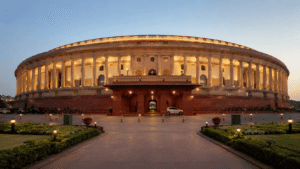
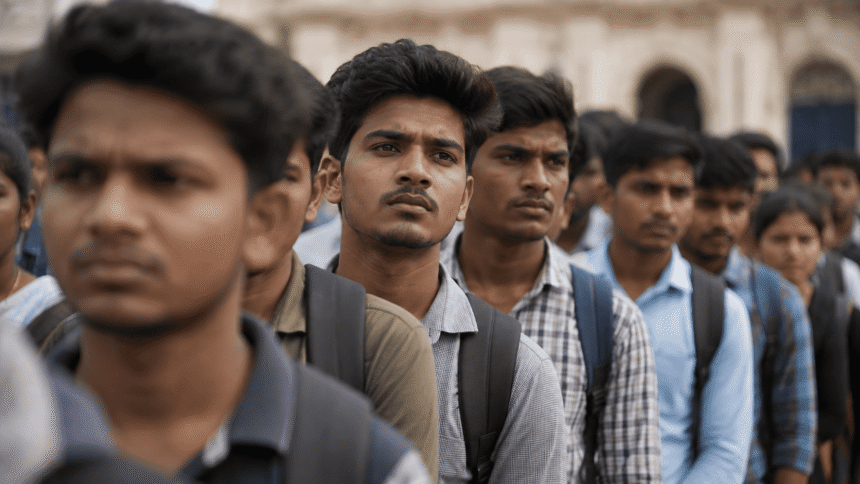


Today, August 13, marks the official anniversary of the historic 1990 notification that implemented the Mandal Commission report. This landmark decision promised a transformative 27% quota for the Other Backward Classes (OBCs) in public employment.
However, 36 years later, the “Mainstream State” has engineered a highly sophisticated administrative mechanism to quietly erase these constitutional guarantees.
Central to this systemic rollback is the highly controversial OBC Reservation Creamy Layer policy.
Rather than emboldening the disenfranchised, the state machinery is playing upon finance details to withhold proportional representation from eligible candidates in the Hindi Heartland. The upcoming crucial UP 2027 Assembly elections highlight this problem as the issue reveals the deep dishonesty of the political class in power.
The 1990 Promise vs. The 2026 Statistical Reality

The Mandal Commission originally estimated that the OBC demographic constitutes a massive 52% of India’s total population.
The implementation of a 27% reservation in education and government was meant to shatter the complete administrative monopoly of a handful privileged ones. A thorough audit of the data in year 2026 But shows utter inefficiency and corruption by the institutions.
According to comprehensive demographic data and employment reports, OBC representation in elite Group A central government jobs remains dismally low, hovering around just 16.68%.
More Read
The huge difference between the constitution’s requirement and how it actually works down there is a clear sign of the system being stacked against people to is deeply embedded. The existing 27% reservation at the moment is just a political trick on paper without translating to real executive authority.
How the OBC Reservation Creamy Layer Operates as a Trap
The most effective tool utilized by the bureaucracy to suppress grassroots representation is the OBC Reservation Creamy Layer framework.
On the surface, imposing an income ceiling appears to be a fair, logical metric designed to prioritize the most economically disadvantaged citizens.
But a sophisticated and rational voting public should identify the major sociological problem in this reasoning. Dr. B.R. Ambedkar and early reformers did not frame reservation as a poverty eradication project; on the contrary, the sole objective was and is to give social and political representation.
The Strategy of Unfilled Seats
More Read
The implementation of the OBC Reservation Creamy Layer specifically targets the first generation of marginalized families who have finally achieved educational stability.
By aggressively excluding these financially capable candidates, the administration ensures that reserved seats frequently remain completely unfulfilled.
The bureaucracy then conveniently declares these positions “vacant due to a lack of suitable, meritorious candidates,” subsequently reverting them to the General Category.
This is a highly tactical method used for the continuation of traditional upper-caste monopoly in the power circles. It is nothing but the state’s own way of punishing Bahujan families for achieving those levels of economic mobility which are claimed by the state itself to be promoted.
The Lateral Entry Bypass and the Erasure of Merit
The subversion of the quota system is not limited to demanding complex income certificates. The “Mainstream State” has rapidly escalated the use of “Lateral Entry” appointments.
This controversial policy allows the government to recruit private-sector specialists directly into high-ranking Joint Secretary and Director-level bureaucratic positions.
Because these are specialized, individual appointments, they completely bypass the mandatory 27% OBC and 22.5% SC/ST reservation frameworks.
This move without any checks or balances enables the political leadership simply to appoint people whose ideas align their with theirs at the very top level, thereby the policy-making elite, the best club with the fewest people is ensured by this move, i.e. the elite club of decision makers that is closed to the representatives of society.
The Hypocrisy of the UP 2027 Election Campaigns
As the political machinery prepares for the monumental UP 2027 elections, the hypocrisy surrounding this issue is reaching a fever pitch.
- The Ruling Party: The incumbent government aggressively pushes the narrative of “Hindu Ekta” (Hindu Unity) to secure the massive 52% OBC vote bank, yet fiercely defends bureaucratic loopholes that limit their actual power.
- The Opposition: Regional parties constantly shout “PDA” (Pichda, Dalit, Alpsankhyak) from their election stages, demanding a National Caste Census. Yet, they offer no concrete economic blueprints to combat the systemic corruption destroying the youth.
The political spectrum of both extremes is completely addicted to analyzing and dissection of demography. The young members of Other Backward Classes are perceived as mere passive emotional voting machines. Politicians make use of rhetoric grounded in history and yet remain absolutely silent about the modern administrative mechanisms that are suffocating the system.
The Economic Squeeze on the Hindi Heartland
This administrative betrayal is occurring against the backdrop of a profound macroeconomic crisis that is devastating families across Uttar Pradesh and Bihar.
India currently produces over 8 million graduates annually, yet the graduate unemployment rate has skyrocketed to a catastrophic 29.1%.
The youth are forced to navigate an incredibly hostile environment characterized by the ₹50,000 crore education mafia and relentless competitive exam paper leaks.
- Over 70 lakh futures were recently ruined by the cancellation of the UP Police Constable and RO/ARO examinations.
- The national NEET-UG medical exam faced unprecedented criminal breaches, forcing the state to use military helicopters for retests.
- The middle-class taxpayer is simultaneously crushed by a 10% electricity surcharge and soaring inflation to fund ₹6,800 crore political PR campaigns.
While political leaders debate demographic arithmetic and caste engineering for the upcoming elections, the youth are left fighting for a rapidly shrinking pool of public-sector jobs.
Conclusion: Auditing the Future of Social Justice
As we observe the 36th anniversary of the Mandal Commission, citizens must rigorously question the true intent of the “Mainstream State.”
Political parties across the spectrum enthusiastically utilize the slogan of “Social Justice” to secure massive electoral victories during public rallies.
Yet, these exact same administrations silently weaponize bureaucratic red tape, lateral entries, and the OBC Reservation Creamy Layer to effectively nullify those very rights behind closed doors.
Only democratic societies backed by visible institutions, fair opportunities through unbiased meritocracy, and honest power division will thrive. The promise of genuine democracy that was articulated and pledged in 1990 will become a mockery of all the taxpayers’ money only if the government fails to guarantee and execute fair representation through mechanisms devoid of the bureaucratic and legal artificial traps that were created to derail such progress.