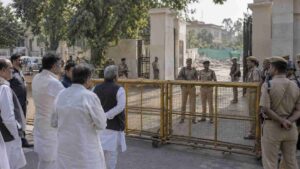

Uttar Pradesh, the most populous state in India and the decisive arena of every national election, will begin the caste enumeration phase of Census 2027 on 16 November this year. The exercise in the four poll bound states of Uttar Pradesh, Punjab, Uttarakhand, and Goa, has been advanced to run until 4 January 2027, well ahead of the nationwide enumeration planned for February. In Manipur, the entire process has been deferred indefinitely. For Uttar Pradesh, the early schedule places the count of caste directly before the approaching Assembly elections and makes the design of the caste question a matter of immediate political weight.
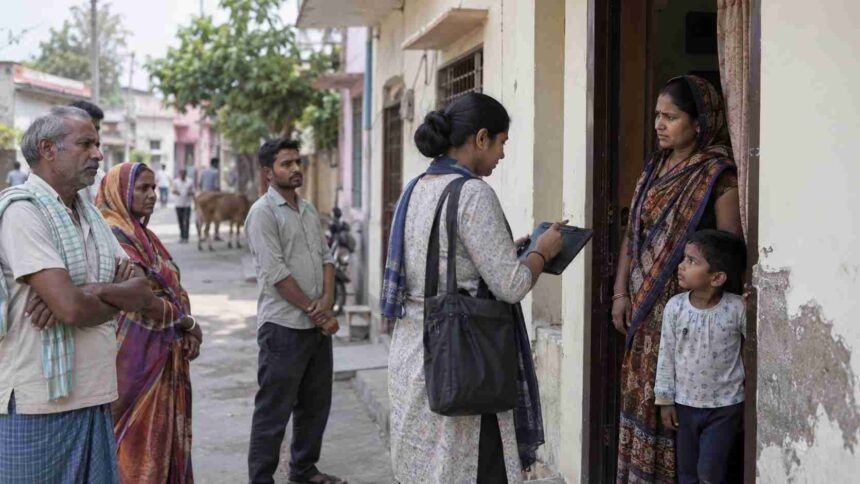
Question 10 on caste has been left completely open ended. Respondents will simply write whatever caste name they use. There is no drop down list, no standardised codes, and no pre approved glossary of the kind employed in the Bihar and Telangana caste surveys. The same community will therefore appear under dozens of different spellings, local variants and honorific forms. Once the forms are digitised, reconciling Yadav, Yadava, Ahir, Gwala and countless other renderings into a single usable category becomes a statistical impossibility. The resulting data set is almost certain to be too fragmented for precise policy or for reliable estimates of Other Backward Classes and Extremely Backward Classes.
Opposition leaders including the Leaders of Opposition in both Houses of Parliament wrote to the Prime Minister on 20 August, urging the government to adopt the Bihar-Telangana model of coded standardised caste lists. That request was ignored. Congress leader Jairam Ramesh has described the open column design as rendering the entire caste census meaningless and has called the decision to advance the count in poll bound states evidence of shoddy planning driven by political calculations.
Accurate clean numbers on the size of OBC and EBC populations would immediately intensify demands for the revision of reservation quotas and for sub categorisation within the existing 27% OBC share. In Uttar Pradesh, where caste arithmetic still decides the outcome of dozens of Assembly seats and where Dalit and backward class mobilisation remains potent such numbers would alter the political balance. An open ended question that produces fragmented non comparable data protects the status quo. It allows the government to claim that a caste census has been conducted while ensuring that the figures cannot be used to press for an expanded or redistributed reservation architecture.
The second phase of Census 2027 contains 40 questions in total. At least 13 of them are new, compared with the 2011 Census. These include spouse name, nationality, fathers particulars, mothers particulars, digital literacy, permanent residential address, place of Covid 19 vaccination, number of bank accounts, passport number, availability of driving licence, and mobile Aadhaar and voter ID numbers if available. Taken together, they create a dense individual profile that goes well beyond the traditional demographic count. In a state with a large Muslim population, the opposition believes that the collection of such identifiers in a single exercise raises the prospect that the data could later be mined for National Population Register or National Register of Citizens type verification. The census is not itself a citizenship exercise, yet the architecture of the new questions makes that separation harder to maintain in practice.
More Read

Most enumerators will be government school teachers who are simultaneously expected to perform election duty. The dual burden increases the risk of rushed or incomplete recording especially when caste names must be written free hand and then later standardised by clerks who lack a master list. Uttar Pradesh alone accounts for more than 240 million people. The sheer scale of the operation amplifies every design flaw. A messy caste column in the countrys largest state does not merely produce bad statistics. It produces a political shield against the very demands that a proper caste census was supposed to answer.
The decision to advance the count In Uttar Pradesh therefore carries a double edge. It places caste data in the public domain before the upcoming Vidhan Sabha election, yet the method chosen ensures that the data will be too fragmented to serve as a clear basis for policy or for political mobilisation. The open ended question is not a technical oversight. It is a design that prioritises the appearance of enumeration over the production of usable knowledge about the very communities whose numerical weight has shaped Uttar Pradesh politics for decades. Residents will have the option of self enumeration through a dedicated portal between 16 and 30 November, before the door to door survey begins on 1 December. A revisional round will follow from 5 to 9 January 2027. The reference date for these four states has been fixed at midnight on 5 January 2027.
The early schedule, the open caste column, and the expanded set of personal identifiers together define the character of the exercise in Uttar Pradesh. The state that stands to gain or lose the most from accurate caste numbers is the same state in which those numbers have been rendered hardest to use.