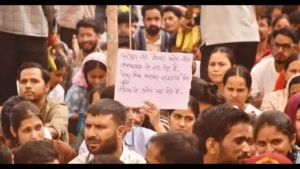



The trust the people place in state examinations of the central Hindi region has once again been broken by another massive scandal. Besides affecting the public servants who are the ones to pay the taxes, their families have also got involved with it since their children are going to face the consequences. The dream of a fair competitive examination system which they always wanted is getting further away from reality. Systematic cheating at examinations had previously been considered as a kind of anomaly Still nowadays it is becoming a legalized very profitable illegal parallel business.
The recent developments surrounding the Bihar TRE-3 paper leak have exposed the terrifying sophistication of this education mafia. This is no longer the domain of petty street-level criminals; it is operated by the educated, white-collar elite.
According to investigation, the Bihar EOU apprehended Dr. Manish Kumar, ex-employee of Bihar government and Doctor, after accusing him of playing a central role in BPSC teacher recruitment scam. Kumar was reported by the investigation as one of the key people behind BPSC recruitment scam. It was also said by them that Kumar had the special skill of opening locked boxes with exam papers inside and sealing them up again without being able to trace any opening marks which led to making 30 prospective candidates pay more than 1.2 crores as a ransom to them. In addition, Kumar is supposed to be the son of the paper-leak chief which points towards Really the subversion of fair competition has been transformed into a criminal enterprise.
The General Category youth in Bihar feel that the TRE-3 paper leak is a total betrayal of the democratic social contract. Not only do the students face academic pressure, but the competition among the rigid demographic quotas and for a shrinking number of public-sector jobs further adds up to the pressure. The state’s decision to auction off these last remaining merit-based seats by selling them at hotel rooms for 50,000 commissions, amounts to an admission by the state that intellectual capacity has no place against money derived from corrupt means.In a predictable maneuver of administrative damage control, the Bihar government, acting on the directives of the Patna High Court, has established three special fast-track courts. These courts in Patna, Lakhisarai, and Purnia are mandated to prioritize and resolve examination fraud cases within a strict three-month timeframe.
The pursuit of justice through legal means may act as a fundamental way of remedying injustice, but a well-intentioned civil examination will appreciate that expediting cases and fast-track courts are merely symptoms of a deeper, underlying problem. While a court may penalize a syndicate, it is powerless to replenish the great material loss inflicted upon middle-class parents who were paying sky-high coaching fees, and it is helpless to mend the profound emotional strain suffered by the youth.
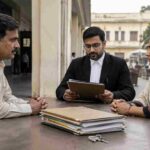
The “Mainstream State” continues to boast of digital supremacy and robust “Double Engine” governance. Yet, its chronic, systemic inability to secure a sealed box of examination papers strips away that facade. Until the administration can guarantee an impenetrable, leak-proof examination environment from the outset, the establishment of fast-track courts will remain a reactive PR exercise, failing to address the fundamental murder of merit.