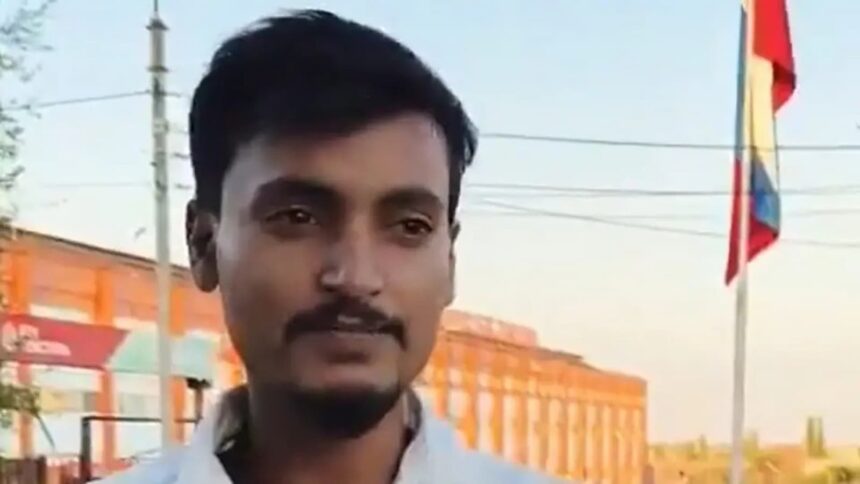

Twenty-five-year-old Mohammad Sadakat was nearly 6,000 kilometres away in Russia when he learnt that his name had been included in an FIR related to a protest against the NEET paper leak in Bihar’s Kishanganj district. Working at a school-bag manufacturing company in Shakhty, Rostov Oblast, he had arrived in Russia on 30 March 2026 on a two-year visa and had been living there for four months. On 29 July he recorded a video from his location, uploaded it on Facebook, and appealed to the Kishanganj Police to remove his name, stating clearly that he had not participated in the demonstration.
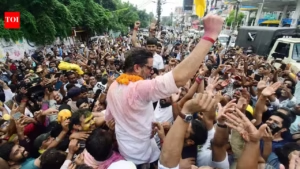
The FIR was registered on 25 July after a clash between police and protesters during a demonstration in Bahadurganj. It named 46 individuals, of whom 22 were detained. Sadakat’s name and address matched those listed, and there is no other person by the same name in his locality. He said he learnt of the inclusion from local Zila Parishad representative Imran Alam and was shocked. He tagged the police in his video and has not received any formal notice.
He Is not the only one contesting the list. Adnan Amini, another named individual, was appearing for the Bihar D.El.Ed examination in Kishanganj town on the same day, with papers in both shifts and CCTV coverage at the centre. Imran Alam claimed that of 12 names from his Laucha Panchayat included in the FIR, around eight were not present at the protest. One was in Russia, another in Delhi, one was writing an exam, and another was working at a laboratory 25 kilometres away yet was detained from there. Alam alleged that names were supplied without proper verification.
Kishanganj SDPO Siraj Khusro told reporters that after verifying Sadakat’s details a correction letter has been submitted to the court. He described such mistakes as “human errors” that can occur when photographs from large crowds are identified with the help of local residents, elected representatives and constables. He said incorrect names, wrong sections or other slips are sometimes rectified through correction letters, and that the police station has been receiving several requests for removal of names. Acting SP Harimohan Shukla declined detailed comment.
The episode exposes serious gaps in the way FIRs were prepared during the NEET protest crackdown. Naming people who were demonstrably elsewhere, including one working abroad and another sitting in an examination hall, points to rushed identification and inadequate cross-checking. For the individuals concerned, the consequences are not abstract. An FIR entry can affect employment, travel, and future prospects even if later corrected. Sadakat’s case is particularly stark: a young man earning a living thousands of kilometres away had to defend his absence through a public video because the system had already placed his name on record.

The Bihar government later announced it would withdraw cases related to the NEET protests and release those arrested, following a Supreme Court direction concerning underage protesters. That broader decision does not erase the initial carelessness that put an overseas worker and an examinee into the same list as actual participants. When police acknowledge human error only after public videos and local representations surface, it raises legitimate questions about the quality of verification that preceded the original FIR. For those wrongly named, the damage to reputation and the effort required to clear their names remain a tangible cost of administrative haste.