

As the Hindi Heartland suffocates under a lethal, record-breaking summer heatwave, the administrative facade of the “Mainstream State” has completely melted away. The unfolding UP Power Crisis 2026 is not just an infrastructural failure; it is a profound betrayal of the middle-class citizen.
Major metropolitans and rural districts in Uttar Pradesh are currently experiencing long 10- to 12-hour power cuts which inflict a lot of pain. People are shelling out big bucks in the form of taxes for world-class infrastructure, but they are quite literally being left without light.
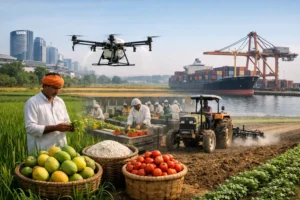
The UP Power Crisis of 2026 reveals a frighteningly huge governance deficit mere months before the crucial assembly elections. It shows that the government’s extensively publicized “Trillion-Dollar Economy” only features on glittering election billboards, not at all reflecting the harsh reality faced by taxpayers.
The Anatomy of the UP Power Crisis 2026
We have to break down the data behind the blackout to really grasp the extent of this administrative failure. The state government is always bragging about having surplus energy generation and managing the grid effectively.
More Read
Though, as temperatures rise beyond 46 degrees Celsius, the local power supply system has completely broken down. Transformers are blowing up, switching stations are shutting down automatically and power outage programs have been turned into a daily horror for the masses.
According to a comprehensive economic analysis, India’s power infrastructure is buckling under unprecedented stress, exposing a severe lack of long-term capital investment in grid modernization.
The situation in Uttar Pradesh is particularly dire. The administration has failed to upgrade legacy transmission lines, choosing instead to focus its budgetary allocations on high-visibility, optic-driven mega-projects.
More Read
Extortion Disguised as ‘Smart Governance’
This power crisis will be a tragedy of major proportions. Though, the financial exploitation of customers through the system makes it even worse. Besides feeling the temperature rising, the middle-class taxpayer is also dishing out extra money for the luxuries.
Just weeks ago, the Uttar Pradesh Power Corporation Limited (UPPCL) aggressively mandated a 10% hike in electricity bills under the guise of a ‘Fuel Surcharge’ (FPPAS).
At the same time, the government was vigorously promoting the rollout of prepaid “Smart Meters.” They were advertising it as a great technological advance But it has actually turned out to be a financial disaster for the working class.
- Exorbitant Billing: Middle-class households have reported their monthly bills inexplicably jumping from ₹1,200 to ₹4,500.
- Zero Grievance Redressal: When citizens approach the electricity department, bureaucrats hide behind red tape or simply refuse to answer.
- Digital Extortion: Prepaid meters automatically disconnect power the moment a balance drops, showing zero empathy for families struggling with inflation.
The state operates as a highly efficient, ruthless collection agent. Yet, when it comes to actually delivering uninterrupted electricity, it suffers from absolute execution paralysis.
The Erasure of the Youth’s Future
More Read
The collateral damage of this administrative apathy extends far beyond physical discomfort. It directly impacts the future of the state’s human capital.
Take the situation, for instance, of a General Category student who is working hard for the next re-examinations. The paper leaks of the NEET 2026 and RO/ARO exam have affected the kind of impact that the students’ mental focus had been broken. Now, new focus is being developed by the students after the jolt that the paper leaks had delivered.
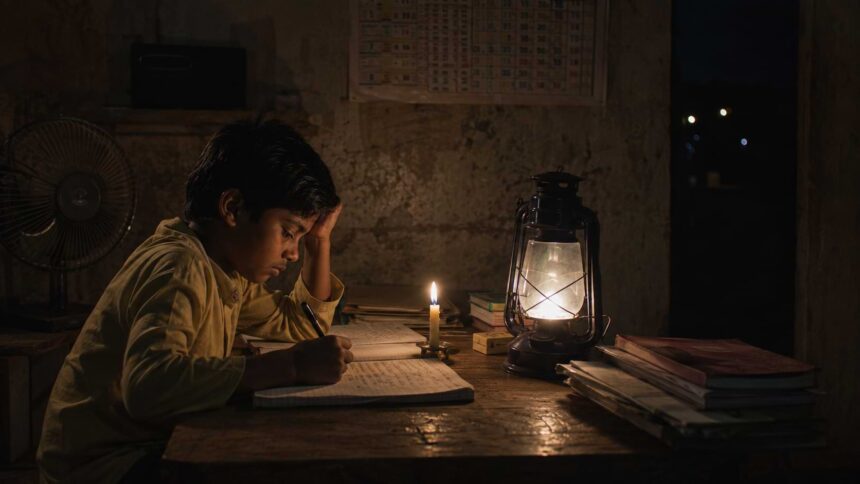
These same students are now sadly studying in immense discomfort, in stifling and dark rooms. It is state that can take Indian Air Force jets for political PR of the examination papers, but for those students who are preparing for those exams the state is unwilling to give even the basic facility of electricity.
When a hardworking student cannot even turn on a fan during peak summer, the foundational promise of the Republic is deeply compromised.
Infrastructure on Paper vs. Ground Reality
The ruling establishment has built its entire 2027 electoral strategy on the narrative of a flawless “Double Engine” government. They demand absolute ideological loyalty from the General Caste voter.
We are saturated with media campaigns showcasing new expressways, international airports, and sprawling luxury corridors. Yet, the foundational, life-sustaining infrastructure of the state remains utterly neglected.
A mature democracy must separate political marketing from actual administrative delivery.
- What is the value of a ₹289-crore “Ghost Campus” if it has no students?
- What is the value of an eight-lane expressway if the homes beside it have no electricity?
- What is the value of “Zero Tolerance” policing if the state cannot protect its citizens from deadly heatwaves?
The “Mainstream State” through their acts have shown that they have a penchant for the “spectacle” over the “substance.” In fact, they allocate large portions of their budgets to infrastructural projects that are grand and impressive when viewed through a drone camera. Yet, in doing so, they are unintentionally erasing, in a way, the vital yet invisible infrastructural elements that provide human dignity.
The Taxpayer’s Dilemma Ahead of 2027
As the Hindi Heartland marches toward the critical UP 2027 Assembly Elections, this power crisis serves as a profound civic wake-up call.
The middle-class taxpayer, belonging to the General Category, is the silent and invisible funder of the whole political circus. We bear heavy burdens of direct taxes, a steeply rising GST on essential items, and arbitrarily increased utilities.
We fund the multi-million-rupee VIP security convoys. We finance the proposed expansion of the Lok Sabha to 850 politicians. We sponsor the massive, nationwide political PR campaigns.
Yet, when we demand the most basic return on our civic investment—a functioning power grid and transparent examinations—we are met with deafening bureaucratic silence.
Rejecting the Politics of Distraction
The political elite is acutely aware of the anger brewing in the streets of Lucknow, Prayagraj, and Varanasi. To mask this profound governance failure, they will inevitably hit the “Nationalism Button.”
They will try to lead the public discussion into the issues of border conflicts, religious divisions, and old wounds. They will employ an ultra-nationalist ideology as a sort of analgesic to help the taxpayers forget about the twelve-hour electricity blackouts and the very expensive smart meter bills.
A sophisticated electorate must fiercely resist this emotional manipulation. True nationalism is holding the state strictly accountable for its domestic governance.
In 2027, the ballot box must be utilized to audit the administration’s data, not its drama. Until the “Mainstream State” realizes that it cannot extract wealth without delivering fundamental civic services, the middle class will remain nothing more than a captive funding machine for an arrogant political elite.