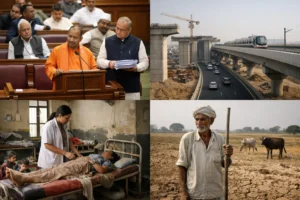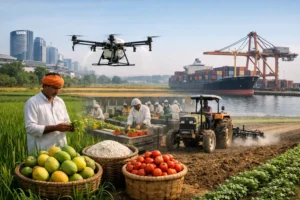


The political theater of the Hindi Heartland is currently characterized by an intense, visible contradiction. On the surface, the “Mainstream State” projects an aura of absolute discipline, unified purpose, and seamless “Double Engine” governance. Billboards across Uttar Pradesh continue to promise rapid economic transformation and uncompromising law and order ahead of the critical 2027 Assembly Elections.
However, beneath this meticulously constructed public relations facade, a profound institutional crisis is unfolding. A rigorous political audit reveals that the ruling establishment is deeply fractured.
One deeply perceptive column says the state is overwhelmed with the escalating Yogi Modi succession battle. This top-tier fight between the Chief Minister’s office in Lucknow and the central high command in New Delhi isn’t just political speculation anymore. But is is even freezing the administrative machinery of the largest state of India.
The Anatomy of an Internal Civil War
The concept of a “Double Engine” government is totally dependent on the idea that a political alignment in harmony between the Centre and the State would expedite development. But, what will the scenario be, if those two engines start to pull in opposite directions?
More Read
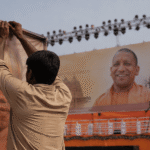
The Yogi Modi succession fight is essentially the result of intense ideological and administrative tensions. The centre leadership in Delhi wants to have total, centralised control over state-level politics, so it keeps interfering in the appointments of ministers, officers and in electoral tactics. Then again, the Lucknow leadership has a huge independent regional mandate and they build their own separate political brand of “Bulldozer Justice” and aggressive Hindutva.
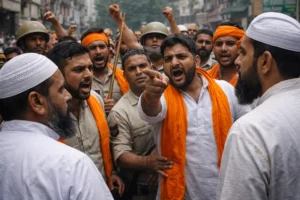
This clash of titans has created a deeply toxic ecosystem of suspicion and factionalism within the party’s state unit.
- Loyalty Tests: MLAs and state ministers are increasingly forced to implicitly choose sides.
- Public Dissent: Key regional figures, such as Deputy Chief Minister Keshav Prasad Maurya, have previously made coded public statements hinting at structural dissatisfaction, further fueling the narrative of a divided house.
Administrative Paralysis: The Bureaucratic Deep Freeze
More Read
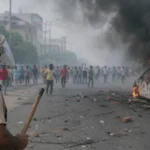
The true casualty of the Yogi Modi succession battle is not the political elite, but the day-to-day governance of Uttar Pradesh.
In a working republic, bureaucracy is the arm which implements decisions of the state. But in their nature, bureaucrats are risk-averse. So when the highest political leadership is involved in a cold war internally, bureaucratic machinery, by nature, instinctively goes into a freeze.
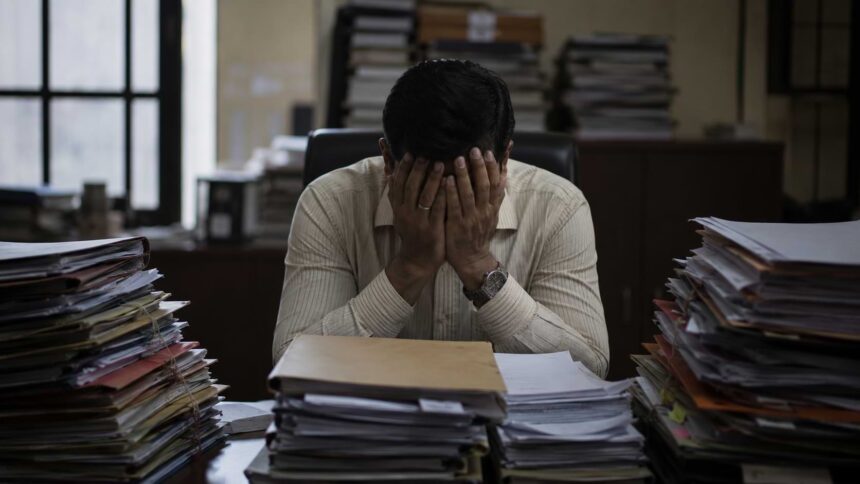
Senior IAS and IPS officers are like sitting ducks in a dangerous crossfire. They need a lot of political support to get a policy approved, to clear a major infrastructure file, or to begin a crackdown on organized syndicates. In a scenario where the political fortunes of characters change overnight based on the outcome of the succession war, the only thing that the administrators end up doing is not making decisions.
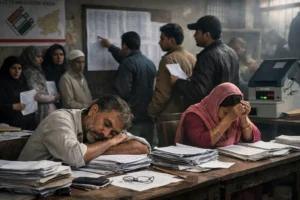
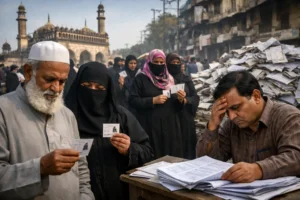
This is what causes “policy paralysis”. Documents collect on office tables, important local-level initiatives suffer postponement, and the kind of timely governance demanded of a huge population of 250 million people virtually disappears.
The Erasure of Merit Amidst the Chaos
As the political elite remains entirely consumed by the Yogi Modi succession battle, the most critical issues facing the state are quietly swept under the rug.
More Read
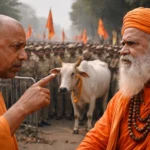
Clearly, this administrative neglect is nowhere more evident than in the state’s education and employment sectors. The young people of Uttar Pradesh have practically suffered a great deal throughout the year. The state came to a standstill due to the UP Police Constable and RO/ARO paper leaks, which not only wiped out the efforts, the financial savings, and the mental peace of more than 70 lakh deserving students but caused such a situation.
Why does the education mafia continue their illegal activities with such boldness and without any fear of consequences? It is because the state\’s intelligence and administrative resources are so deeply committed to only controlling the external political image that they have left almost no space in their schedule to go after and break up criminal groups.
Though, the General Category youth who depend solely on merit and not on demographic caste quotas, are deeply disappointed. They see how their futures get jeopardized by a government that is so preoccupied with its own survival that it forgets to maintain the sanctity of a competitive examination.
The Taxpayer’s Disillusionment
For the middle-class taxpayer, the situation represents a fundamental breach of the democratic social contract.
General Caste taxpayers are the dependable but quiet supporters of the “Mainstream State.” They suffer through a heavy load of direct taxation, very high fuel prices, and sudden changes in administration that can be very inconvenient, like the compulsory introduction of “Smart Meters.” They also financially support the enlarged political system with the hope of receiving strong governance in return.
Instead, without realizing it, their money keeps propping up a political game of chess running on and on. Demanding ideological fetters under the guise of “Hindu Unity, ” the state would like the taxpayer to turn a blind eye to the shocking administrative discord. Though, unity cannot be unilateral. At the same time, a politically fractured house will not be able to create a trillion dollar economy or a completely safe society.
Conclusion: A Demand for Governance Over Politics
As the countdown to the UP 2027 Assembly Elections accelerates, the electorate must engage in a sophisticated, data-driven audit of the ruling establishment.
The ongoing Yogi Modi succession battle is a stark reminder that prolonged, centralized political monopolies often breed internal decay. A mature democracy requires an administration that is unyieldingly focused on human capital, transparent governance, and the preservation of merit.
The citizens of Uttar Pradesh must demand that the political elite prioritize statecraft over survival. We cannot afford an administration that treats the state as a mere battleground for future national successions. Until the “Mainstream State” resolves its internal civil war and refocuses its entire machinery on serving the citizen, the promises of the “Double Engine” will remain nothing more than an expensive, tragic illusion.