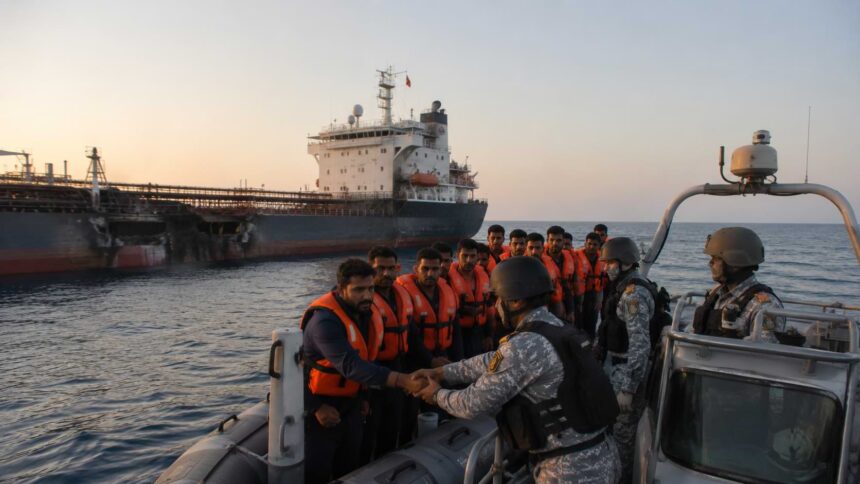


Mumbai/New Delhi, June 9: In the waters near the Omani coast, where tensions from the Iran-Israel conflict had already heightened maritime risks, 24 Indian seafarers found themselves in grave danger aboard a merchant tanker struck by a missile. The swift and coordinated rescue operation that brought them to safety stands as a commendable example of proactive Indian diplomacy, naval readiness, and effective international partnership with Oman.
The Incident unfolded amid escalating regional hostilities. The tanker came under attack close to Omani shores, leaving the Indian crew exposed and urgently appealing for assistance from the Indian Navy. Responding without delay, Indian authorities, through the Maritime Rescue Coordination Centre (MRCC) in Mumbai, orchestrated a joint operation with Omani forces. The successful extraction demonstrated seamless interoperability between the two nations’ maritime agencies at a moment when commercial shipping in the region faces real threats from missile strikes and broader instability.
This was no routine extraction. Merchant seafarers, often the unsung backbone of global trade, operate in increasingly hazardous environments from the Red Sea to the Arabian Sea, where proxy conflicts and direct attacks have surged. For Indian sailors, who form one of the largest nationalities in the international maritime workforce, such incidents carry both immediate peril and long-term implications for India’s economic interests. The safe return of all 24 crew members without reported casualties is a relief and a testament to the professionalism of the teams involved.
The operation underscores the maturing strategic partnership between India and Oman. Muscat has long served as a stable and reliable partner in the Gulf, facilitating access and cooperation in maritime security. Joint efforts like this reinforce trust and operational familiarity, which are critical in a region where India maintains significant stakes in energy security, trade routes, and the welfare of its diaspora. MRCC Mumbai’s central role highlights the growing sophistication of India’s maritime domain awareness and response capabilities, built over years through investments in naval infrastructure and diplomatic outreach.
Yet this rescue also throws into sharper relief the vulnerabilities inherent in Indian seafaring. Thousands of Indian nationals work on foreign-flagged vessels traversing high-risk areas. While the government has mechanisms for crisis response, repeated incidents call for stronger preemptive measures: enhanced advisories, better insurance frameworks, improved coordination with ship owners, and perhaps greater emphasis on deploying armed guards or rerouting protocols where feasible. The welfare of Indian mariners must remain a priority as India’s blue economy ambitions expand.

In a broader sense, the episode reflects India’s evolving posture as a responsible maritime power. From anti-piracy operations in the Indian Ocean to evacuations during conflicts, the country has consistently demonstrated its commitment to protecting its citizens far from home. This latest success adds to that record at a time when the Hormuz Strait and surrounding waters remain volatile.
The 24 rescued sailors can now reunite with their families, their ordeal over. For policymakers in New Delhi, the incident offers both validation of existing systems and a prompt to strengthen them further. As geopolitical fault lines shift across West Asia, India’s ability to safeguard its people and interests at sea will increasingly define its global standing. Today’s efficient rescue is a quiet but firm assertion that, when Indian lives are on the line, response will be rapid and resolute.