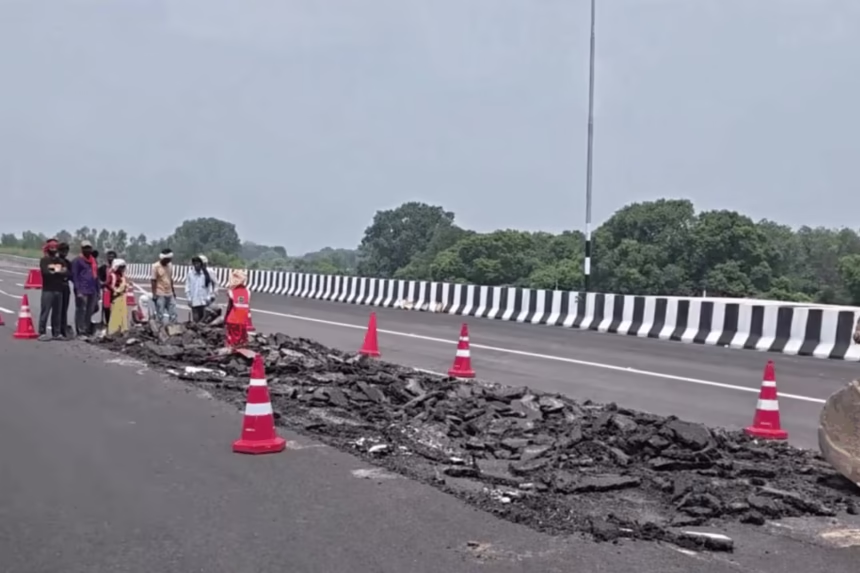


A section of the newly opened Lucknow-Kanpur Expressway suffered visible damage near Korari village in Unnao district just 12 to 13 days after its high-profile inauguration. Heavy rainfall caused the upper road surface to slip and form depressions on the six-lane corridor, prompting viral videos and sharp criticism from the opposition. The National Highways Authority of India later described the incident as limited slippage of the wearing coat over roughly 40 metres rather than a full structural cave-in, stating repairs were completed the same day and traffic restored by evening.
The 63-kilometre greenfield expressway, built at an estimated cost of ₹4,200 to ₹4,700 crore, was inaugurated on 13 July by Defence Minister Rajnath Singh, Union Road Transport and Highways Minister Nitin Gadkari and Uttar Pradesh Chief Minister Yogi Adityanath. Officials had projected it would cut travel time between Lucknow and Kanpur from nearly three hours to 35-45 minutes. The project was promoted as India’s first expressway constructed with automated intelligent machine-guided technology and equipped with advanced traffic management systems.
The visuals of rainwater-filled trenches and peeled asphalt spread quickly, fuelling public scepticism about the durability of high-cost infrastructure projects. Critics question how a road inaugurated with such fanfare could show distress in its first monsoon and alleged lapses in construction quality and possible irregularities in execution.
NHAI Project Director Nakul Prakash Verma rejected the “cave-in” label, explaining that a true cave-in involves settlement of the underlying soil that sinks the entire structure. He maintained that only the surface layer was affected and that such technical issues can occasionally occur on long asphalt stretches. The authority emphasised prompt corrective action and continued normal operations.
Yet the timing remains uncomfortable. A multi-thousand-crore corridor celebrated as a technological leap should not require emergency surface repairs within a fortnight of opening. Monsoon rains are predictable in the region; design and material standards must therefore account for them from the outset. The episode raises legitimate concerns about quality control during construction, the adequacy of soil stabilisation on the elevated and greenfield sections, and the effectiveness of pre-opening inspections.
More Read

Taxpayers ultimately fund these projects. When visible surface failure appears so soon after inauguration, confidence in both the engineering and the oversight mechanisms erodes. While NHAI’s swift response prevented prolonged disruption, the incident underscores the gap between inaugural rhetoric and on-ground performance. Thorough independent audits of materials, compaction and drainage design are necessary if similar problems are to be avoided on future corridors. Until then, the rapid damage to the Lucknow-Kanpur Expressway will stand as an early warning about the real cost of hurried or inadequately supervised infrastructure.