

The political establishment heavily markets the narrative of a robust, modernized agricultural sector across the Hindi Heartland. State-sponsored campaigns continually assure citizens that the “Double Engine” government has eradicated systemic exploitation and secured the financial livelihoods of farmers.
But an in-depth study of the actual conditions of the ground-level economy repeatedly invalidates these shiny administrative claims. What is coming up – a Bareilly sugar mills auction – will be an example that shows a lot of people’s sufferings from weaknesses of the system that still plague farming economy of Uttar Pradesh.
According to detailed reports, the Kesar Sugar Mill in Baheri and the Oswal Sugar Mill in Nawabganj are facing imminent auction due to severe financial distress. While the administration frames this as a routine recovery proceeding, the underlying data exposes a massive governance failure.
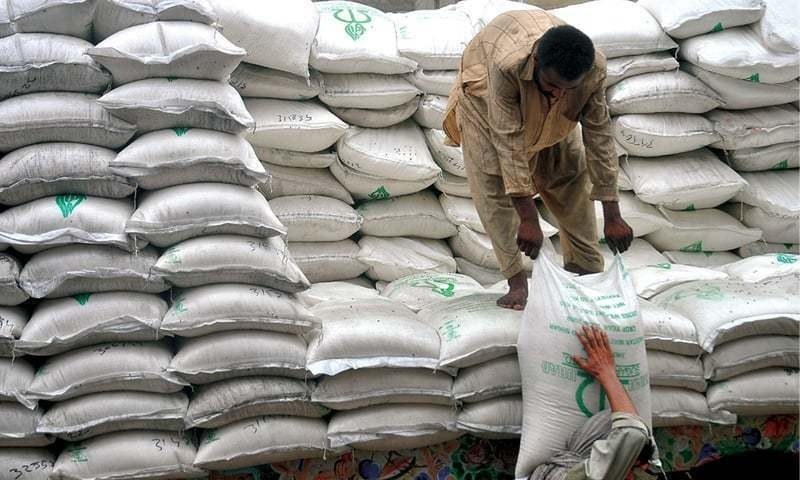
These two mills altogether still owe 200 crore to local farmers as cane dues. Kesar Mill alone has built up debts equal to the amount of roughly 146 Crore to farmers, and Oswal Mill owes approximately 55 crore.
The consequences of the Bareilly sugar mills auction extend far beyond corporate insolvency; it represents an existential crisis for the region’s human capital. Farmer representatives note that nearly 80,000 sugarcane growers and hundreds of factory workers depend entirely on the operational continuity of these units.
More Read

For the average taxpayer and a farm electorate member, this scenario demonstrates one of the worst institutional double standards. When the “Mainstream State” has to collect money from taxes or raise utility fees (such a 10% FPPAS power price hike was recently introduced), they do it with the brutal perfection of a well-tuned machine. Still, when some of the best-connected industrialists take away from working farmers 200 crore worth of debt, the government gets stuck in the slowest gear possible. The choice to liquidate the factories – and not to revive them through government support or by putting the pressure on the entrepreneurs to settle their debts first -, has been regarded as a very typical example of government policy that benefits the corporate class and ignores the farmers.
As Uttar Pradesh prepares for the highly anticipated 2027 Assembly elections, crises like the Bareilly sugar mills auction will heavily dictate the electoral calculus in the critical Rohilkhand region. A democracy cannot legitimately claim to be transitioning into a “Trillion-Dollar Economy” while permanently destroying the economic backbone of 80,000 agricultural families. Until the state ensures absolute financial accountability for corporate mill owners and guarantees the immediate clearance of pending dues, the grand promises of “Kisan Kalyan” (Farmer Welfare) will remain a tragic, taxpayer-funded illusion.