

Yesterday, a Delhi Police notice reached AISA president Neha Bora. Today, Monday, October 19, she was due before a magistrate, and her lawyers are already in the Delhi High Court. In about 48 hours, a student leader went from detention to a legal fight over whether she must promise the state she will behave.
The notice, issued under Sections 126 and 130, read with Section 135(3), of the Bharatiya Nagarik Suraksha Sanhita, directed her to appear before the Special Executive Magistrate, New Delhi District, today, and to execute a personal bond of ₹10,000 with one surety to “maintain peace during the period of inquiry”. Her legal team says they will tell the magistrate today that she will not sign the bond, and will decide on further action depending on the response. The petition itself argues that the notice is prima facie ambiguous, factually incorrect and violates Articles 19 and 21 of the Constitution, according to an AISA statement, and asks for an immediate stay and withdrawal of the notice.
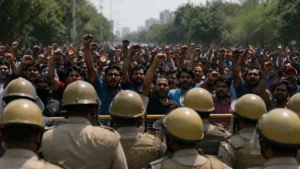
The timing matters. Bora was detained on Friday evening ahead of the “Lehra Do Tiranga” march at Connaught Place, and released the next morning. Delhi Police have said she was released after completing formalities under Section 65 of the Delhi Police Act. After her release, she alleged that she had initially been kept from consulting a lawyer, a claim that remains hers and has not been tested. AISA has also alleged that plain-clothes police have been following her since she came out of detention. I found no police response to either allegation.
The notice also arrives amid a pattern. CJP founder Abhijeet Dipke was granted conditional bail on Saturday after being arrested for allegedly violating the peace bond he had furnished on October 10, which undertook good behaviour for a year. Delhi Police have also announced plans for multiple FIRs over Friday’s protest and said protesters were being identified for further legal action. Seen together, a preventive tool is being used in sequence: a bond, then an alleged violation of the bond, then an arrest, then conditions. Each step is legal on paper. Together, they make a protester’s next demonstration a legal risk before it has even begun.
Preventive provisions like these exist for real emergencies, where a breach of peace is likely and imminent. A notice that asks a student leader to promise peace “during the period of inquiry” invites a plain question: inquiry into what, and based on what conduct? Her petition says the notice leaves that unclear. Whether it does is for the court to decide, and the police have yet to state their reasons publicly.
More Read

Then there is the calendar. The petition has been filed, but the High Court is shut for Dussehra vacation and will reopen only on October 26. Her lawyers may seek an urgent hearing before a vacation bench, and whether one is listed as early as tomorrow, Tuesday, is not known. If it is not, the notice stays in force for a week, and the bond question will be settled in the magistrate’s room before a judge sees it.
The larger issue extends well beyond one student leader. If a ₹10,000 bond can be demanded from an organisation’s president days after a detention, every student and activist in Delhi has reason to wonder what the next notice will look like. A court may stay this one. What should worry the rest of us is that, for many young Indians, the cost of joining a march now includes a legal procedure they must be ready to answer.