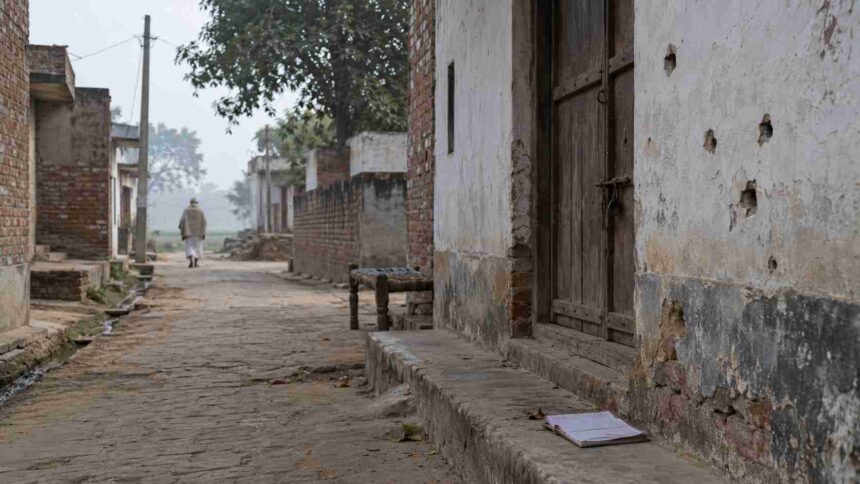

On the morning of 16 September 2016, a dispute over the alleged harassment of school going girls erupted on a pathway outside Pedda village in Bijnor district. Within an hour, the argument had turned into armed violence. A mob carrying licensed guns and country made weapons entered the minority quarter of the village and opened fire. More than fifty rounds were discharged into courtyards and homes.
Three members of one family were killed. Haseenuddin, aged fifty, his seventeen year old son Sarfaraz who was in class twelve, and their relative Ehsan, aged thirty six, died in the shooting. At least twelve other villagers including five women were injured by bullets and shrapnel. The wounded were taken to Bijnor district hospital and some were later moved to medical facilities in Meerut.
Police registered FIRs against twenty seven named persons and a larger number of unidentified attackers. Several local residents were arrested in the following days. Provincial Armed Constabulary and Rapid Action Force units were deployed and restrictions were imposed on movement in and around the village. The then state government announced ex gratia payments to the affected families.
The incident took place only months before the 2017 Uttar Pradesh assembly elections. Western Uttar Pradesh had already seen serious communal violence in Muzaffarnagar three years earlier. Observers at the time noted that a local altercation had escalated with unusual speed and that the presence of firearms turned a village dispute into a deadly assault. The killings deepened existing mistrust between communities that had previously shared the same agrarian landscape.
Ten years later, Pedda remains marked by that morning. Police presence which was heavy in the immediate aftermath, left a lasting imprint on daily life. Inter community relations that once rested on routine agricultural cooperation never fully recovered. The legal cases moved slowly and the broader questions raised by the rapid mobilisation of an armed group were never fully resolved in public memory.
More Read
The anniversary of 16 September returns attention to a simple sequence. A morning argument about the safety of girls became an armed attack that wiped out three members of one household and injured more than a dozen others. The passage of a decade has not erased the facts of the gunfire or the loss suffered by the family of Haseenuddin. It has only underlined how quickly a rural dispute can turn fatal when weapons and collective anger arrive together..