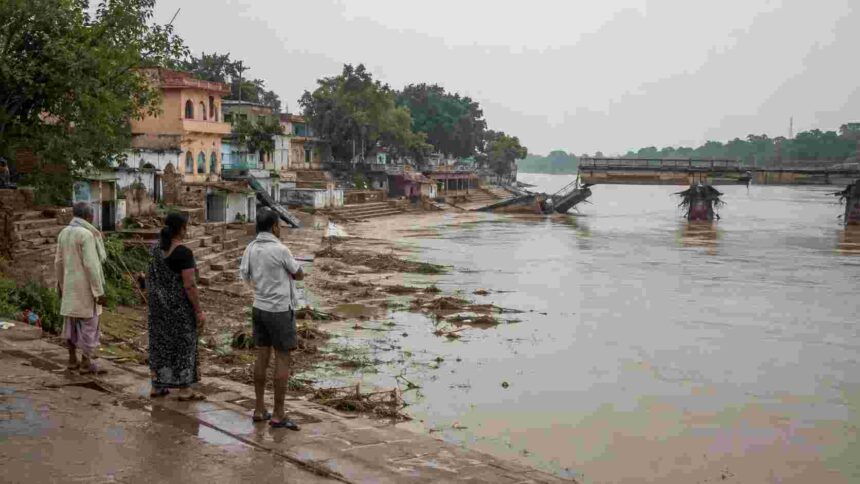

Heavy rain and a sharp rise in the Mandakini River have left large parts of Chitrakoot under water, damaging homes, shops and key bridges on the Madhya Pradesh–Uttar Pradesh border. The river crossed previous high marks, inundating the Ramghat area and several adjoining villages and forcing hundreds of residents to move to safer ground.
District officials reported that the Mandakini reached a level of around 135.2 metres, surpassing the earlier recorded high of 134.5 metres set in 2003. Water entered houses, temples and market stretches along Ramghat, Raghav Prayag Ghat, Kamta, Nayagaon and nearby localities. In some places the floodwater rose high enough to reach the upper floors of two-storey buildings. Residents described livestock being swept away, food stocks of paddy and wheat spoiled, and children’s books and household goods ruined by the sludge that remained after the water began to recede.
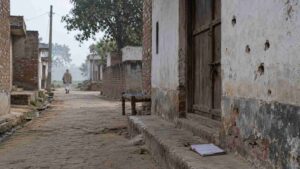
A major bridge linking Ramghat to Hanuman Dhara was damaged or washed away, along with other local crossings. The Karwi bridge also suffered serious damage, disrupting movement between affected pockets. Streets that had been busy pilgrimage and market routes were left covered in mud and debris. Shops along the ghats reported heavy losses of stock and fittings.
Rescue teams from the State Disaster Response Force and the National Disaster Response Force, supported by local administration and police, evacuated more than 400 people in the initial phase. The number of those rescued later rose above 600 in the wider Chitrakoot–Satna belt. Indian Air Force helicopters were pressed into service to locate and assist stranded residents, while drones were used to survey inundated zones. Food packets and dry ration kits were distributed, and temporary relief arrangements were set up for families who could not return home immediately.
Roughly 16 villages in the Chitrakoot area were reported affected. In neighbouring Satna district, the flood impact extended further, with additional rescues and disruption to road and rail movement. Power supply was interrupted in several localities after poles were washed away, though restoration work began once the water levels started to fall. Schools in the affected zone were closed for a short period.
More Read

The administration announced immediate assistance of ₹5,000 and 50 kg of ration for eligible flood-hit families, with further compensation to be assessed for damaged houses and commercial premises. Cleaning of the ghats and market areas began as soon as the water receded, but residents said the scale of loss in the villages would take longer to recover from. Livestock deaths, ruined grain stores and damaged dwellings remain the most pressing concerns for families who depend on agriculture and small trade.
The flooding followed intense rainfall In the catchment areas that feed the Mandakini. Officials have advised people to stay away from the riverbanks while the water remains high and unstable. Survey teams continue to move through the affected villages to record damage and identify those needing further support. For a town that draws large numbers of pilgrims to its ghats and temples, the sudden inundation has left both residents and local businesses facing an uncertain period of recovery.