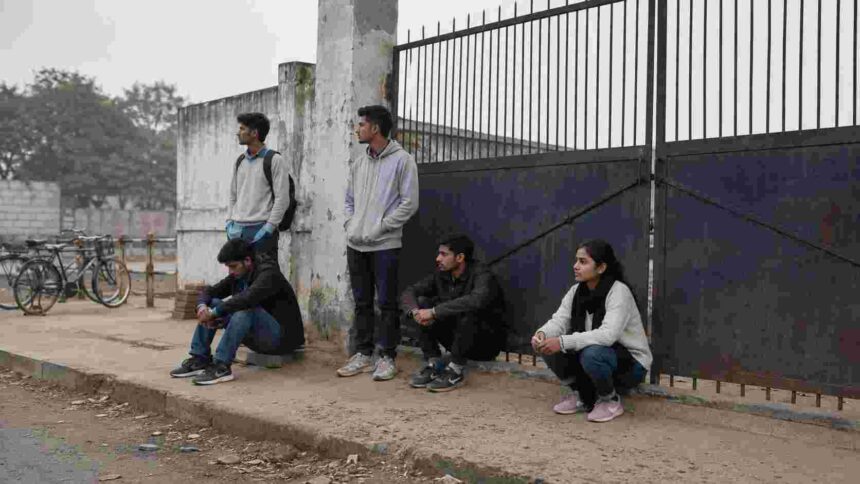

The latest Periodic Labour Force Survey data continue to show Bihar lagging well behind the rest of India in the share of young people who are working. In the April–June 2026 quarter the all-India worker population ratio for the 15–29 age group stood at 34%. Bihar’s corresponding figure remains significantly lower, keeping the state near the bottom of the national table.
The gap is not new. In 2025 only 34.3% of Bihar’s youth were in the workforce against a national rate of 46%, an 11.7% point shortfall. The number had risen from an even lower base of 24.4% in 2017–18, confirming gradual improvement over the intervening years. Yet the absolute level has stayed among the weakest in the country. Two out of every three young people in Bihar continue to remain outside the workforce.
Quarterly and annual PLFS releases have repeatedly placed Bihar at or near the bottom on both worker population ratio and labour force participation for the 15–29 cohort. Female participation is especially low and pulls the overall state average further down. Neighbouring states with comparable demographic profiles have recorded higher youth work participation, showing that the shortfall is not an inevitable outcome of population size alone.
Official statements over the years have pointed to employment camps, skill programmes and investment drives. The data show only partial results. The rise from 24.4% in 2017–18 to the mid-30s in recent years indicates progress from an extremely low starting point. The persistent distance from the national average demonstrates how limited that progress has been. A generation that should be entering productive employment in large numbers remains largely outside it.
Low workforce participation among the young carries long-term consequences. It delays any demographic dividend, increases pressure on household incomes and sustains high levels of out-migration in search of work. When a clear majority of the 15–29 population is not working, the state’s ability to convert its youthful age structure into sustained economic growth remains constrained.
More Read

The 2026 figures reinforce the same pattern visible in 2025 and earlier. Bihar has moved up from the depths of 2017–18, yet it continues to trail the national rate by a wide margin. Until the share of young people in the workforce rises decisively closer to the all-India level, the gap between employment claims and the reality facing Bihar’s youth will remain difficult to close.