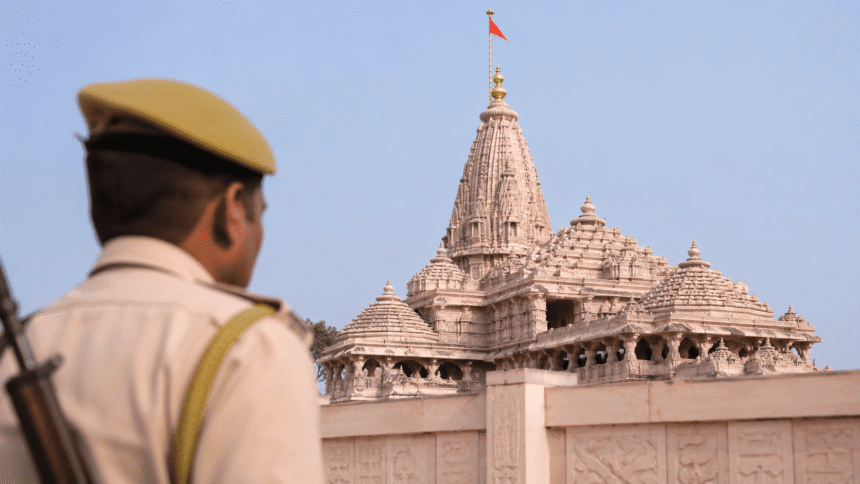

The Special Investigation Team examining the alleged theft of offerings at the Ram Temple in Ayodhya has submitted its final report to the Uttar Pradesh government. According to the findings Champat Rai former general secretary of the Shri Ram Janmabhoomi Teerth Kshetra Trust and former trustee Anil Mishra have not been named as accused. The report effectively clears both of criminal involvement in the theft of devotees’ donations.
Eight individuals associated with the counting of cash and valuables remain the only named accused. They include Avinash Shukla Anukalp Mishra Lavkush Mishra Manish Kumar Yadav Karunesh Pandey Ramashankar Mishra Subhash Srivastava and Ramashankar Yadav also known as Tinnu. All eight were arrested earlier and are in custody. The government has forwarded the report to the Trust for further action. It is expected to be placed before the Trust’s next major meeting.
The clean chit comes months after both Rai and Mishra resigned from their positions citing moral responsibility. Preliminary findings of the same SIT had earlier drawn attention to serious lapses in the counting process. CCTV footage examined for a period of roughly forty days had shown multiple instances of theft. Questions had been raised about the appointment of counting staff and the failure to implement standard operating procedures that had been formally approved. Some of those procedures were signed by Anil Mishra on behalf of the Trust.
Key individuals who had knowledge of the counting system and related financial arrangements were not examined with the thoroughness the scale of the leakage demanded. One star witness and an engineer who had spoken of high commissions in connected works received little attention during the inquiry. The final report has confined criminal liability to the lower level staff who handled the cash while leaving the senior functionaries who oversaw the system outside the circle of accused.
The outcome leaves a striking gap between the evidence of repeated theft and the limited circle of accountability. Devotees from across the country contributed large sums in cash and kind. The discovery of systematic removal of offerings from the counting room raised fundamental questions about the systems put in place to protect those donations. When an investigation ends by clearing the two most visible administrators of the Trust while prosecuting only the hands that physically took the money the distance between systemic failure and individual culpability stands exposed.

A separate SIT continues to function under the directions of the Supreme Court. Its work may yet produce further findings. For the present the official position is that Champat Rai and Anil Mishra bear no criminal responsibility in the theft of offerings. The Trust now has the report in its possession. Whether it treats the clean chit as the end of the matter or as the starting point for a deeper examination of how such large scale leakage could occur under its watch will decide if the episode closes with administrative convenience or with genuine institutional correction.
The case began with allegations of crores of rupees disappearing from the counting centres of one of the most closely watched religious institutions in the country. It has so far ended with eight arrests and a formal clearance for the two men who stood at the top of the Trust’s operational hierarchy when the thefts took place. The report has drawn a firm line. The questions it leaves unanswered remain in plain sight.