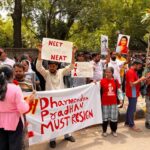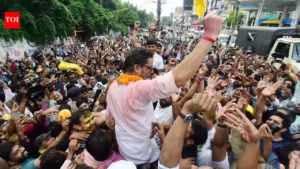


The “Mainstream State” has cultivated an unparalleled public relations machinery designed to project an image of absolute control, “Double Engine” development, and unyielding global supremacy. Yet, when tens of thousands of young students marched toward Parliament under the banner of a satirical internet movement, that entire facade violently crumbled.
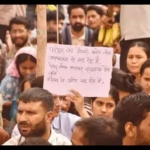
The massive Cockroach Janta Party protest unfolding in the heart of the national capital is not just an administrative challenge; it is a profound, generational reckoning.
The protest, which initially was a sharp and acerbic reply to a Supreme Court Chief Justice’s unthinking remark that unemployed youth are “parasites” and “cockroaches”, is now the largest youth movement of such scale in recent Indian history. The CJP movement led by thirty-year-old Abhijeet Dipke is a symbol of that suffocating and deep despair which an electorate at a graduate unemployment rate of catastrophic 29.1% must endure.
The reason for Cockroach Janta Party’s protest was the total, unmistakable collapse of the education system. The 2026 NEET-UG paper leak was far from a minor setback that affected a few students. It was a complete cancellation of the months of toil and effort put in, not merely causing a major academic backslash but also leaving a lasting psychological and emotional impact on the millions of students. It led to the breaking point for thousands of students and some of them ended up committing suicide.When the youth demanded accountability and the resignation of Education Minister Dharmendra Pradhan, how did the “Vishwaguru” state respond?
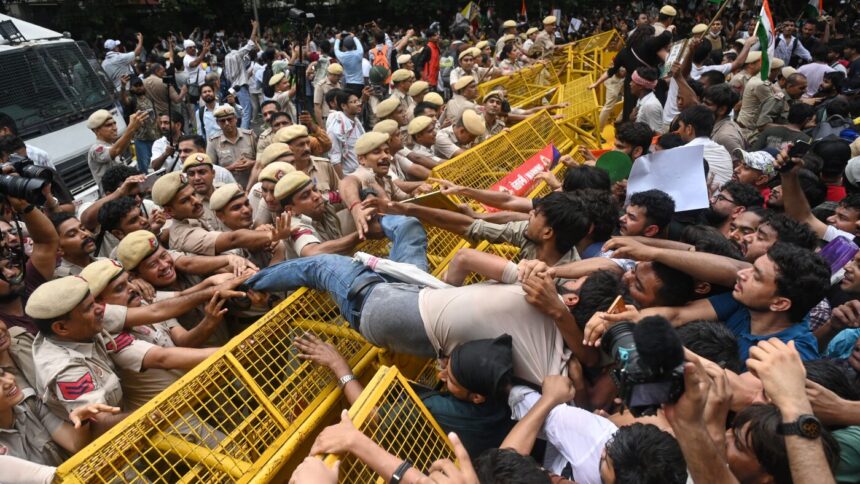
The state brought out the Rapid Action Force (RAF) after ground reports said so. Tear gas rounds were fired by the authorities and violent baton charges were unleashed against the students who showed up to the protests unarmed. A hundred and more police officers plus sixty protesters were hurt. Sonam Wangchuk, a well-known activist, was taken ill to a hospital against his will to disrupt his solidary fast.

The ruthless crackdown highlights the deep-seated weakness of the current regime. In fact, that the Republic is so weak and unstable needs to be exposed by a lathi-charge. Peaceful, knowledgeable youths who are asking only for just exams are being perceived by the government as violent insurgents. When the government sees its citizens who peacefully demand the fair conduct of examination only as a pack of violent terrorists officially it marks, the transition of democratic government into an autocratic rule through elections.
The youth have reclaimed Jantar Mantar, and their message is clear: if the state continues to treat them like pests, these “cockroaches” possess the demographic resilience to overrun the ballot box in 2027 and beyond. The “Mainstream State” can no longer hide its failures behind teargas and police barricades.