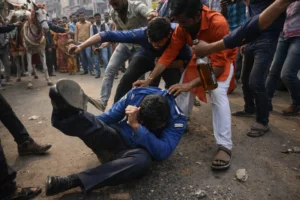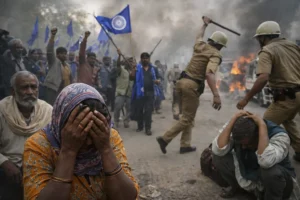


The political systems are dependent on the speeches about strong, firm, and effective leadership to demonstrate their power. The discourse about “Zero Tolerance” law enforcement has turned into the best defense for the “Mainstream State” in the eyes of the public. Yet, real governmental power is not determined by how quickly a state can stop a peaceful protest; it is proven at moments of serious, unexpected law and order challenges.
The recent Uttarakhand Gurudwara Nihang standoff serves as a profound civic reality check, exposing a glaring execution gap within the state’s administrative machinery.
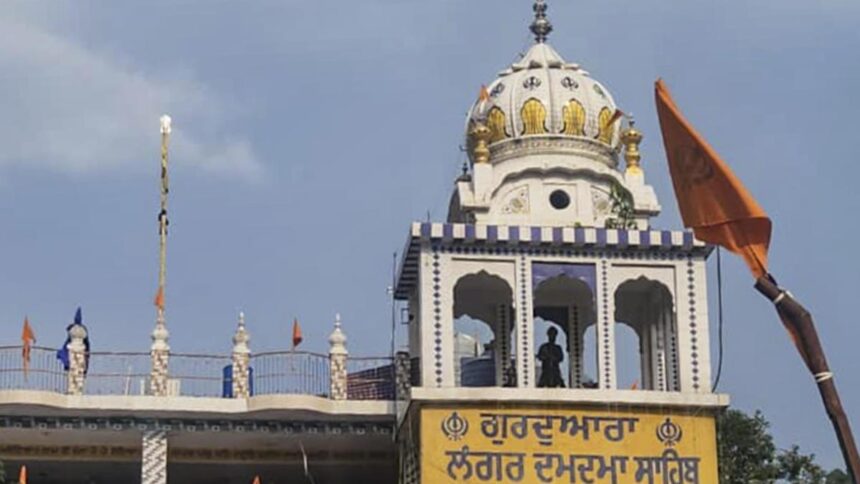
According to comprehensive reports published by The Hindu, a highly volatile situation unfolded in Nagrasu, within the Rudraprayag district. Two Nihang Sikhs engaged the local administration in a tense standoff from the roof of a local Gurudwara.
It is very praiseworthy that Rudraprayag District Magistrate Vishal Mishra, together with a delegation from Punjab, successfully ended the peaceful and casualty-free resolution of the standoff at the Uttarakhand Gurudwara Nihang. Still, the length of the incident leads to serious questions about the functioning of the institutions. The standoff brought the activities of the local administration to a halt for more than 40 hours.
For the middle-class taxpayer, the two-day administrative shutdown is a glaring example of how policing at the state level is riddled with a serious double standard. The very “Double Engine” governance system that constantly shows off how it is able to very quickly respond to the crime, sometimes even outside of the judicial process, and that does not hesitate to use heavy force even against unarmed students or citizens protesting for basic infrastructure, was completely paralyzed in the case at hand.
More Read
This hesitation reveals that the state’s “toughness” is so selective, largely adjusted by political optics and the fear of localized backlash. The administration asking for almost two days of discussions to reduce a local standoff with two people shows that the idea of a strong, very efficient security force is just a facade.
The resolution of the Uttarakhand Gurudwara Nihang standoff is a relief, but the delay is a symptom of a deeper administrative rot. It proves that the “Mainstream State” operates its law and order machinery through the lens of political convenience rather than strict constitutional consistency. A mature democracy requires an administration that is objectively robust, demonstrating the same capability and resolve across all scenarios, rather than selectively flexing its muscle only when the cameras are watching or the targets are politically powerless.