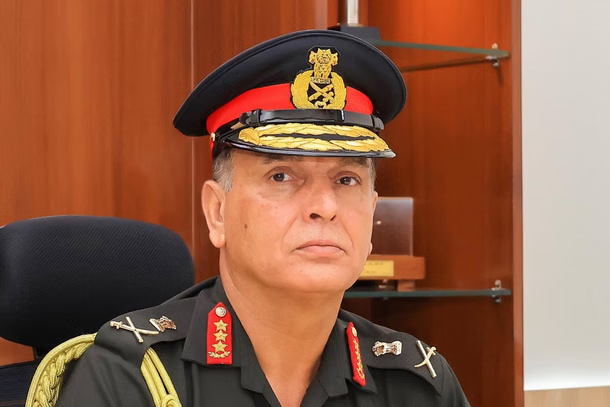

Lieutenant General Dhiraj Seth took over as the 31st Chief of the Indian Army. He succeeds General Upendra Dwivedi after a distinguished tenure. This leadership transition occurs at a pivotal moment when the force balances border readiness modernisation and evolving security threats across multiple fronts. Seth brings decades of hands-on experience that positions him well to steer the army through these challenges.
Dhiraj Seth represents a second generation military leader. His father commanded key formations including the same strike corps that Seth himself later led. Commissioned into the Armoured Corps in December 1986 as a National Defence Academy alumnus he has accumulated nearly four decades of service marked by operational expertise across diverse terrains. His decorations include the Param Vishisht Seva Medal Uttam Yudh Seva Medal and Ati Vishisht Seva Medal reflecting consistent excellence in command and staff roles.
Seth commanded an armoured regiment in the desert sector followed by an armoured brigade in the western theatre. He later headed a counter-insurgency force in Jammu and Kashmir where he managed complex internal security operations. As a Lieutenant General he took charge of the Sudarshan Chakra Corps then served as General Officer Commanding of Delhi Area overseeing major national events and international engagements. He earned the rare distinction of commanding two operational commands first the South Western Command and subsequently the Southern Command. In April 2026 he assumed the role of Vice Chief of the Army Staff contributing to strategic planning and capability development.
His ascent marks another milestone as the first Armoured Corps officer to head the army since General Shankar Roy Chowdhury in 1997. This background in mechanised warfare brings fresh perspectives to force modernisation especially in integrating advanced platforms and joint operations doctrines.
Seth steps into the role amid ongoing tensions along the northern borders and the need to enhance technological edge against hybrid threats. His extensive field experience combined with institutional exposure suggests a focus on combat effectiveness troop welfare and seamless tri-service integration. The Indian Army requires leaders who can translate strategic vision into tangible readiness without compromising operational ethos.
More Read

The appointment underscores continuity in professional merit based selections. As Seth assumes command expectations run high for accelerating indigenisation initiatives strengthening logistical resilience and preparing soldiers for multi domain conflicts. His proven track record across command echelons inspires confidence that the force remains in capable hands during this transformative phase.