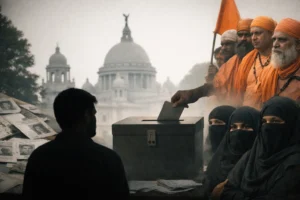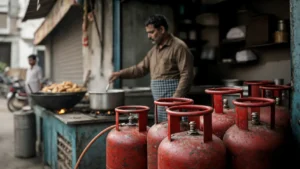
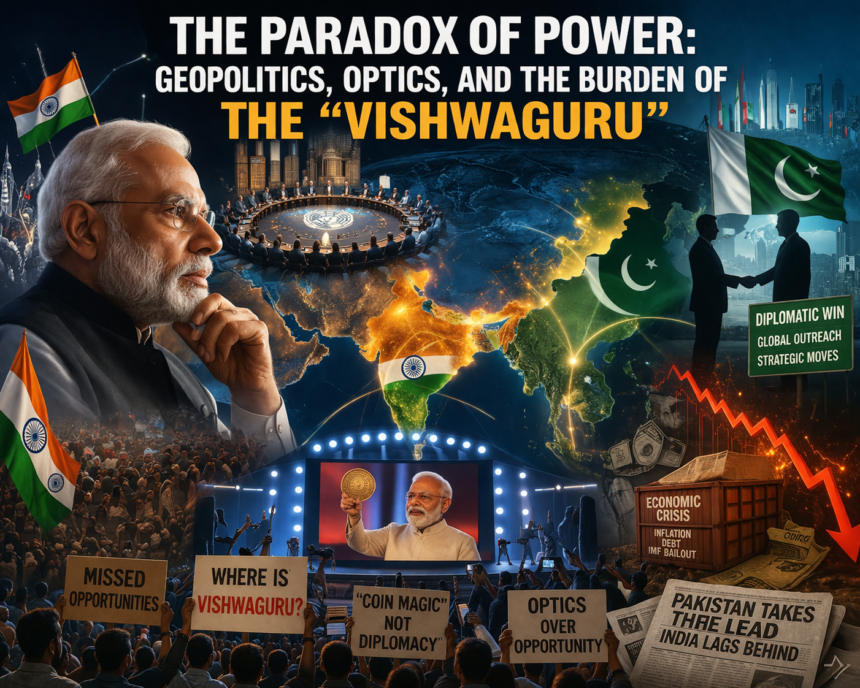

Power, prestige, and diplomatic initiative constantly changing in fact representing quite a big part South Asia’s geopolitical landscape try to narrate themselves partly through this changing scene. Recently a pronounced and quite loud perspective has come up among political analysts and the common peoplethey are pretty unsettled by the diplomatic failures of India. Sudden and quite bold geopolitical moves by a Pakistan that is facing serious economic problems hardly can be seen as a situation that India should always look up to. In fact, this situation leads us to the central issues of India’s foreign policy of today. More than that, it brings to light an aspect of New Delhi’s grand plan of becoming a “Vishwaguru” (world teacher) that keeps getting a lot of attention from the media. Seeing that a neighbor who is not quite doing well diplomatically takes the lead in the international arena, makes one think about India’s strategic focus as well as the tension between using politics as a show and actually functioning as a leader on the world stage.
The Weight of the “Vishwaguru” Ambition
To even think about this domestic critique that is growing, one first needs to understand the ideological concept of the “Vishwaguru.” Over the last ten years, the Indian government has been very active in creating a story that is changing the image of India from just a developing country to one that is a rising moral, cultural, and diplomatic superpower. The concept of Vishwaguru means a world leader. It is a sign that India is willing to show others how to live, be the one who finds solutions to the problems of the world, offer help without being asked, and be the one who keeps the world from going bad. But it is a very demanding role indeed. It raises expectations among the people of the country to a massive level. They want India not only to be the first to respond at any time but also the most vocal person for justice and diplomacy. Not surprisingly, the nation praises India when she comes forward and sometimes criticizes when she does not at all times, observe the principles of non-alignment, and when the government fails to book the department and use the mechanisms to the fullest extent.
The Glaring Paradox: Diplomatic Agility Amidst Economic Crisis
The frustration of the public escalates dramatically when Pakistan occupies the geopolitical gap that India has left because of its perceived inaction. Presently, Pakistan is quite honestly facing the harshest economic crisis in its history. Dealing with sky-rocketing inflation, empty foreign exchange reserves, and being heavily, almost entirely reliant on International Monetary Fund (IMF) bailouts, they’re even getting a fair amount of ridicule from their regional enemies with very harsh nicknames of their financial dependence. However, that in fact leads to an even bigger paradox. When a country that is fighting to survive financially manages to pull off a bold diplomatic move, deliver international aid at the right time, or take a strong moral stand on a major global issue, it reflects India’s own reluctance. The fact that India is hesitant is particularly painful for its critics to accept. The main point underlying the discussions is evident and sharp: If a country that is only just barely surviving economically can successfully present itself on the world stage, why is the one aspiring to be Vishwaguru still behind?India giving away its soft power and strategic foresight to the world is equal to it surrendering the global narrative. In the 21st century, the diplomatic optics are as important and contributing to the power as economic strength. How can you blame the myth of Indian supremacy is punctured and it is the turning of accusations of complacency and missed historical opportunities, when a neighbor with only 1/10 of India’s resources grabs the opportunity of the moment of global significance?
“Coin Magic” and the Illusion of the “Mahamanav”
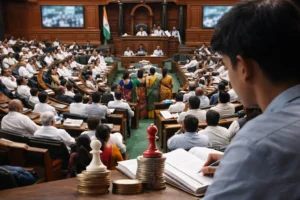
Such geopolitical irritations form the first main aspect of the current public disapproval that a government may be “distracted” by political games. Public relations has become a very important part of modern forms of governments with a new social media era, smartphones, and 24/7 news cycles. Prime Minister Narendra Modi has built an enormous, very well-maintained public image successfully, and his supporters often glorify him as a “Mahamanav” (a great leader or superman figure), who is capable of greatness or leading the country alone. However, the opposition says the leadership is so focused on staged events that they are losing touch with the harsh realities of international diplomacy. The leaders are jokingly said to be “busy in coin magic, ” which is a metaphor for light-hearted public relations stunts, very publicized inaugurations, or the virality of media spectacles, expressing a serious dissatisfaction with politics based on appearances.The world crises require statesmanship, prompt response, and deep strategic focus, citizens expect their leaders to be very focused on grand strategy. Still, if the viral videos of politicians doing trivial things dominate the public sphere instead of the international situation, it will create people’s frustration. Some people believe that the ‘Mahamanav’ character has to be continuously involved in managing domestic events to keep its existence, which is contrary to, very serious, proactive, and sometimes unglamorous foreign policy work.
The Strategic Cost of Missed Opportunities
There are many ways in which the risk of giving higher priority to the domestic appearance rather than the international reality can be a danger and, at the same time, be the source of problems and the reasons of the long-term risks for India. For one, it almost completely erodes a country’s soft power. Soft power is not something that can be built only through cultural exports, yoga days, or making great declarations in international summits; it is also a result of reliable, consistent, and daring behavior in periods of global disagreements. In the case a country does not take firm actions, it creates a geopolitical vacuum. Since nature does not like a vacuum, international relations are a great example of it. Other state playerseven those with weaker economies or domestic instabilitieswill very easily step into that vacuum to raise their own international standing and to win the favor of the global superpowers.Moreover, this dynamic reveals a significant flaw in the model of personality-based, populist politics. Leaders of this kind rely heavily on projecting an image of strength, infallibility, and omnipresence at all times. Yet, the mismatch between the actual lost international opportunities and the perfectly designed domestic story of being a world leader to such an extent that nobody else can match it, leads to a cognitive dissonance which makes the people angry. Since the people were given the impression that the country would reach a level of global eminence like never before, they end up feeling cheated when the realities on the ground do not match the soaring political rhetoric.
More Read
Conclusion: Reconciling Domestic Optics with Global Reality
There are many ways in which the risk of giving higher priority to the domestic appearance rather than the international reality can be a danger and, at the same time, be the source of problems and the reasons of the long-term risks for India. For one, it almost completely erodes a country’s soft power. Soft power is not something that can be built only through cultural exports, yoga days, or making great declarations in international summits; it is also a result of reliable, consistent, and daring behavior in periods of global disagreements. In the case a country does not take firm actions, it creates a geopolitical vacuum. Since nature does not like a vacuum, international relations are a great example of it. Other state playerseven those with weaker economies or domestic instabilitieswill very easily step into that vacuum to raise their own international standing and to win the favor of the global superpowers.Moreover, this dynamic reveals a significant flaw in the model of personality-based, populist politics. Leaders of this kind rely heavily on projecting an image of strength, infallibility, and omnipresence at all times. Yet, the mismatch between the actual lost international opportunities and the perfectly designed domestic story of being a world leader to such an extent that nobody else can match it, leads to a cognitive dissonance which makes the people angry. Since the people were given the impression that the country would reach a level of global eminence like never before, they end up feeling cheated when the realities on the ground do not match the soaring political rhetoric.