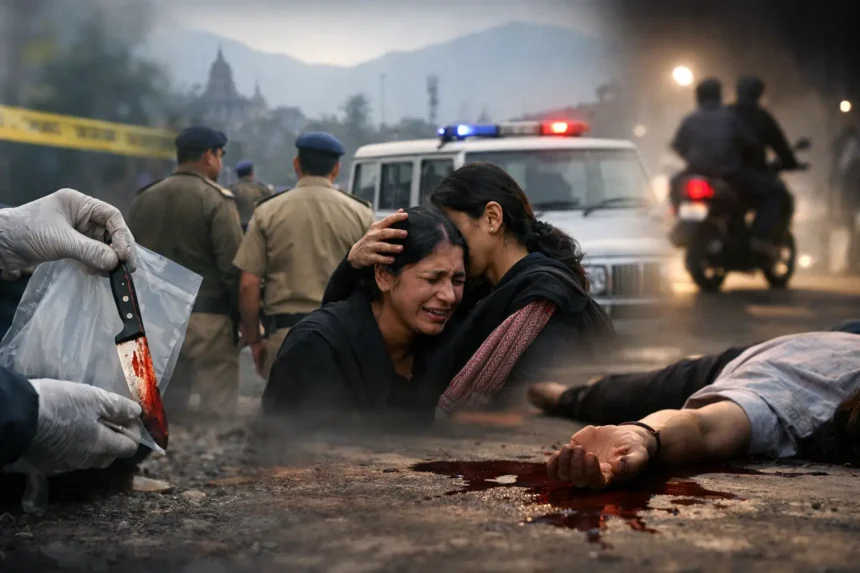

It is no longer possible to write off the unsettling concentration of deadly violence that has occurred in Uttarakhand within only fifteen days as random acts, bad luck, or isolated criminal activity. Seven killings have occurred in quick succession, sometimes with only 48 hours between them, in major cities like Dehradun, Haldwani, and Rishikesh. These killings’ brutality, speed, and public nature expose a deeper breakdown in state authority, policing tactics, and governance priorities in addition to a rise in crime. This illustrates a breakdown in deterrence, where fear of the law, the consequences, or prompt action no longer serves as a deterrent to violence.
This spree’s obvious pattern is what makes it particularly concerning. These are not crimes that are concealed in isolated hill villages or forests where there is a naturally low level of government presence. They have taken place in places that ought to be the most obvious manifestations of government, such as wholesale markets, crowded bazaars, malls, and residential rental homes. The current cycle started on January 31, when a woman was shot dead by her lover inside a rented house in Rishikesh. Gunjan Srivastava, who was only in her early twenties, was killed by a cleaver in broad daylight two days later in Dehradun’s Machhi Bazaar when she attempted to break off contact with a man who was pursuing her. It was a clear message. Open, public violence could be carried out with the assurance that one could flee or at least postpone it.
The killings persisted rather than prompting increased preventive policing. Renowned businessman and gas agency owner Arjun Sharma was killed on February 11 in the vicinity of Dehradun’s Tibetan Market, allegedly in a contract killing stemming from a family property dispute worth approximately fourteen crore rupees. It was evident that criminal networks did not feel urgent pressure from law enforcement when they hired shooters for a daylight murder in a busy commercial area. A young man and woman were discovered with their heads and faces crushed by stones in Haldwani’s Galla Mandi a day later. This method of murder conveys intense anger, dehumanization, and a total lack of fear. Vikram Sharma was shot on February 13 on his way back from the gym near Silver City Mall on Rajpur Road. The attackers fired from inside the complex and fled on a waiting motorcycle. The brutality of the violence on Valentine’s Day, February 14, shocked even seasoned onlookers. Following an attempted sexual assault, resistance, and a violent escalation that resulted in rape, stone crushing, and death, Shubham from Almora and Laxmi from Nainital were killed by their own friends following a drinking party.
When taken as a whole, these incidents show a state’s inability to act between warning indicators. In a relatively small state that takes pride in its tranquility, spirituality, and tourism, seven murders in fifteen days is almost one murder every two days. The administration has responded in a way that is both predictable and risky. After a crime, there is indignation, promises are given, inquiries are started, and then there is silence until the next murder. This isn’t crime prevention; it’s reactive governance. Criminals can repeatedly test boundaries and discover that the system only reacts after blood has been spilled.
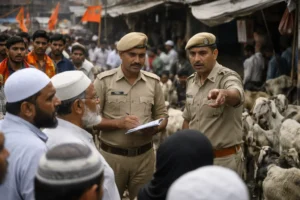
The locations of these murders matter as much as the murders themselves. Markets such as Machhi Bazaar and Tibetan Market, commercial hubs like Silver City Mall, and wholesale trading zones like Galla Mandi are supposed to be under constant surveillance, routine patrolling, and rapid response policing. Their vulnerability indicates thin police presence, inadequate beat systems, and an overreliance on CCTV footage as a post crime tool rather than a preventive deterrent. CCTV cameras may help identify suspects later, but they do not stop bullets, knives, or stones in the moment. The fact that killers acted confidently in such spaces suggests they did not expect immediate interception.
More Read

Underlying this crisis are long standing structural weaknesses. Uttarakhand, traditionally, has struggled with police personnel shortages, with numerous districts operating significantly below sanctioned strength. The expansion of cities like Dehradun and Haldwani has outpaced the growth of policing capacity, leaving large semi-urban areas under-monitored. Conviction rates in violent crimes have remained low, reinforcing a perception that even arrest does not guarantee punishment. When paired with judicial delays, the result is a system where the cost-benefit calculation increasingly endorses violence.
One of the reasons behind such crimes is the unregulated usage and supply of alcohol. Its role is seen most strikingly in the Haldwani murders. The double murder was a direct result of intoxication and sexual exploitation. The extensive expansion of liquor business in Uttarakhand although has boasted the state revenue over the last decade, however the state has failed to codify or enforce any regulations or community level intervention. Majority of such liquor outlets are often near the residential areas, yet the state keeps on ignoring the matter. Dhami’s government has learnt how to monetise the liquor on the cost of life.
Another reason which fueled this killing spree is the proliferation of arms especially among the radicalised elements of society. All of the weapons involved in these killings were unlicensed. This raises serious questions about arms regulation and dismantling of local gangs an crime networks. One of the cases involved individuals who were out on bail, yet still carrying weapons. In another instance, contract killers operated with illegal firms. All this points out not only just the failure to police, but also lack of administrative vision and intelligence.
More Read

The larger failure of governance cannot be overlooked. Political leadership seems to be more concerned about appearances, tourism stories, and episodic narratives, while avoiding long-term commitments to police reform investments. Administrative systems tend to react to media demands and ignore risk. Urban development has embraced disorderly change without meeting the growing need for protective systems. The slow pace of the courts is the only thing that reinforces the belief that justice is promised, and will be delivered too late to be of any use. In these circumstances, violence is not only criminalized, but is also inflected and normalized in society.
The price for the normalization of violence is huge. Markets empty, women change, restrain or altogether abandon their routines in the public realm, and families learns to compromise rather than seek justice. Once this level of social fear is reached, it becomes extremely difficult to restore the lost social confidence. The rapid decline of confidence is also further evidence of social decay.
These seven murders are not incidents in isolation. They are manifestations of a state that is losing its hold on deterrence. They are manifestations of a police apparatus that responds after bodies are left on the ground, of a government that responds after outrage is ignited, and of a society in which violence is increasingly convinced that it can operate without the fear of immediate retribution. Until the enforcement apparatus is seen to be visible, proactive, and relentless, and until accountability is taken out of the press conference and into the realm of structural change, this murder spree will not be an exception. It will be a precedent. The most disturbing question that Uttarakhand currently faces is not whether there will be another murder, but when, and where.