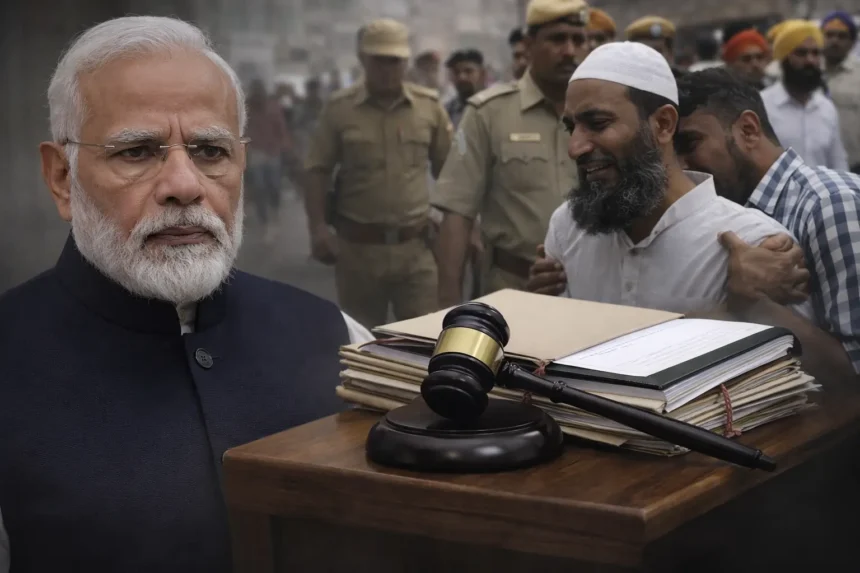

Recently a commissioner of the United States Commission on International Religious Freedom (USCIRF) suggested imposing targeted sanctions on the Rashtriya Swayamsevak Sangh (RSS) and the Research and Analysis Wing (RAW). In particular, the commissioner was for freezing assets and barring these individuals from entry into the US. It’s no great surprise then that the Modi government reacted quite sharply and dismissed the international report as completely ‘biased, ‘ ‘prejudiced, ‘ and ‘an unacceptable interference in India’s internal affairs.’ But when we look inside, the more bitter and exacting fact is revealed.
It’s ironically the same government which takes foreign institutional reports as discriminatory that has consciously kept the annual reports of the country’s own constitutional bodythe National Commission for Minorities (NCM)in the dark for over a decade. Since Narendra Modi became Prime Minister in 2014, no annual report of the NCM has been laid in the Parliament. In fact, the Delhi High Court has also raised a question against the government for this obvious neglect. Now, the question is: Is it not a glaring double standard to discredit foreign reports and at the same time completely cripple your own domestic minority institution?
The Hollow Claim of ‘Sabka Saath, Sabka Vikas’
In 2014, Narendra Modi was elected on the popular slogan of ‘Sabka Saath, Sabka Vikas’ (Inclusive Growth for All) that generated great excitement in the country. He further added ‘Sabka Vishwas’ (Trust of All) to this in the 2019 elections. PM keeps on emphasizing in his speeches that his ruling is inclusive and no community will be left aside whatever their religion is. However, if one looks at the annual reports of the National Commission for Minorities, it has been proven that this slogan is nothing but a mere election promise.
The big question is why the report has not been presented in Parliament since 2014 until now. This is not simply a case of negligence in administration but a clear and direct breach of Section 13 of the National Commission for Minorities Act, 1992. The Act lays down that Council report, Action Taken Report of the Government on the recommendations of the Council, and the reasons for rejecting any of the recommendations shall be presented before both the Houses of Parliament.
More Read
Legal Obligation and Institutional Apathy
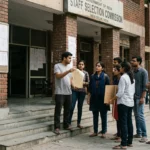
According to Section 12 of the NCM Act, the Minorities Commission draws up its report each year and submits it to the Ministry of Minority Affairs. This was a regular and enforceable constitutional arrangement until the year 2010-11. However, after 2014, this legal formalitiy was, in fact, reduced to an absolute minimum. In their own annual reports for 2020-21 and 2021-22, the Ministry of Minority Affairs revealed that the NCM had submitted reports till the year 2020-21. But, there was no indication at all of these reports being presented to the Parliament.
Even more surprising was the government’s response to an unstarred question (No. 1725) in the Rajya Sabha on December 15, 2025. The Ministry officially recognized that no report had been laid down in the Parliament since 2014. This is indeed a reflection of the disregard of Indias religious minoritiesMuslims Christians Sikhs Buddhists Jains, and Parsisconstitutional rights.
More Read
1,495 Recommendations and the Standard Reply: “Under Consideration”
Data obtained under the Right to Information (RTI) Act has decisively uncovered this sort of institutional negligence on a wide scale. In its official replies to RTI applications, the NCM revealed that from 2015-16 to 2024-25, it had forwarded a total of 1,495 recommendations to the Central Government. A year-wise splitting: was 127 in 2015-16, 246 in 2017-18, 226 in 2022-23, and 245 in 2023-24, which is deeply disturbing. What were these 1,495 recommendations?
They concerned very sensitive and vital issues such as steps against police brutality in minority-dominated areas, strict enforcement of laws against communal violence, safety of minority kids in schools, and protection of places of worship. However, every year the Modi government, despite receiving dozens of recommendations, has given one and the same seemingly copied and pasted answer: The matter is under consideration in the Ministry of Minority Affairs.
So far the government has not revealed how many of these 1,495 recommendations have been carried out and how many have been thrown away. The NCMs official website hardly shows anything beyond 2010-11, as no reports or ATRs have been published for the later years. When this body itself is so helplessor often headless, for example, in 2020 and 2025 when the vacancies were very longhow can minorities expect justice?
Development Claims Are Meaningless Without Security
The Modi government often highlights that initiatives like the PMJVK (Pradhan Mantri Jan Vikas Karyakram), ‘Nai Manzil’, and minority scholarships are contributing substantial development in the lives of minorities. Showcasing figures of huge budgets and millions of beneficiaries as proof, they are proud of the results.
More Read
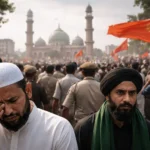
But the basic question still remains: Is there development without a feeling of security? Every year, there are many complaints about the pastor and church attacks in Christianity, the lynching of Muslim youths allegedly, evictions of Sikhs, and police working in a biased way in Dalit-Minority cases.
As per the RTI figures, NCM received 9,824 complaints only between 2020 and 2025. Besides, the NCM often proceeds on its own and issues communications to the state governments and also suggests compensation to the victims. Yet as the summary reports are not presented to Parliament, a nation-wide discussion on the issue is not possible, the lawmakers cannot thoroughly examine and demand for highest-level accountability. When the victims kept on crying in the files, the ‘Sabka Vishwas’ (Trust of All) slogan becomes a deep and mean mockery.
The Political Motive Behind Concealing the Truth
Even during the previous UPA governments, there were some delays in tabling the reports however they were finally placed before Parliament together with the ATRs. The Modi era has almost ended this process. It does not take a genius to deduce the political motive behind it. If the reports from 2014 to the present were placed in Parliament, the sad reality of communal atrocities
Dadri and Hathras, the Delhi riots, as well as the recent communal clasheswould become a part of the official parliamentary record. Tabling them would be inviting the opposition to raise stabbing questions, the media would be highly excited about the debates, and it would further tarnish the image of the Indian government on international platforms (thereby validating the concerns raised by bodies such as USCIRF). In order to prevent this, the government decided to take the easiest path: they immobilized the institutional framework and just did not put the reports forward at all.
This is not ‘Sabka Saath’; this is the dark shadow of majoritarianism where minority communities are not only beneficiaries of token welfare schemes but their constitutional rights for security and institutional grievance redressal are being.
Modi Government in the Dock: Time for Accountability
The story of ‘Sabka Saath, Sabka Vikas, Sabka Vishwas’ narrative did not even come close to the minority security and institutional accountability aspects. 12 years without a single NCM report in the Parliament, 1495 recommendations getting hold of dust, the violation of laws of the constitution, and the weakened Commission in a deliberate mannerit is only the Modi government’s deep insensitivity to this issue that these things together prove beyond any doubt.
On the one hand, a government roars that Parliament has to be made accountable, while on the other hand, they are doing their best to subvert the laws of the country. Minority communities of India’s today are left almost without any alternative but to ask when our real ‘inclusive growth’ will come, when the people of our ‘trust’ will be truly honored. Modi government today is in the dock. If the ‘Sabka Saath’ is the real claim, then the government should immediately bring all NCM reports for the last 12 years, with the Action Taken Reports, to the House for the next session.
It should openly and honestly inform the country about the concrete steps taken to prevent the violations of the rights of minorities. Minorities in India need very little from the government besides scholarships and schemesthey need constitutional protection, security, and dignity. If the government decides to continue its silence, history will mark this time as a perfect example of institutional suppression and majoritarian politics disguised as inclusive development.