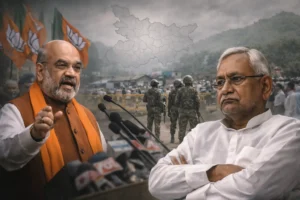


Today, the worlds self, proclaimed “Mother of Democracy” is marking a sad and alarming anniversary. It was exactly two years ago, on March 11 2024 that the Indian government officially notified the rules for the contentious Citizenship Amendment Act (CAA). In fact, it was the state that did much more than simply implement a law; it went so far as to make religion an official criterion for citizenship law in India for the first time.
From 2026, those who have experienced the implementation of the CAA rules will hold that moment in history as a turning point in the fast disintegration of the Indian republic. It was when the government legalized the policy of exclusion, pointedly telling its Muslim citizens that their existence in India is dependent on the goodwill of a majoritarian government. Yet the pain of the CAA goes beyond its unjust provisionsit is expressed in the blood, the sweat and the lost years of the young activists who have protested against it.
The Foundation of Exclusion: Rewriting the Republic
In order to grasp the extent of the destruction caused by the CAA, it is necessary to examine the very basic promises of the Indian Constitution. India’s world image is mainly based on the fact that India is a secular country, according to the Indian Constitution. Secularism means that the government does not favor any religion and that one’s religion can never be a criterion for determining one’s citizenship in India.
The CAA totally disregarded this principle. By giving priority to granting Indian citizenship to migrants from the neighboring countries, and explicitly excluding Muslims, the government sowed the seeds of a deeply divided nation. The CAA, when combined with the threat of the National Register of Citizens (NRC), turned out to be a bureaucratic weapon not only to exclude but also to risk intimidate India’s largest minority group. It was an audacious legislative act that changed the definition of an Indian from a diverse pluralistic community to a singular, ethnically nationalist one..
The Pushback: When the Streets Defended the Constitution
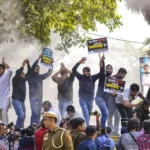
India’s citizens chose not to keep quiet when their constitutional rights were under threat. The enactment of the law, and the subsequent notification of its rules, gave rise to one of the most historic democratic protests in modern South Asia. The movement was not led by the political class, but the marginalized.
More Read

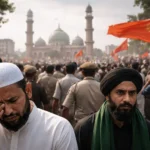
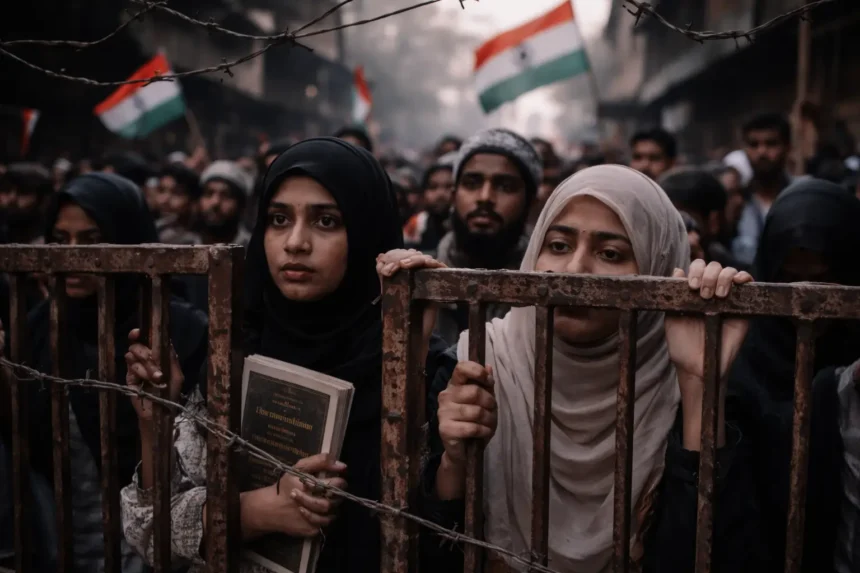
The focal point was Shaheen Bagh in New Delhi where grandmothers and young women facing harsh winters, staged a peaceful and persistent sit, in. Besides them, the brave student leaders of Aligarh Muslim University (AMU) in Uttar Pradesh, Jamia Millia Islamia in Delhi, and large, loud rallies in states like Bihar also came along. The demonstrators did not possess firearms; rather, they held the Indian Constitution in their hands.
They rejoiced waving the tricolour flag, loudly reading the Preamble in the public spaces, and singing unity songs. They showed a government that was betraying its own founding fathers, and that the communal and divided India cannot be of their acceptance. For a short time, the democratic uprising led the world to discover the true power of a community that is resilient and fighting for the secular fabric of their country.
The Ruthless Retaliation: Weaponizing Anti-Terror Laws
Authoritarian governments nevertheless always fear a peaceful mass mobilization the most. In fact, the Indian government did not use any democratic means like engaging in dialogue or constitutional refashion to respond to this democratic wave rather it showed complete and unmitigated barbarity. When the government could not defeat the protesters morally or intellectually, they had no option but to resort to physical violence and judicial cruelty in order to silence the dissent.
More Read
In order to quiet the streets, the government turned the Unlawful Activities (Prevention) Act (UAPA), which is a very strict anti, terror law that was originally intended to deal with armed insurgency and terrorism, into a weapon.
In a terrible distortion of justice, young Muslim student leaders, human rights scholars, and civil society activists were labeled as “conspirators, ” “anti, nationals, ” and “terrorists.” Resorting to the UAPA against peaceful protesters is a clear indication of a fearful, dictatorial state.
Most characteristic of the law is that it turns the regular rules of criminal justice upside, down: bail is almost impossible to get, and the police are empowered to the extent that they can hold an individual for several months, even a couple of years, without ever proving his or her guilt or even filing any formal charges. By charging UAPA to the brightest young minds from the minority community, the government has very effectively cut off the head of the civil rights movement.
2026: The Process as the Punishment
At this point of time in 2026, the CAA has become a lived fact. Its discriminatory system carries on without any obstacles, completely changing the demographic and social situation of the country. However, the deepest sorrow of this day is not in the parliament or the judiciary; it is in the dark, crowded cells of India’s prisons, where the situation is very painful.
Those who courageously defended the secular Constitution of Indiathe scholars, the students, the poets, and the activistshowever, are continuing to remain in jail. They have been deprived of their youth, their education, and their liberty as they are caught in an endless judicial maze.
Some have even been held in solitary confinement for years without ever having been tried. A clear, loud, and dreadful message of the state to its people is: If you oppose the ruling ideology, the legal procedure itself will be your punishment.
More Read
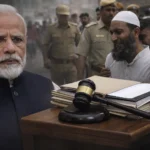
You do not have to be found guilty of a crime to die; the state will let the tremendous and unrelenting force of the legal system do away with your spirit and silence your voice. The courts which are often recognized as the last refuge of hope, for the most part, have been mere silent witnesses to this systemic abuse of power, handing out adjournments while innocent citizens are left to rot in prison cells.
Conclusion: A Democracy in Name Only
While the world is flocking to see India as a democracy on steroids, a fundamental, a bit scary question has to be asked: If the very anti, terror laws that identify university students as terrorists when the only “crime” of these students was the reading of the Preamble of the Constitution in a public place, then what does one make of the health of this so, called democracy?
The response is as harsh as it is sad. A country that is scared of its own Constitution, targets its minority groups, and considers even peaceful dissent as a form of terror, is a democracy only in name. The two, years anniversary of the CAA remains not only a reminder of a discriminatory act, it is a representation of the demise of Indias secular promise.
Indias bar of democracy will probably remain hanging as one of the greatest global hypocrisies of the 21st century until the political prisoners of the anti, CAA movement are released, and the anti, terror laws are disarmed of their political utility.