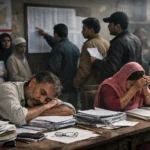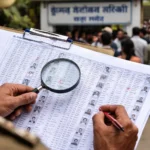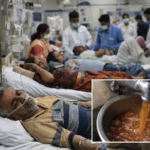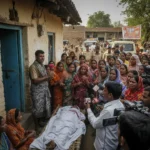
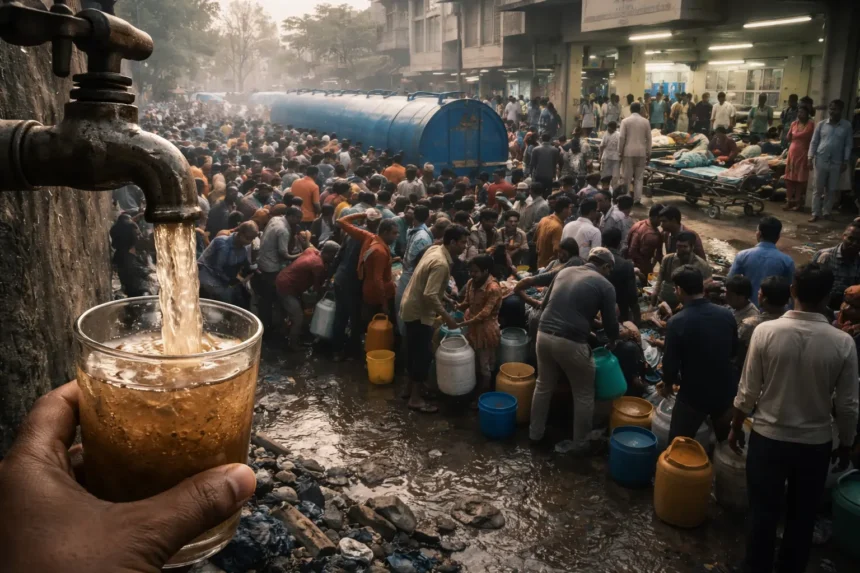

Indore had long been standing with the medals of cleanliness pinned to its chest. Government brochures, global surveys, and media reports continued to declare it India’s cleanest city. But on a quiet morning in January, these medals lost all meaning when the water flowing from the city’s taps began giving people illness instead of life.
This was not a natural disaster. No flood came, no earthquake struck. It was a human-made crisis—old pipes, poor monitoring, and complaints that had been heard for years but never taken seriously. Citizens kept saying that the water was foul-smelling, its color had changed, its taste was unbearable. In response, there was silence, or formal assurances. Then what often happens in such systems happened: hospitals filled up, mourning spread in homes, and the administration moved into action—but far too late.
Here, the question is not only about contaminated water, but about priorities. Does cleanliness mean only swept roads and shining footpaths? Or does it also include those basic facilities on which human life depends? If a city can rank first in global rankings but cannot provide safe water to its citizens, what moral value do such rankings really hold?
The Indore tragedy is a symbol of a wider Indian—and in fact global—problem: the showmanship of urban governance. We measure what looks good in photographs, not what saves lives. Sewerage and water lines run underground; they are neither visible nor headline-worthy—until bodies begin to surface.
After the incident, suspensions took place, compensation was announced, and promises of investigations were made. But all this is the story after the fact. The real story is the one being written in every city where infrastructure has grown old, but the system claims to be young; where citizens’ voices are treated as data points, not as alarm bells.
More Read

Indore reminds us that the true measure of a clean city is the health of its citizens, not certificates. If this crisis is dismissed merely as an “accident,” the next city will be someone else’s—the name will change, but the story will remain the same.
And perhaps this is the bitterest truth of all:
dirt is not always on the street;
More Read

sometimes it flows from the tap.