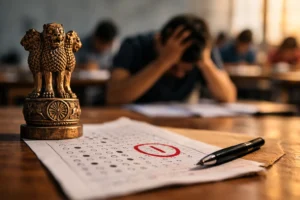
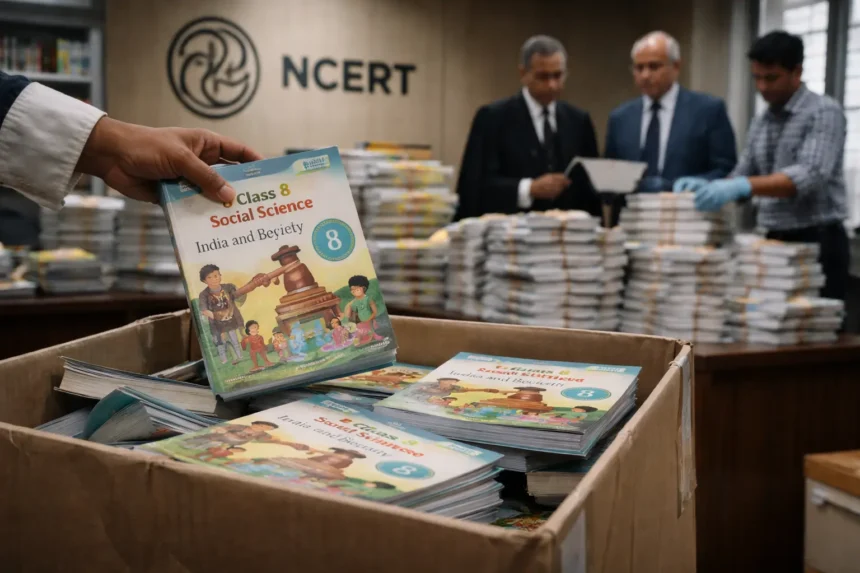

New Delhi NCERT, the National Council of Educational Research and Training, has done something very extraordinary; they have completely withdrawn from circulation a Class 8 Social Science book which they had published just recently. In fact, on March 10, the highest educational authority in the country even apologized unconditionally and without any reservation for the controversial chapter on Indian judiciary. This very harsh step has been taken after the Supreme Court of India issuing very stern remarks and suo motu going to the extent of even cautioning that the content of the book may very well harm the image of the judiciary as an institution in the minds of children. The immediate discontinuation of the book Of the book that is so contrary to the Truth, the Earth in a Question came at a time when it reminded one of the ongoing concerted for the NCERT board textbooks is making the responsibilities of the different educational boards concern the pedagogy and the tense situation in balancing have to be drafts civil and political science curriculums for the Middle School Students.
Key Highlights of the Controversy
Total Withdrawal: NCERT has completely removed Part II of the Class 8 Social Science textbook
Exploring Society: India and Beyond.
Unconditional Apology: Directors and other members of NCERT apologized “unconditionally and without any reservations” on March 10 for Chapter 4 of the book.
Controversial Content: The chapter focused excessively on the judiciary corruption, huge case backlogs, and alleged negligence of judges, while positive aspects of constitutional doctrines were downplayed.
More Read
Supreme Court Action: The Supreme Court, on its own motion, considered the matter and issued show-cause notices for possible criminal contempt to senior education officers.
Next Steps: All the physical and digital copies have been either confiscated or removed. The Supreme Court will hear the case again on Wednesday, March 11, 2026.
The Apology and Complete Withdrawal
The Kentucky controversy finally reached a peak on Tuesday when the NCERT published a final public statement admitting the grave errors in their recent publication. The challenged book, ‘Exploring Society: India and Beyond’ (Class 8, Part 2), was part of the educational system only a few weeks ago, on February 23, 2026. Nonetheless, Chapter 4, plainly headed ‘The Role of Judiciary in Our Society’, rapidly became the focus of a large institutional uproar. “NCERT, a premier educational research and training organisation, had published the Class 8 (Part 2) Social Science textbook ‘Exploring Society: India and Beyond’ three weeks ago. It included Chapter 4 investigating ‘The Role of Judiciary in Our Society’, ” the official statement issued on 10 March read. “The Director and members of the NCERT deeply regret Chapter 4 and thus, express their sincere apologies unconditionally and immediately. The complete book has been permanently removed and is not available for sale anymore.”
More Read
This quick pullback is a telling sign of the huge pressure the educational body has been under. At first, NCERT in its February 25 disclosure tried to be a little tolerant by only partly admitting the presence of “inappropriate content” and assuring that the chapter would be re, written with the help of legal experts. But the council had to give up the rewriting option and take a complete withdrawal step because of the severe reasons behind the Supreme Court’s intervention.
Roots of the Controversy: Skewed Perspectives
Chapter 4 had a major problem at its core; it presented a very one-sided and negative image of the Indian judicial system. Those who are experts in education and law, after going through the text, observed that the text seemed to be overwhelmingly focused on depicting the judiciary as a failing system. The chapter mainly blamed the problems of the judiciary on corruption at all levels and the huge backlog of more than 3 crores of pending cases. It even cited instances of complaints against judges and gave strong hints of a culture of institutional inaction and impunity.
Discussing case backlog and judicial accountability are indeed the need of the hour and vocal concerns of the society. However, challengers maintained that exposing the complex and negative aspects of judiciary to the students at such an early age (i.e. 8th graders) without sufficiently highlighting the positive aspects is a grave irresponsibility. Recent debates around judicial decisions and merit in recruitment have already sparked nationwide discussion, as seen in the controversy surrounding the Rajasthan High Court’s zero cut-off ruling
The chapter did not point out the role of judiciary as the protector and enforcer of the Constitution. Not only that, essential facets like upholding Constitutional Morality, Basic Structure Doctrine, provision of legal help to those who cannot afford and the wider theme of access to justice are some of the things that might have simply been skipped or neglected and completely left out. The book, which was supposed to generate some faith in the courts, presented such a harshly negative and disproportionate picture that it could very well have dealt an initial blow to the faith of the young and tender minds in the whole legal system.
Supreme Court’s Suo Motu Intervention
The story took a drastic legal twist after the Supreme Court of India, based on the widespread media reports that analyzed the contents of the textbook, took suo motu cognizance of the matter on February 25, 2026. The next day, the highest court in the country issued a severe reprimand. On February 26, the Supreme Court lambasted the NCERT for its lack of editorial control. It outrightly accused the publishing of the chapter as “a deliberate move to discredit and demean the judiciary institutionally.” It further indicated the bench’s fears regarding the mental and civic impact of the text by suggesting that educating with such a lopsided material might lead to “permanent misconceptions” among students. According to the Court, the nurturing of such intense distrust at an early stage may have the most serious, long-lasting effects on the perception of judicial independence and the rule of law in India.
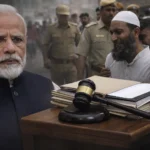
Going further than just scolding, the Supreme Court formally sent show-cause notices to the Director of the NCERT and the Secretary of the Department of School Education. The notices strongly required them to explain why they shouldn’t be made the subject of criminal contempt proceedings for the publication of material that was a serious insult to the courts’ authority.
More Read
Drastic Remedial Measures Ordered
Recognizing that the continued circulation of the textbook was a direct threat, the Supreme Court did not wait for the contempt trial to finish before ordering wide-ranging administrative measures. The Court gave a blanket instruction for the immediate stopping of production and distribution of the contentious book. Besides that, the Court instructed the law enforcement agencies to confiscate all physical copies that have either reached the distribution networks or educational institutions.
The digital copies, including PDFs and e-books, available on NCERT’s official websites and other educational platforms were ordered to be completely removed from the internet to avoid further spread.
Future Implications and Accountability
NCERT tried to fix its image in the last part of the apology statement from 10 March when it said, “NCERT is quite serious about always keeping very high standards of accuracy, sensitivity and responsibility in educational content. We apologize for any inconvenience caused due to this and also thank all stakeholders for their understanding.”
This kind of a thing could be the breaking point in NCERT’s story as this will put it forever in scandals, and the list of controversies is still growing with the changes and revisions of textbooks and curriculum. However, this issue is different from others, such as changes in historical narratives or different wordings in political science. In fact, this controversy is the only one that led to the judiciary exercising its punishment powers. By the time the nation reaches the highest court’s hearing on Wednesday, March 11, 2026, they will not be talking about the withdrawal of the book but rather, the endpoint of those officials who were involved being held responsible.
The whole thing is a very strong message of curriculum makers’ tremendous responsibility, that is, youth education of a country cannot be done in any less careful, neutral ways and must be done with respect towards those constitutional institutions that keep democracy alive.