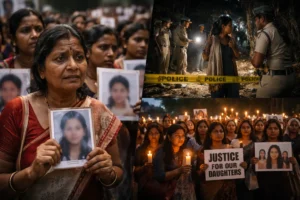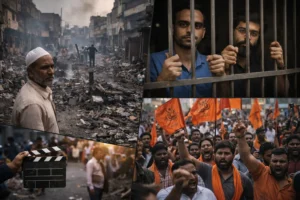
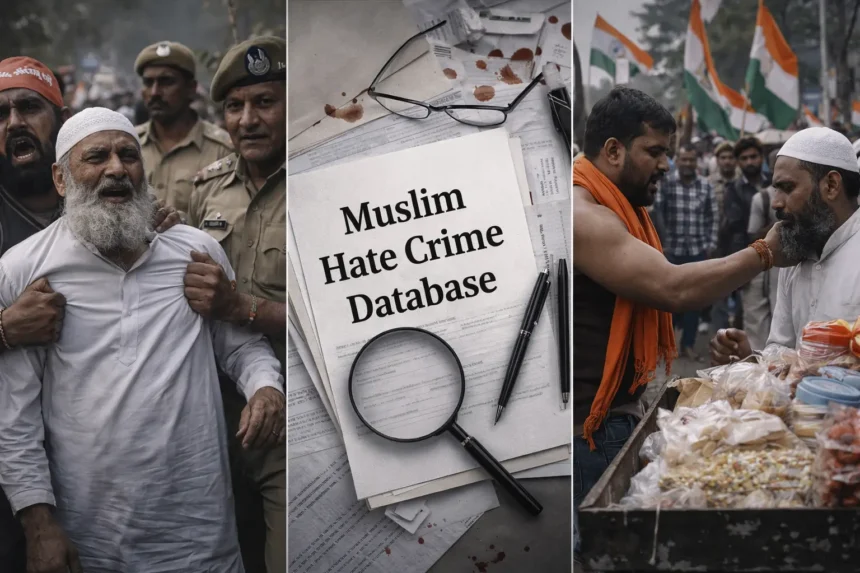


The recently released Muslim Hate Crime Database 2026 has, through a series of powerful figures, revealed the ghastly reality of communal violence in India. According to the data published by the Muslim Mirror Network, the report portrays the discrimination suffered by Muslims, who are the largest minority group in India, in the month of February 2026. To everyone’s surprise, the report said that an enormous 95% of the violence was committed in states administered by the BJP. This database is an extremely valuable tool for human rights activists, journalists, and the general public to assess the increasing levels of religious intolerance. The data serves as a warning that the security of minorities is a serious issue and also highlights the responsibility of state governments to work towards communal harmony.
What the Data Reveals
Only in one month, February 2026, a total of 66 hate crimes were reported in different Indian states. These hate crimes comprise things like physical attacks, forced sloganeering, and also demolition of religious places. The figures clearly show that the incidents took place mostly in a few areas. The five most affected states in terms of the number of these incidents are:
- Uttar Pradesh: 27 cases
- Madhya Pradesh: 8 cases
- Odisha: 7 cases
- Uttarakhand: 7 cases
- Maharashtra: 6 cases
The report reveals that close to 85% of the accused individuals are members or supporters of right-wing Hindu groups. Besides, it brings to light an alarming pattern of police either ignoring the complainants or even showing hostility towards them.
Uttar Pradesh as the Epicenter of Documented Violations
Uttar Pradesh, with 27 out of 66 incidents, stands first in the list in the February report. The state experienced a broad variety of communal hostilities aimed at both persons and places of worship.
It seems that religious places got a major share of demolition by local administrations. In Bareilly, even a mosque, which was subject of a High Court case, got demolished. In another instance, a madrasa was also bulldozed in Sambhal after the authorities claimed that it was encroaching upon government land.
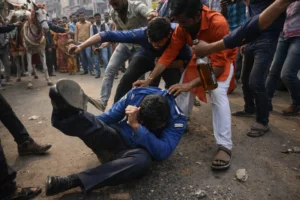
Physical attacks on individuals are just as worrying. For example, in Meerut, a Muslim man was severely beaten because he spoke against reckless driving. One can see the violent act in a viral camera footage. Sadly, such violence when it breaks out results in loss of lives. Based on the information from northeast Delhi, a 35-year-old Muslim man was killed when he tried to save his teenage son from a mob which was attacking on religious grounds.
More Read

Voter Suppression and Violation of Electoral Integrity
A large number of reported incidents allegedly relate to the misuse of electoral rolls. In a number of states, the reports disclosed that political powers arranged disenfranchisement of minority voters:
- In Gujarat’s Somnath constituency, there were 15,663 bulk Form-7 applications made for voter deletions, the majority of which were for the names of Muslim residents.
- In Uttar Pradesh, BLOs mentioned they were intimidated and beaten up by political leaders after they refused to delete the recorded minority voters.
- There were massive demonstrations in Siddharthnagar alone against the alleged mass deletion of Muslim names during the voter list revision.
These planned activities, causing disenfranchisement of a community, raise deep concerns regarding the democratic rights of 200 million Muslims living in India.
Sabotage of Livelihoods and Economic Boycott
Assaults on Street Vendors
In Odisha, several old Bengali Muslim sellers were hit, and they were made to say religious slogans “Jai Sri Ram” or “Bharat Mata Ki Jai.” In Telangana, a Muslim snack seller at the Medaram Jatara was attacked on the internet for “food jihad.” The YouTubers not only harassed him but also demanded his Aadhaar card, and on the camera forced him to eat his own food.
More Read
Expulsion of Migrant Workers
In states like Assam and Maharashtra, migrant Muslim laborers were labeled as the “Bangladeshi Jihadis” or “Miyas” by the locals. In Mumbai, some Hindutva groups physically held migrants, threatening to deport them without any legal basis.
In the state of Madhya Pradesha total of ten Muslim families dwelling in Ghoti-Nandora village encountered an utter social boycott. The villagers were instructed to refrain from trading with or purchasing goods from Muslims which practically cut off their main source of income.
The Weaponisation of “Love Jihad” Narratives
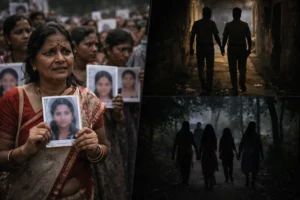
The alleged “Love Jihad” plot is, in fact, the cover for a wide pattern of mob violence and public shaming. Taking a woman to a dargah in Maharashtra with a Muslim man was enough reason for Bajrang Dal members to detain that Hindu woman, and this is just one of the examples found in the database of how interfaith interactions have led to mob violence and public humiliation. In Madhya Pradesh, an interfaith was paraded through the streets by the Hindu Jagran Manch while police stood by. Forcible sloganeering is the new mode of intimidation. In fact, victims in Uttarakhand, Odisha, and Telangana were physically assaulted until they delivered the chant of majoritarian slogans. In addition, a Muslim truck driver was so brutally beaten with sticks and belts simply after revealing his Muslim name to a mob.
Institutional Negligence and Political Rhetoric
The upsurge in violence is sometimes a result of the use of inflammatory political language. There are records of politicians and notable persons delivering inciting speeches encouraging extremist groups.
Recently, the Chief Minister of Assam Himanta Biswa Sarma has added fuel to the fire of anti-minority talk, particularly putting the blame on Bengali-speaking Muslims to win the elections. A politician from Madhya Pradesh publicly declared the ability of his men to “behead 10 Bangladeshis”. Similarly, a religious leader of Uttarakhand verbally attacked the Muslims in a Hindu conference and demanded that they should vacate the region.
International observers are monitoring these events closely. As reported extensively, religious divisions in India have never been greater, which has dealing a blow to the secular nature of the country.
Besides, institutional neglect also covers healthcare. At King George’s Medical University in Lucknow, a 35-year-old Muslim woman passed away after 12 hours of being in a situation of alleged medical neglect, which is a stark example of how minorities are often the victims of institutional apathy.
Way Forward
The database results show a very disturbing scenario regarding communal harmony in India. Even a single month’s total number of incidents is quite surprising and worrisome for a democratic nation.
66 cases recorded in 28 days show hate crimes have become normalized which is not only a serious threat to India’s constitutional values but also a death of public spirit and citizenship.
Community groups, media persons and human rights defenders should use the data for their demand for accountability authorities. The law enforcement agencies should behave like an independent arm of the state rather than be a tool of the ruling party if India is to protect its people, regardless of their religion.
India can only hope for peace if the perpetrators are punished by the law and divisive politics is rejected, without leaving any room. Making a commitment to protecting the minority communities from violence at a national level should be kept as a top priority without delay.