
Women’s safety in Madhya Pradesh has become one of the most urgent and sentimental
issues in the recent political discussion.New figures presented in the state assembly show
that thousands of women and girls who went missing in recent years are still missing. The
figures have sparked outrage, political recriminations, and a reassessment of the state’s
policing policies, governance priorities, and social fabric.
This is not a new issue. Madhya Pradesh has ranked several times in national crime
statistics for crimes against women for many years. However, the recent emergence of a
large number of unsolved missing cases has made the debate even more intense and
urgent.
A disturbing figure
According to official figures presented in the assembly, about 2.6 lacs women and girls
have gone missing in recent years, of whom more than 50,000 are still missing. Although
officials say many cases involve voluntary departure, running away from home, or family
disputes, the number of unsolved cases is a serious concern. National Crime Records
Bureau (NCRB) reports consistently rank Madhya Pradesh among the states with the
highest number of reported cases of kidnapping, abduction, and crimes against women.
Political implications
The case has become political one. Opposition parties have blamed the government over
the negligence to protect the women and not introducing an effective system to monitor
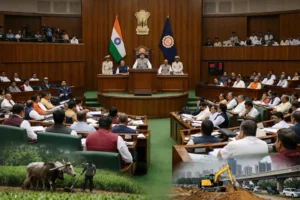
missing persons cases. During the debate in the Madhya Pradesh Assembly, MPs
questioned the implementation of women safety schemes and coordination between
regional police units.
Political implications
The case has become political one. Opposition parties have blamed the government over
the negligence to protect the women and not introducing an effective system to monitor
missing persons cases. During the debate in the Madhya Pradesh Assembly, MPs
questioned the implementation of women safety schemes and coordination between
regional police units.
However, the ruling government believes that the number of cases registered has increased
naturally due to improved FIR registration, digital reporting system and better
documentation. Office beater complain that former governments reported such cases with
no exact figure, while the updated system ensures transparency.
However, transparency without a resolution does not provide any solace to the affected
families. Critics say that registering cases is only the first step. What matters is the speed,
seriousness and outcome of the investigation.
Structural and social factors
The issue of women’s safety in Madhya Pradesh cannot be limited to the police alone. Many
factors related to structure added to this matter severally
More Read

- Human trafficking networks
The central location of Madhya Pradesh in India has made it a transit point for trafficking
networks that are running all over the state’s frontiers. Affected girls from affected families
are particularly at risk. - Poverty and migration
Economic hardship drives internal migration, which sometimes leads to unsafe working
conditions, exploitation or disappearance. There is a great lag in the informal labour sector,
which aggravated the situation. - Child marriage and male-dominated culture
Despite legal restrictions, child marriages continue in some areas.
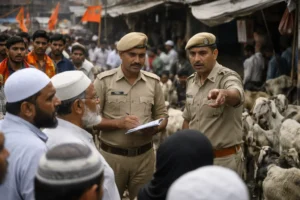
A large backlog of cases, a lack of criminal capacity, jurisdictional issues between states,
and a shortage of human resources are just a few of the challenges that law enforcement
organizations must deal with
In certain regions of India, mechanisms like centralized databases and computerized
tracking portals have been put into place, but their implementation is still lacking. Families
commonly lament the lack of transparency and the absence of updates on the status of
investigations. Additionally, conviction rates for human trafficking and abduction vary slow
legal proceedings and inadequate witness protection policies further erode accountability
Social Effects:
The crisis has an effect that goes beyond the immediate sufferers. Families may impose
movement restrictions on girls when safety concerns predominate in public discourse,
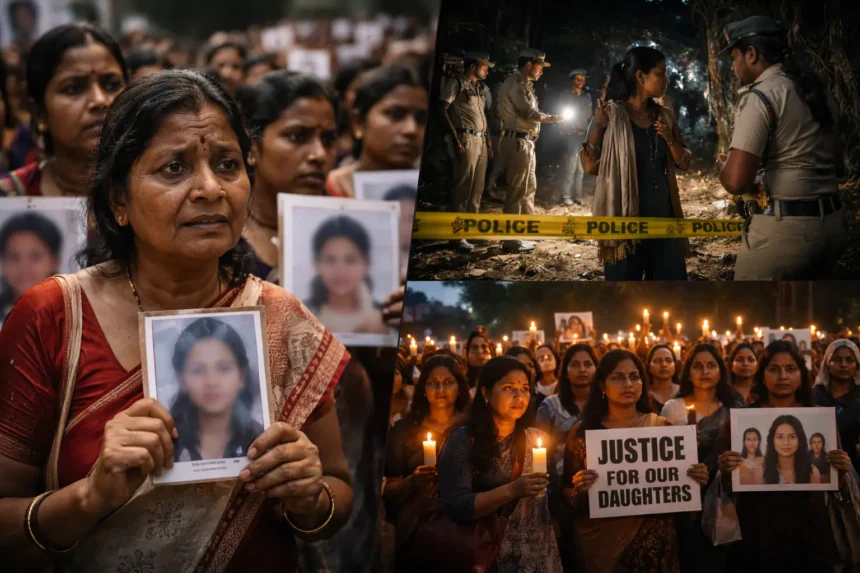
which could jeopardize long-term objectives for gender equality. Civil society groups have
staged demonstrations in cities like Bhopal and Indore, calling for more stringent laws to
prevent human trafficking, quicker investigations, and more vigilant police. These groups
contend that human trafficking is a sign of larger as well as crime It also has a cognitive
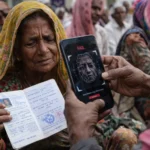
modalities as families of missing women undergo long-term trauma, often entangled
between hope and disappointment. Without knowing their fate, finding them becomes
nearly impossible.