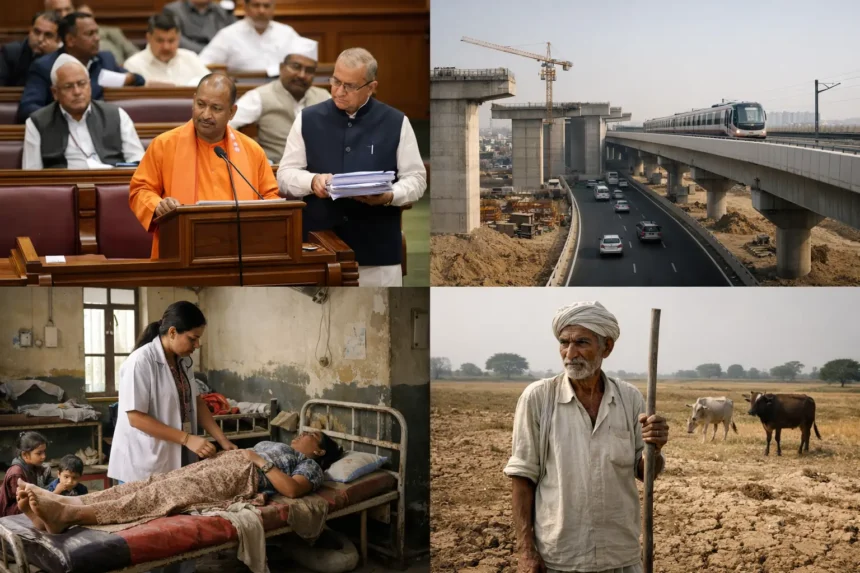


Lucknow, February 2026: This week was filled with air of triumphant rhetoric in the Uttar Pradesh Vidhan Bhavan. Finance Minister Suresh Khanna tabled what probably is the final comprehensive budget of the Yogi Adityanath 2.0 government, outlining a fiscal plan that is admirable in its scope. The budget has surpassed a record 8.85 lakh crore, a figure that is expected to take the state to the goal of the state having a trillion-dollar economy in 2027.
On the surface of it, the document can be deemed the example of accounting prosperity and meet all requirements of the Fiscal Responsibility and Budget Management (FRBM) Act. However, behind the apparent shroud of “Fiscal Discipline there is an even more disconcerting story. It unveils a government that has perfected its financial management techniques but is increasingly distant from the people that such funds should serve. With the state moving towards the pre-electoral season, the 2026-27 budget is an indicator of the increasing divide between the economic hopes of the government and the daily lives of the common people.
Myth of Surplus: When Saving is Starvation
The headline grabber in this budget is the claim of a Revenue Surplus in the state estimated at ₹28,000 crore. In the business context, surplus is a reason to rejoice and this means that the revenues are higher than the expenditures. The administration believes that this portrays Fiscal Prudence since the Fiscal Deficit has been kept at 3.2 percent of GSDP, which is well within acceptable limits.
But in the case of a state like Uttar Pradesh, a proclaimed Surplus is not the harbinger of success; it is rather an indication of a lot of under-utilization.
The problem lies in spending data. A surplus in a welfare state often shows that the system didn’t use the allotted finances. Latest observations by the Comptroller and Auditor today’s (CAG) highlight that departments vital to human development—like health, education, and Social Welfare— have consistently failed to utilize their full budget estimates. In the previous fiscal year, nearly 18% of the Health Department’s budget remained unspent.
More Read

The fallout from this “savings” is excessive. That ₹28,000 crore surplus isn’t always virtually extra cash; it represents medicines that weren’t delivered to Community Health Centres (CHCs), delays in scholarships for Dalit students, and lack of nutrition in mid-day meals. With a medical doctor-populace ratio of 1:3,500 (as opposed to the WHO norm of 1:1,000), hoarding cash isn’t always smart; it’s utter negligence.
The budget creates a structural imbalance with its heavy focus on Capital Expenditure (Capex). This yrea, Capex has risen via 20% to over ₹1.6 lakh crore. This cash goes to expressways, metro rails, and defense corridors—infrastructure that is quite visible and politically attractive. However, this comes at the cost of Operational Expenditure (Opex). The budget for salaries and maintenance has barely kept pace with inflation.
The result is the “Shiny Shell” syndrome: We assemble world-class medical colleges (Capex), however we don’t set aside enough resources to to hire specialists or fix the CT scan machines (Opex). We focus on six-lane highways, while our schools have crumbling roofs. As reiterated earlier, a government is not a Bania (Trader) meant to hoard profit. It is a guardian meant to spend. When “Fiscal Prudence” leads to unspent funds in a state with high malnutrition, it becomes an excuse for “Social Apathy.”
More Read
The Political Battlefield: The “Farewell Budget” Narrative
The political reaction to the budget was immediate and strong, indicating that the campaign for the 2027 Assembly Elections is on. Opposition Leader Akhilesh Yadav labeled this the “Vidaai budget” (Farewell budget), suggesting that electorate is ready to show the BJP the door.
The opposition’s criticism isn’t mere rhetoric; it is a ferocious attack against the structural integrity of the “Double Engine” growth story. The Samajwadi Party referred to the budget as “Directionless,” arguing it ignores the PDA (Pichhde, Dalit, Alpsankhyak) coalition. Their argument is based at the divide among Macro-Economics and Micro-truth.
Whilst the authorities claim a GSDP increase charge of 14%, the opposition highlights the stagnation of rural wages. The budget allocates big sums for industrial corridors, yet the unemployment percentage for the youth (15-29) within the states remains a contentious thing, with independent bodies suggesting it is way higher than the authorities’ claims of 2.4%.
The Congress party has labelled the budget a “bundle of hollow promises,” specifically criticizing the way it addresses agrarian distress. No matter the grand promises to double farmers’ earning, the prices of diesel and fertilizer have risen faster than the Minimum Support Price (MSP). ₹4,000 crore has been set aside for power subsidies to farmers; however, critics argue that it a band-aid on the gaping wound of stray cattle—a menace that destroys standing crops across the Terai and Bundelkhand regions.
Dubbing it a “Farewell budget,” the opposition aims to create a psychological narrative that the government is on its way out. They are capitalizing at the disconnect among the “Trillion dollar” vision and the fact of growing thali inflation, which has increased 8% year-on-year for the rural poor. The budget session has consequently shifted from a economic debate to the starting point for the 2027 Election campaign.
Ayodhya vs. The Others: The Geography of Inequality
One of the most striking elements of the budget is its geographical favoritism. The authorities have earmarked ₹150 Crore specifically for “Tourism Development” in Ayodhya, collectively with a ₹100 crore grant for the Naimisharanya pilgrimage. This is in addition to the over ₹30,000 crore already invested in Ayodhya for the international airport, railway station, and corridor redevelopment over the past 5 years.
More Read
There is no doubt that Ayodhya has grown to be a hub of the “Spiritual Economy,” attracting over 10 crore visitors in the last 12 months. However, a state budget cannot function as a municipal budget for a single VIP district. The contrast with the rest of the state is shocking.
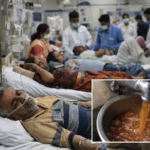
Simply forty km away in districts like Gonda or Barabanki, situation is dire. Reports from government medical colleges in these regions often display patients sharing beds or sleeping on flooring due to absent infrastructure. Even as Ayodhya enjoys solar streetlights and underground cabling, villages in Bundelkhand face severe water shortages, with the Har Ghar Jal scheme failing to meet the 100% saturation in the arid hinterland.
The critique here isn’t against religious tourism but against the sharp regional imbalance. Ayodhya is crafted into a shiny island of development in a sea of neglect. When the authorities can immediately find funds for “beautification” in spiritual sites and have difficulty freeing timely budget for flood defenses in eastern UP or encephalitis prevention within the Gorakhpur area, it indicates out of place priorities.
Final Verdict
The Uttar Pradesh budget 2026-27 is a document of excessive ambition but low empathy. It succeeds in impressing credit rating groups and bond markets, however it risks letting down the mother searching for a doctor in a rural PHC or the the youth waiting for a joining letter for a government job.
A state cannot run with focus on one city, nor can it thrive absolutely on economists’ approval. The government’s fixation at the “Trillion dollar” intention has blinded it to the cracks beneath. While ₹150 crore is effortlessly available for tourism when basic health infrastructure in neighboring districts crumbles, the message is clear.
The authorities need to take into account that a surplus within the treasury is meaningless if there is a lack of trust. As we move towards 2027, electorate will not be focusing on GSDP figures but on their economic savings, their fields, and their children’s schools. If this budget is actually the “Farewell budget ,” it will not be due to the fact the authorities ran out of finances, but because it ran out of connection with the common man.