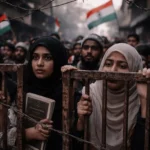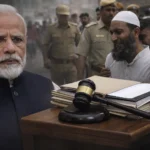
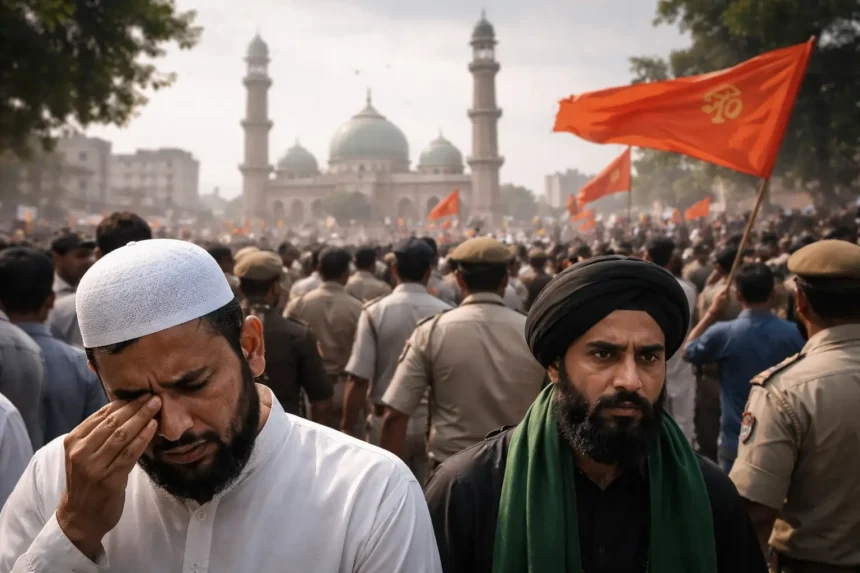

Iran-Israel war in Madhya Pradesh started a new debate and controversy over the muted Eid announcement by the Shia community. Right wing organizations and political pundits have reacted strongly to reports that Shia Muslims intend to celebrate a muted Eid as a symbolic homage to Ali Khamenei. Supporters contend that the gesture is display of religious identity and togetherness despite critics, especially Hindu nationalists voices, seeing it as contentious. Deeper issues like minority rights, religious freedom, and the nature of secularism in India under Narendra Modi’s administration are brought to light by the dispute. The ideology of the ruling Bharatiya Janta Party and the emergence of Hindu nationalists politics in the nation have produced large conflicts that are reflected in this controversy.
The Context of the Issue
The context of the issue is that some members of the Shia community choose to celebrate Eid in moderation, according to the reports from Bhopal, the state’s capital. For many Shia Muslims around the world, Ali Khamenei is a revered religious figure. The act was meant to be a symbolic homage to him. Expressions of support for religious leaders l are common among Shia communities worldwide. However, even symbolic actions can easily become politicized in India’s fiercely divided political environment. Social media pundits and right-wing activists swiftly denounced the action, accusing participants of associating with foreign political symbolism. What had started out as local choice swiftly became a national political controversy due to these reactions.
The Issue of Religious Freedom is At The Heart of Dispute
The issue of religious freedom is at the heart of the dispute. The freedom to practice and express one’s religion is guaranteed by the Indian constitution. The capacity of the communities to observe the religious occasions in ways that are consistent with their traditions and beliefs should, in theory, be protected by this concept. However, many analysis contented that social and political pressure is mounting on Muslim population, particularly Shias. Because they deal with Muslim identity, decision regarding how to commemorate religious holidays can become contentious. In this sense, minority growing concern about their religious freedom are reflected in the muted Eid decision, which is also symbolic gesture.
More Read

The BJP Role in anti-Muslim Policies
The BJP role in anti-Muslim policies has a trickle down effect as administration is accused by the critics of supporting narratives and policies that marginalized Muslim populations. Fears among minorities have increased over the past 10 years due to a number of contentious laws and political campaigns, including discussions about citizenship, religious conversion, and conflicts between mosques and temples. The subdued Eid debate is just one more instance of how the current political system politicizes Muslim religious customs. They contender that the government’s inability to unequivocally protect minority rights fosters an environment in which radical speech is accepted. As a result, the ruling establishment is frequently held accountable for the rising tensions because it failed to protect effectively prevent communal polarization.
The Ideological Alignment of Modi and Netanyahu
More Read
The ideological alignment of Modi and Netanyahu is reflected in the behavior of government towards Muslims as critics argue. Prime Minister Modi also rekindled by the debate. India and lsrael have improved their diplomatic and strategic relations during the last ten years. Supporters of the BJP see this collaboration as advantageous for technical advancement and defense cooperation. Critics counter that the two leader’s ideological similarities particularly with regard to religion is threat to Muslims in India. Many Muslim observers believe that India’s political leadership is less understanding of Muslim issues, both at home and abroad, as a result of growing closeness between Israeli and Indian governments.
Secularism in India is At Stake
Secularism in India is at stake as because this kind of issues, India has portrayed itself as a secular republic where many religions live under the an egalitarian arrangement. However, issues like the muted Eid debate cast doubt on this principle’s viability. The majoritarian politics compel to think that secularism is faded away from India. However, proponents of pluralism contended that India’s democratic institutions are still capable of safeguarding religious freedom and diversity.
Conclusion
To conclude, this debate in Madhya Pradesh is not only issue but disagreement and rupture in Indian society. It’s is a reflection of greater conflicts about political divisiveness , religious freedom and the future of secularism in India. The decision was meant to be a symbolic show of solidarity for the Shia minority. However, the response from political and ideological factions made it a national problem. In the end, the episode emphasizes how crucial it is to defend minority rights and make sure the religious expression is not unjustly politicized. Protecting equitable for all religions will continue to be a critical challenge in the coming years If India is to preserve its long-standing character as a heterogeneous country .