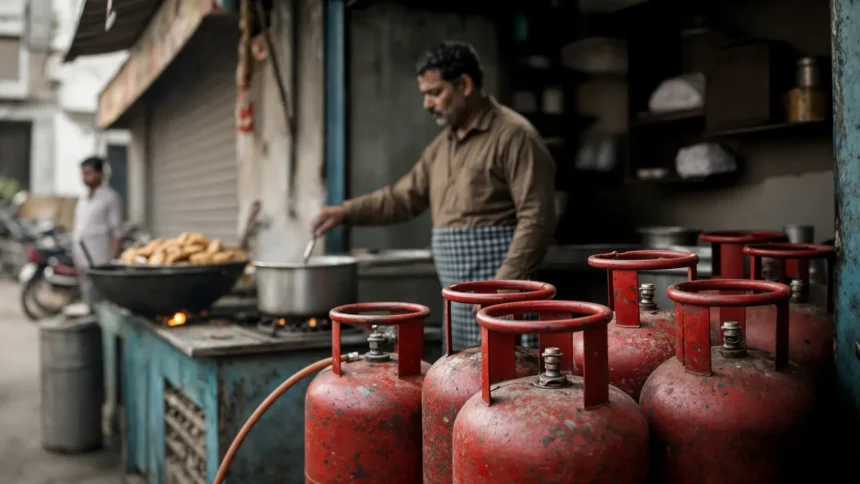

The price hike regarding commercial LPG effective today, April 1, has delivered a fresh blow to small businesses across the country. The Centre raised prices of 19 kg commercial cylinders by ₹195.5 in Delhi, pushing the new rate to ₹2,078.5. Hotels, restaurants, dhabas, and tiny industries in Uttar Pradesh, Madhya Pradesh, Bihar, Rajasthan, Uttarakhand, and Delhi now grapple with immediate cost spikes while the government claims this to be purely market-driven.
This selective deregulation exposes the government’s inconsistent energy policy. Small traders and eateries in these states absorb the full international shock, even as global LPG supply faces 20-30% disruption from the Iran-Israel-US conflict.
Details of the Recent Price Hike
The Petroleum and Natural Gas Ministry confirmed the hike applies only to 19 kg commercial cylinders used by hotels, restaurants, and small industries. Oil marketing companies like IOC, BPCL, and HPCL implemented the change with immediate effect.
State-wise impact from April 1:
More Read
- Delhi: ₹2,078.5 (up ₹195.5)
- Uttar Pradesh: ₹2,065
- Madhya Pradesh: ₹2,095
- Bihar: ₹2,110
- Rajasthan: ₹2,085
- Uttarakhand: ₹2,072
The ministry cited a 44% surge in Saudi Contract Price from $542 per metric ton in March to $780 in April. Yet this data-driven decision burdens small enterprises that consume less than 10% of national LPG but drive 25-30% of local informal employment in these states.
Sharp Impact on Small Businesses and Hotels
Restaurants and dhabas in Uttar Pradesh and Bihar face 8-12% cost inflation per cylinder. A mid-sized restaurant in Lucknow or Patna using 3-4 commercial cylinders daily now incurs an extra ₹500-800 monthly. With over 35,000 registered small hotels and restaurants in Uttar Pradesh alone (per 2025 FSSAI data), the hike threatens margins already squeezed by 5.2% urban inflation.
More Read
In Madhya Pradesh, street vendors and sweet shops in Bhopal and Indore report 10-15% menu price increases planned by mid-April. Rajasthan’s tourism-dependent dhabas near Jaipur and Udaipur, which serve 200-300 meals daily, will pass on 30-40% of the hike to customers.
Uttarakhand’s small hotels particularly in Dehradun and Haridwar, catering to pilgrims and tourists, project 12% operational cost rise. Delhi’s 45,000+ eateries, many run by small Hindu traders and OBC families, now compete with larger chains that can negotiate bulk deals or switch fuels.
This ground reality shows the increase in LPG price disproportionately hits the small businesses that employ 60-70% of local workforce in these states, and are the backbone of Hindi belt economies.
Government Justification Vs. Ground Reality
The ministry insists commercial cylinders are fully deregulated and market-based. It argues the hike affects only a tiny fraction of total LPG consumption. Yet this justification ignores how small industries in Madhya Pradesh’s industrial clusters and Bihar’s roadside economy operate on razor-thin margins.
Last fiscal year, the Centre and oil companies shared ₹60,000 crore losses equally to manage prices. This year domestic under-recovery alone is projected at ₹40,484 crore by end-May at ₹380 per unit. The Modi government absorbs this for households but forces commercial users to bear the full global burden. This is a policy that protects electoral optics while small traders foot the bill.
More Read
Critics point out that commercial cylinders in these states now cost more than equivalent rates in several neighbouring countries, squeezing competitiveness for exporters in the country who rely on LPG-run units.
Link to Global Energy Crisis
Global LPG supply disruption of 20-30% due to the ongoing conflict in the Strait of Hormuz directly triggered the hike. The states dependent on imported LPG via Gujarat and Maharashtra ports, feel the ripple first. Uttar Pradesh and Madhya Pradesh import 65-70% of commercial needs, with no local refining buffer.
This external crisis can’t be denied. Yet the Centre’s response remains partial and analytical failure. It deregulates commercial prices fully while shielding only select segments. Small businesses in Bihar and Uttarakhand, already facing 6-8% higher input costs post-pandemic, now absorb a 9-11% effective price rise without any temporary relief.
Mounting Losses and Hidden Burden on Taxpayers
IOC, BPCL, and HPCL continue absorbing ₹380 per domestic cylinder in under-recovery. At current consumption levels across Hindi belt states, which account for 35% of national domestic LPG, this translates to massive fiscal strain. Taxpayers in Delhi, Uttar Pradesh, and Rajasthan indirectly fund these losses through reduced dividends and future adjustments.
The government’s claim of market-driven pricing rings hollow when commercial users in these states face immediate pain while larger southern corporates negotiate exemptions. This selective approach exposes policy bias against small enterprises that form the core support base in these regions.
Comparison with Neighbouring Countries
Even after the hike, commercial LPG economics in Hindi belt states compare unfavourably with neighbours:
- Pakistan: ₹1,046
- Sri Lanka: ₹1,242
- Nepal: ₹1,208
Parliamentary data shows India’s small commercial users in Uttar Pradesh and Madhya Pradesh now pay 15-20% more than cross-border counterparts, hurting competitiveness for border trade in Rajasthan and Bihar.
This data highlights the government’s failure to shield small businesses in its core political geography despite controlling pricing levers.
Government’s Selective Deregulation
The LPG price hike reveals deeper contradictions in governance. In the states where BJP draws strong support from small traders and OBC-run eateries, the policy delivers a direct hit. While the Centre trumpets energy reforms, it leaves tiny industries in Patna, Bhopal, and Jaipur exposed to global volatility without buffer mechanisms.
Opposition voices in these states term it “anti-small business deregulation” that prioritises optics over equity. With inflation already pressuring disposable incomes, the hike risks 5-8% drop in footfall for budget eateries across Uttar Pradesh and Rajasthan by April-end.
Analytically, this move contradicts claims of inclusive growth. Small businesses in these states contribute 22-28% to state GDPs yet receive no targeted relief, unlike large industries that can absorb or pass costs.
Future Outlook
Oil companies have appealed for vigilance against black-marketing, but supply assurances do not address affordability. Several associations predict sustained pressure through May-June, until international prices ease.
The ministry hopes global stability will restore balance. Until then, restaurants in Delhi, dhabas in Bihar, and hotels in Uttarakhand will continue paying the price for a policy that burdens the very enterprises driving local employment and consumption.
According to a detailed report by The Indian Express, this commercial LPG price adjustment arrives at a time when several are already grappling with rising input costs amid post-pandemic recovery.
Conclusion
The latest LPG price hike stands as a clear example of the government’s skewed priorities. Small hotels, restaurants, and industries across Delhi, Uttar Pradesh, Madhya Pradesh, Bihar, Rajasthan, and Uttarakhand absorb a sharp ₹195.5 per cylinder increase driven by global factors.
With oil companies facing ₹40,484 crore under-recovery and small businesses confronting 8-12% cost inflation, the policy protects select segments while sacrificing economic equity in the Hindi belt. True relief demands temporary commercial subsidies or faster diplomatic resolution of the Hormuz crisis, neither are prioritised by the Centre. Until international prices normalise, small traders and hoteliers in these states will bear the hidden cost of selective deregulation.