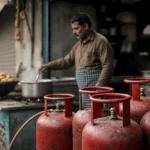

Oil Marketing Companies (OMCs), by hiking the prices of commercial Liquefied Petroleum Gas (LPG) cylinders, have again disrupted two major sectors of Indian economy – hospitality and food service. By increasing prices for not only the regular 19-kilogram commercial cylinders but also the 5-kilogram mini commercial cylinders, the OMCs are, quite frankly, forcing hotels, restaurants and even small eateries to operate on increasingly tighter margins, which in some cases will become less than waist size, and perhaps even hopelessly so. On the other hand, it is quite commendable that everyday citizens using 14.2 -kilogram domestic LPG cylinders, have not been subjected to a ‘direct’ price change of any kind. Beneath this commendable action, industry experts warn, the “indirect”upward effects of the hike may be passed on to the final consumers. Let’s take a very detailed look at the sudden price hike, the consequent ripple-effect in the food and beverage sector, and the message for the average consumer.
The Specifics of the Price Hike
OMCs’ latest revision is another step up in the rising trend of costs of commercial fuels. The increase is targeted at 19-kg cylinders that are the major source of cooking fuel for commercial kitchens, catering services, and large restaurants. Moreover, the prices of 5-kg mini commercial cylinders, which are most commonly used by street food vendors, tea stalls, and small eateries, have also been raised correspondingly. This move hardly gives any time to the previous price increase, which had come into effect on March 1. The successive price increases are mainly due to changes in global benchmark prices of propane and butane along with changes in the foreign exchange rates. Nevertheless, for a business owner who is checking their monthly balance sheet, the macro-economic reasons hardly provide any solace in the face of rising daily operational expenses.
Hospitality Sector Takes the Brunt
Cooking gas for the hospitality sector is not an optional expense; on the contrary, it is the ingredient that keeps the business going. Be it the most luxurious five-star hotels or simple local cloud kitchens, fuel is responsible for a significant portion of the total costs. Restaurant owners at present face a highly unpredictable economic environment. Besides fuel, the industry is also struggling with the rising prices of raw materials, such as seasonal vegetable price hikes, costly edible oils, and higher transportation rates. The aggravation of an even larger LPG bill in this scenario gives rise to huge financial problems. “Fuel and food comprise our two major variable costs, ” reveals a representative of a local restaurant association. “When commercial gas prices increase, our profit margins are directly affected. We have already had to raise prices on March 1st. For many mid-sized restaurants, which barely manage to make profits of 10-15%, this price hike might decide whether they will be profitable or in the red for the whole quarter.
Street Vendors and Small Eateries Struggle to Survive
Although big hotel chains may have the money reserves to survive such a crisis, the reality is that things are extremely bad for the unorganized sector. The price increase of the 5-kg mini commercial cylinder has an immediate effect on the millions of street food vendors, small dhabas, and roadside tea stalls. These little micro-entrepreneurs are based on daily cash flows. So, a sudden increase in the price of their main cooking fuel will completely change their day-to-day economics. Large restaurants, which can resort to strategic menu redesigns to conceal cost increases, are quite different from a street vendor selling samosas or tea at a fixed, very low price, who will find it almost impossible to suddenly raise the price to their regular, price-sensitive customers. That is why, a lot of these small business owners have to take less profit home, putting in longer hours simply to make ends meet and have enough to support their families.
Will Eating Out Become More Expensive?
The chief concern among the public as a whole is whether they will be affected by the increase in commercial prices. The simple reply is that it is highly likely. In the past, the hospitality sector has endeavored to protect the end-users from the minor changes in the costs of the supply chain. However, the series of hikes one after another – the ones of March 1st and now, for instance, – normally leave the business owners with no other option but to change their prices. There is more than one channel through which customers will probably be able to notice the rise in prices due to fuel: Direct price increase on menu items: to recover the higher fuel cost, eateries may start to have new menus printed indicating a price increase ranging from 5% to 10% for the most popular dishes. Counterfeiting in quantities: without raising prices, some restaurants could decide to reduce very subtly the size of their dishes. For example, with the same amount of money you would get a little less curry or fewer pieces of meat. Delivery Fees: Ramp-driven places and delivery-first restaurants, which rely heavily on volume and quick cooking, might add new packaging or handling fees in order to cover the deficit in their operating expenses. Higher charges for catering: If you are the one who organizes a wedding, a corporate event, or a big party, then you may be concerned that your catering quotes per plate will increase because caterers are great consumers of commercial LPG.
More Read

Domestic Consumers Breathe a Sigh of Relief
In the middle of the worries in the trade side, we see a brighter side for the regular Indian homes. The OMCs have decided not to change the price of the 14.2-kg domestic LPG cylinder at all. Such a step will greatly help Indian families financially especially at this time when everywhere they are dealing with the effect of inflation.
Keeping prices of domestic LPG unchanged is an important aspect that helps in sustaining the purchasing power of the middle and lower-middle classes. It also makes sure that while a home-cooked meal remains affordable, the price of the same meal in a restaurant is increasing.
Industry Demands and the Road Ahead
In the wake of these price increases, several hotel and restaurant trade groups are appealing to the government to step in and help. It is an open secret that industry organizations have been requesting the adjustment of taxes on commercial LPG and have also advocated for being able to claim Input Tax Credit (ITC) on the Goods and Services Tax (GST) paid on commercial gas. According to them, such steps would act as a great cushion against price fluctuations worldwide. Now that hospitality industry is gearing up for the immediate effect of the new billing cycle, business owners are examining their workings very closely to identify energy saving opportunities. Whether it’s upgrading to energy efficient burners or better managing kitchen prep times, the whole industry seems to be exploring every possible way to minimize their fuel usage. Currently, owners of hotels and restaurants have no choice but to keep on doing a difficult balancing act: on the one hand, continuing to serve good quality food and retaining customers, and on the other, dealing with exploding costs of operating stoves. With global energy markets being so volatile, Indian food service industry needs to be quick, tough and ready to face even bigger changes in the coming months.